Saint Veronica [obverse] by Memling, Hans
View the artwork: Saint Veronica [obverse] →
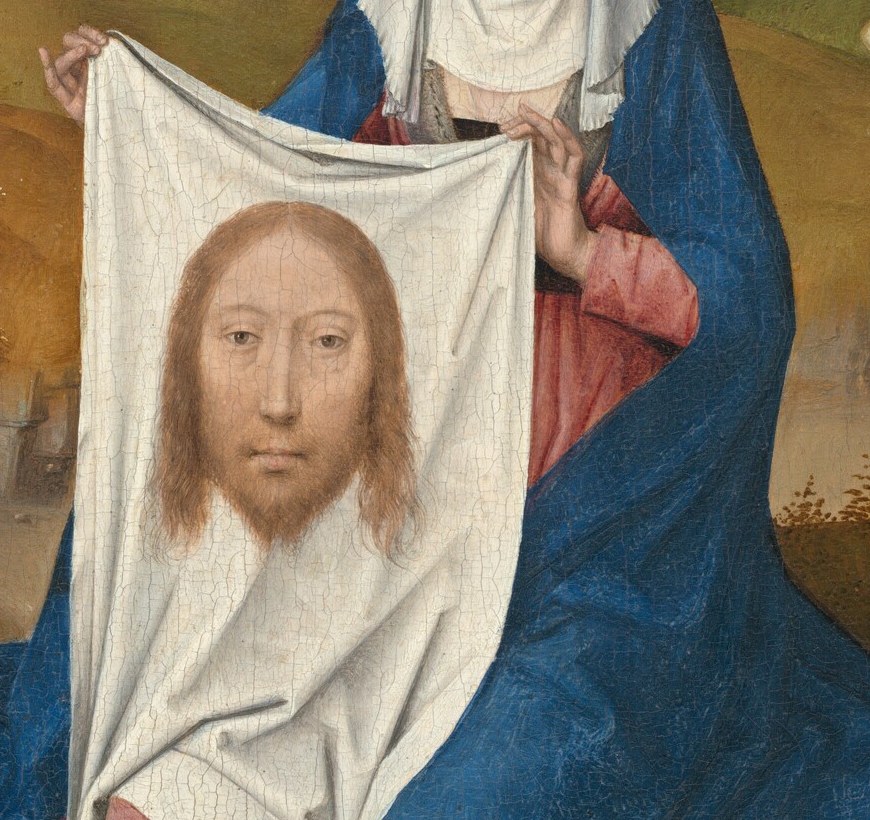
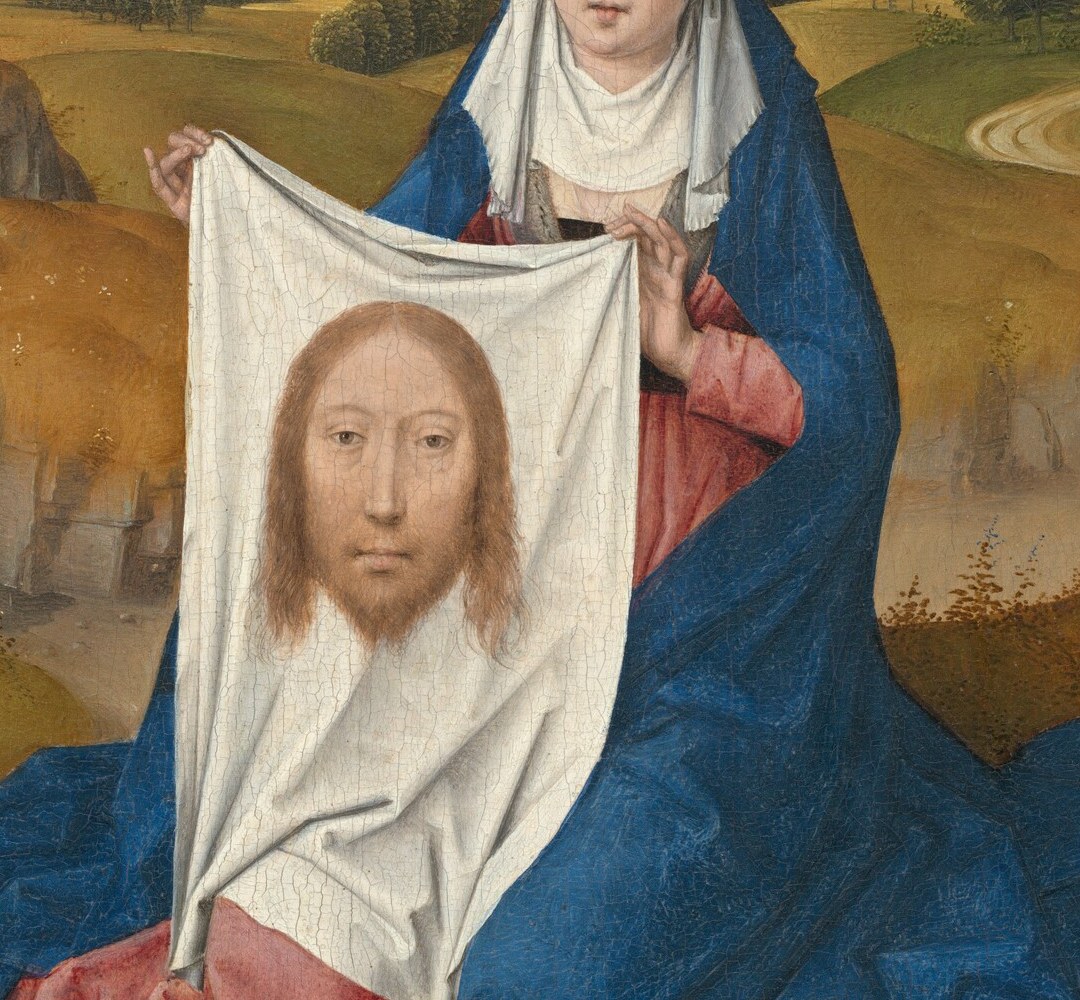
This is Hans Memling’s Saint Veronica, painted around 1470 to 1475. It shows the moment from Christian tradition when a woman stepped from the crowd on the Via Dolorosa and wiped the face of Jesus with her veil. The image of his face was said to have been miraculously imprinted on the cloth.
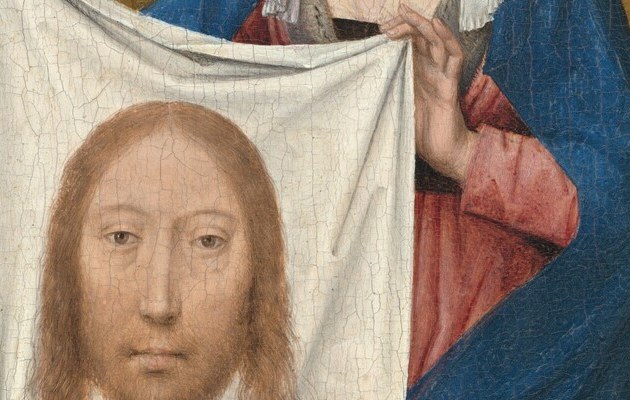
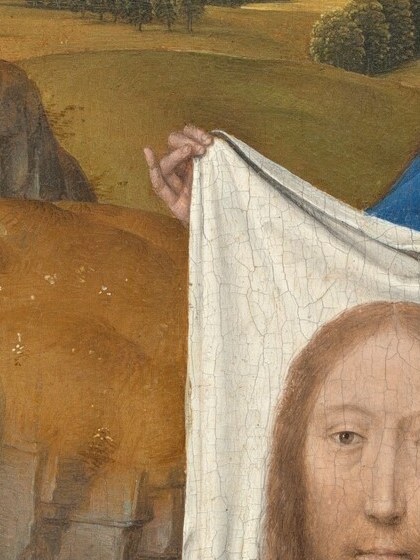
Veronica holds the sudarium at an angle so we see both her face and his simultaneously. Look at Christ’s eyes on the veil: they are open, sorrowful, and looking straight out. Then look at Veronica’s hands, delicately modeled fingers pinching the upper and lower corners of the linen. The veil itself is a technical feat. Memling painted the translucent white cloth in fine glazes of oil, with creases and folds so thin that the face embedded within it seems to float beneath the surface.
Veronica is not named in the Gospels, but her story became central to the Stations of the Cross and to late-medieval devotion. The painting comes from Bruges, where Memling was a leading artist and a wealthy citizen. Around 1480, he was listed among the city’s highest taxpayers. His calm, precise, deeply sympathetic figures made his work widely sought by patrons who wanted a devotional image they could sit with, quietly, steadily.
The hilltop city in the upper left corner is a Flemish rendering of Jerusalem, and the barren, rocky earth behind Veronica places us on the road to Calvary. Memling asks us to stand with her.
#arthistory #hansmemling #earlynetherlandish
Details

Transcript
Jerusalem, a hilltop city, on a spring day around the year 33. A road runs through this rocky ground, the Via Dolorosa. A woman holds a white cloth, and on it: a face. His eyes, open, look directly into yours. The cloth is linen, painted in translucent oil layers so thin you can see the folds beneath. She was a bystander who stepped forward with this cloth. The image burned into it. 500 years later, Hans Memling painted the woman, the cloth, and the hill where it happened.