Madonna and Child, with the Man of Sorrows [middle panel] by Nardo di Cione
Nardo di Cione's "Madonna and Child, with the Man of Sorrows" from around 1360, housed in a prominent collection, is a devotional painting rich in symbolic meaning. Every detail, from the figures to their attributes, was chosen to convey a specific message to the viewer.
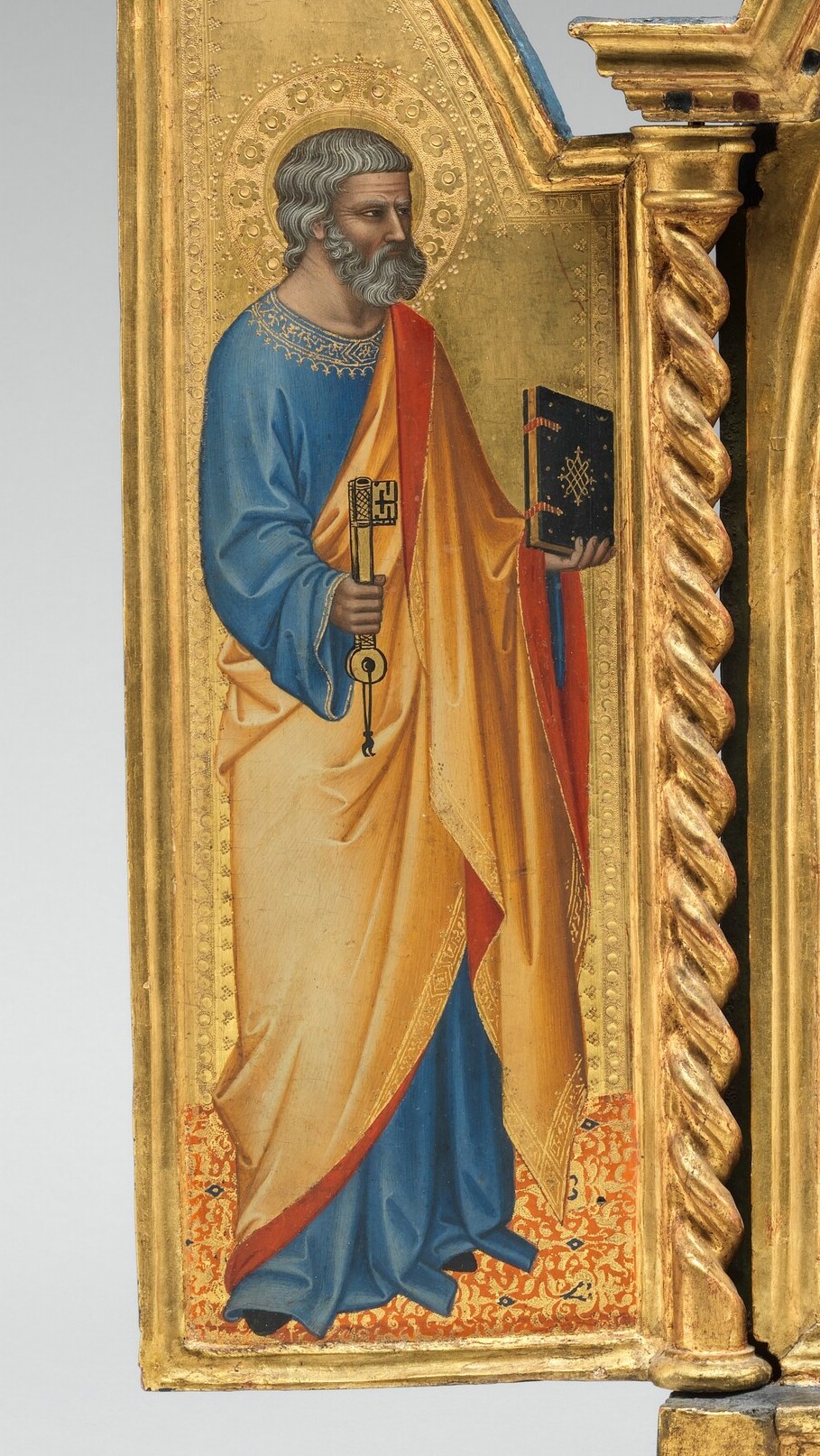
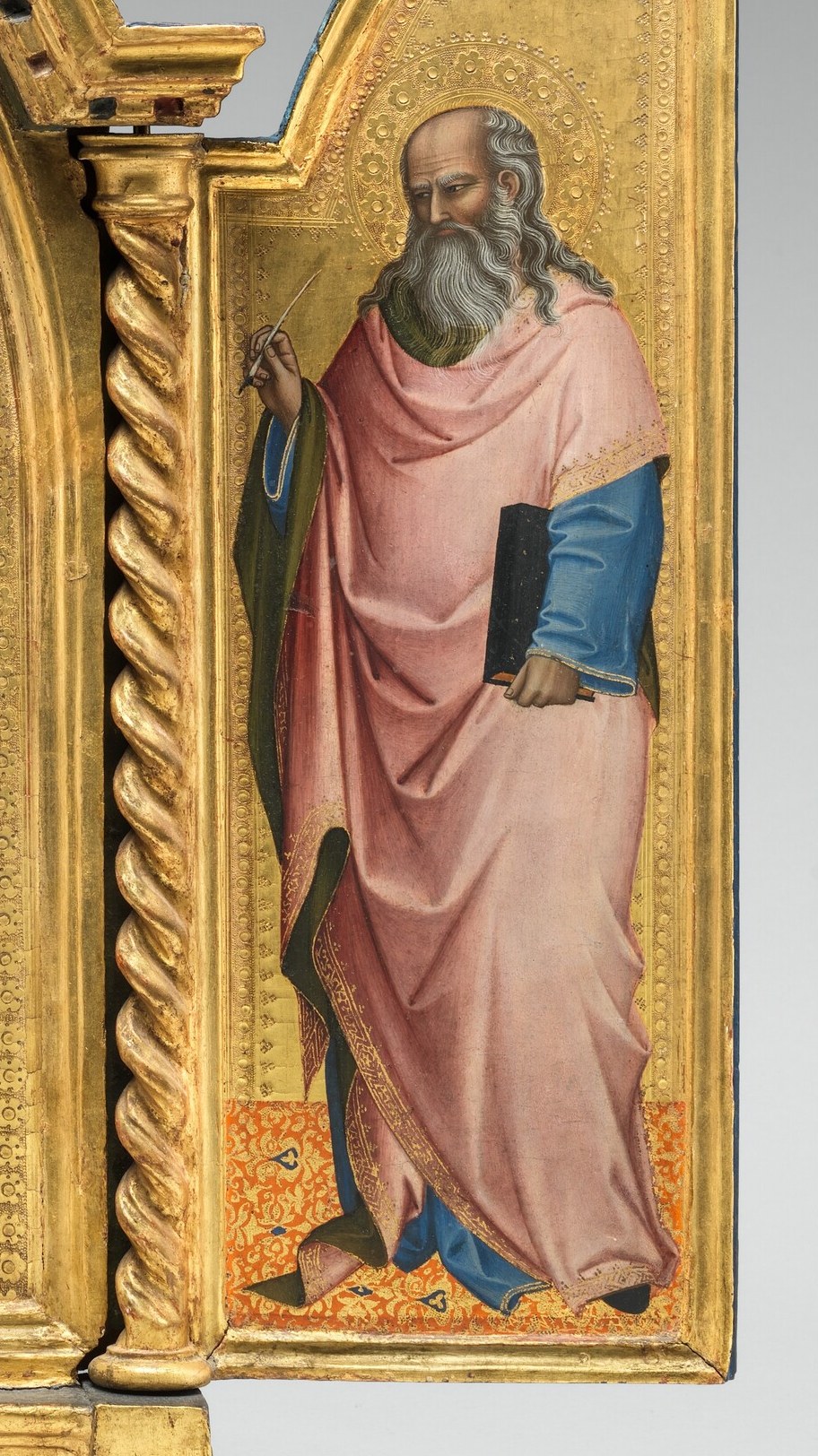
Look closely at the figures flanking the Madonna and Child. On the left, Saint Peter is clearly identified by the two keys he holds, traditionally known as the keys to the Kingdom of Heaven. On the right, Saint Paul holds a scroll, symbolizing his profound theological writings, his epistles, which were foundational to Christian doctrine.
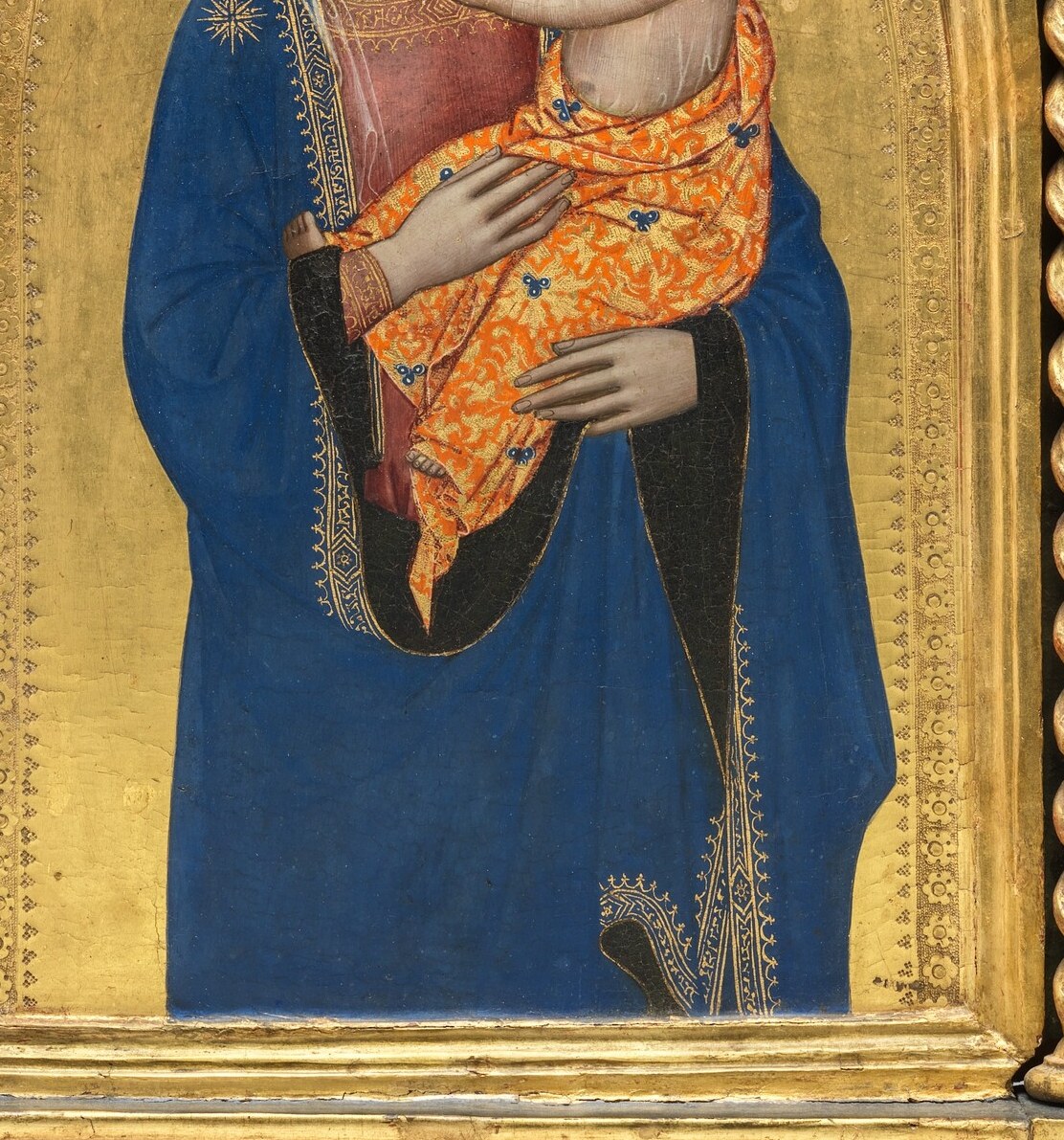
The Madonna herself is draped in a striking deep blue robe, a color universally associated with purity, royalty, and her heavenly status. The extensive use of a gold background throughout the panel further emphasizes the sacred and divine nature of the scene, elevating it beyond the earthly realm.
This painting is a masterful example of how Florentine artists of the 14th century used visual cues and established iconography to tell complex religious stories, inviting contemplation and reinforcing faith. What other stories do you think a painting like this could tell?
Details
Transcript
This painting tells a story, if you know the symbols. First, Saint Peter, holding two keys. These are the keys to the Kingdom of Heaven. Next, Saint Paul, identified by his scroll. It represents his epistles, his letters of doctrine. The Madonna's deep blue robe signifies her purity and heavenly status. Together, they convey divine promise and the Church's authority.