Breton Brother and Sister by William Adolphe Bouguereau
William-Adolphe Bouguereau finished this painting in 1871, but its heart belongs to the late 1860s, when he vacationed in Brittany and filled sketchbooks with studies of local children, their costumes, and their quiet, unguarded moments. "Breton Brother and Sister" now lives at the Metropolitan Museum of Art, a work that once commanded top prices and official honors before modern taste turned sharply away from his academic polish.
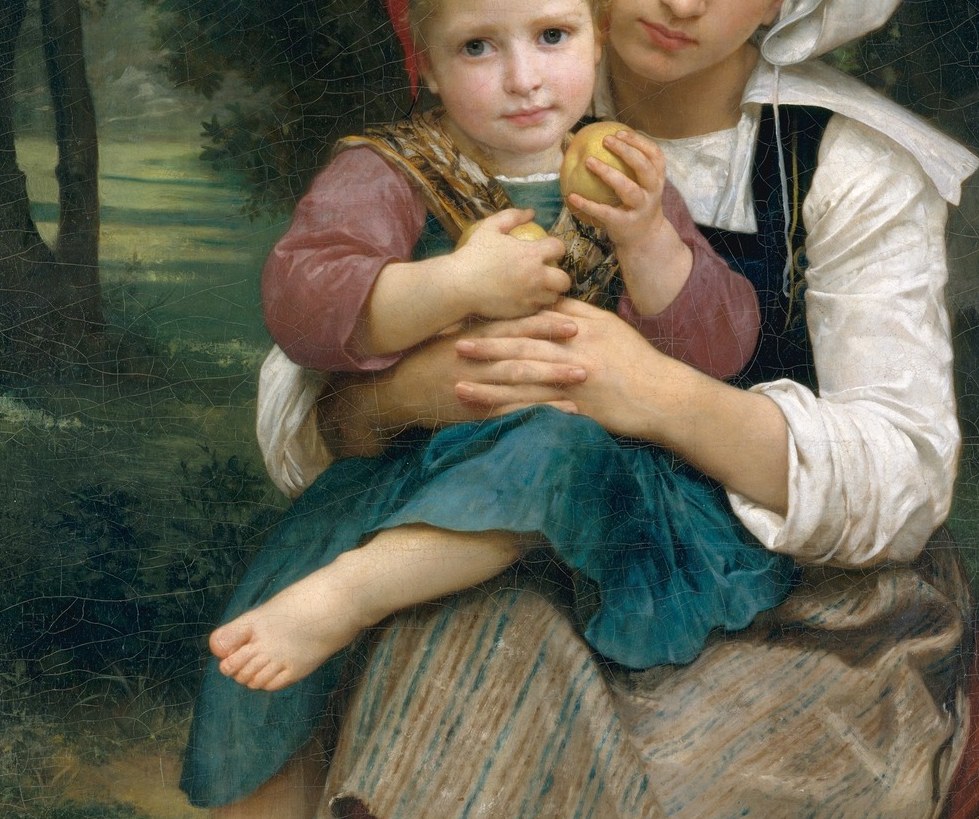
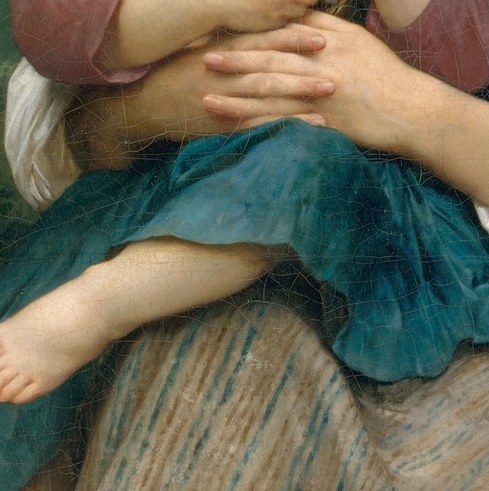
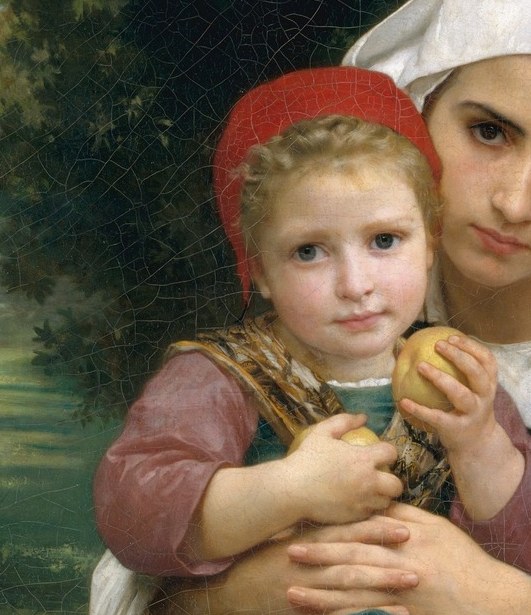
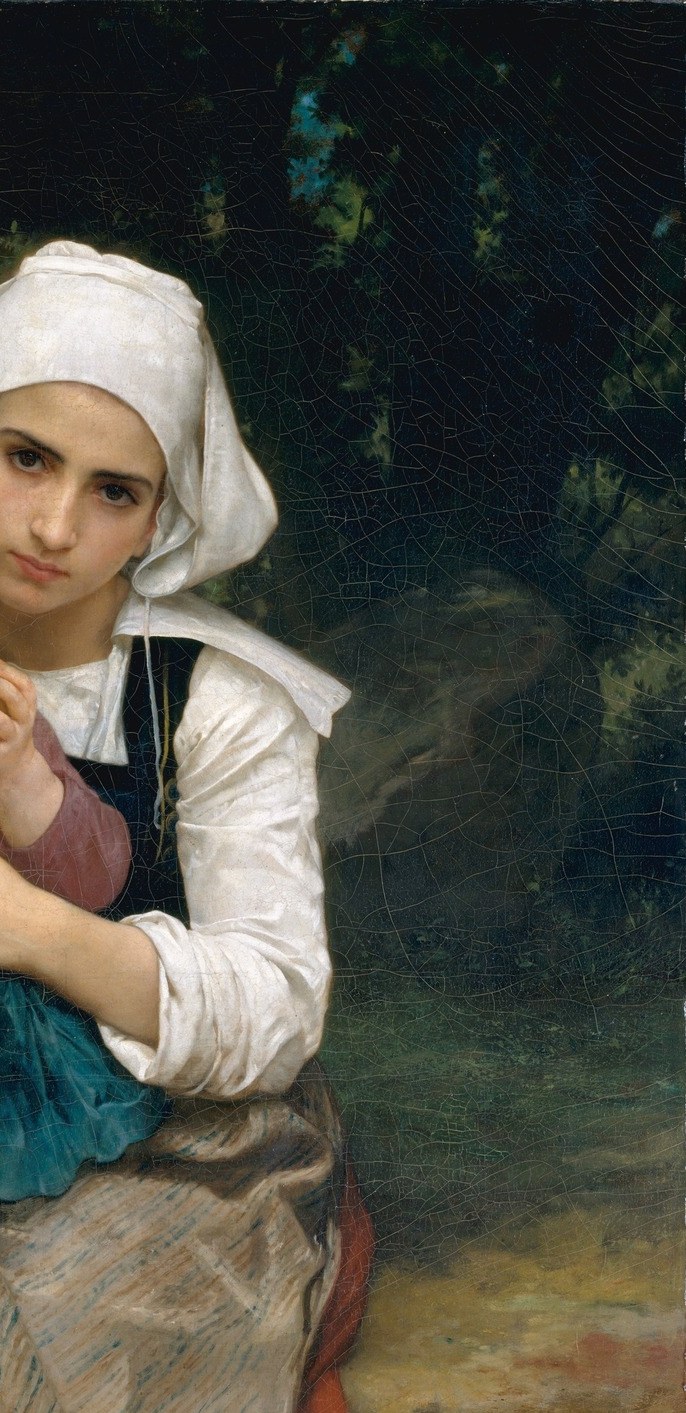
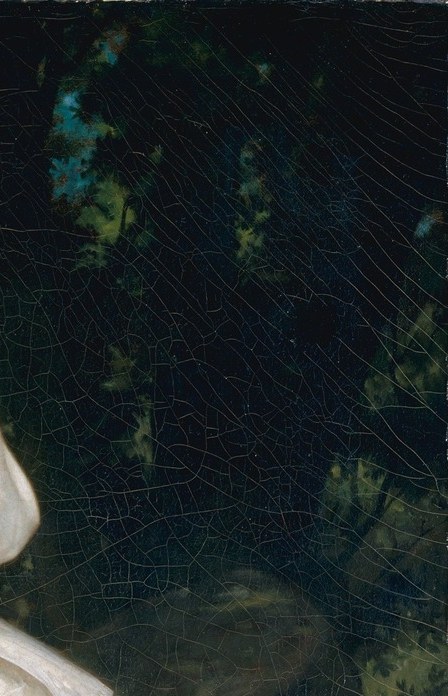
Look at the boy's grip on that humble bread roll, then at the sister's interlaced fingers holding him from behind. The tenderness is physical, protective. But the real surprise is the background. Bouguereau, famous for his flawless finish, lets the foliage go soft and loose. It is a painter's private freedom, almost invisible on a phone screen.
Up in the top right corner, the trees part. A sliver of pale sky opens. It is easy to scroll past, but it changes the whole painting. The tight embrace of the foreground has a release valve. Two figures, locked in sibling duty, sit beneath a world that does eventually open up.
What detail in a painting have you noticed only on a second or third look?
Details
Transcript
She holds her brother with the weight of a parent. Bouguereau painted this in 1871, from sketches made in rural Brittany. His hands grip a simple bread roll like a treasure. The figures are polished to an almost porcelain finish. Their faces are his focus, but look past them, into the trees. Everything behind them is loose, dark, and brushed with freedom. And up here, a thin clearing opens onto a pale sky. A single breath of space in a painting about holding on tightly.