Bateaux en Mer, Golfe de Gascogne by Édouard Manet
Édouard Manet's "Bateaux en Mer, Golfe de Gascogne" (1873) captures a dynamic seascape with a hidden detail that grounds the scene. This oil painting, part of The Cleveland Museum of Art's collection, showcases Manet's fascination with modern life, even in a marine setting.
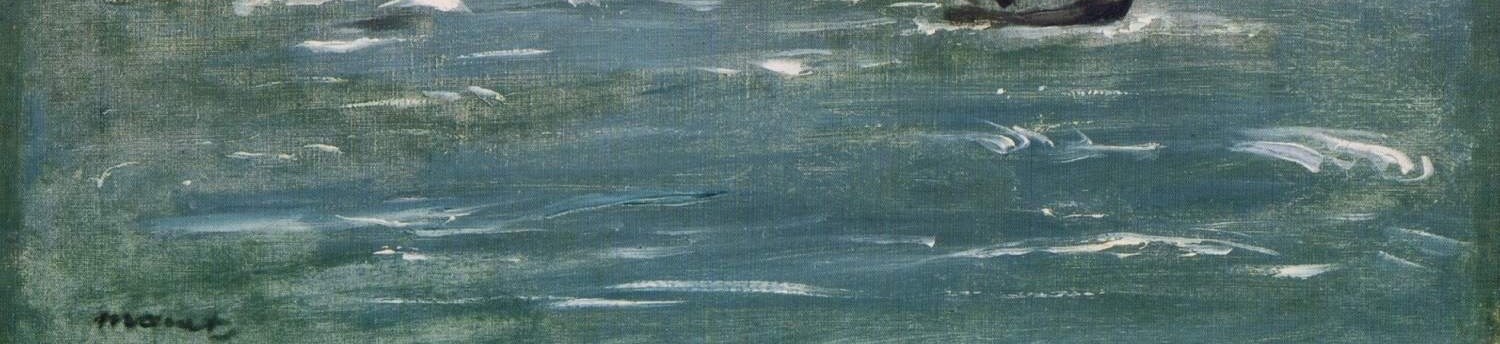
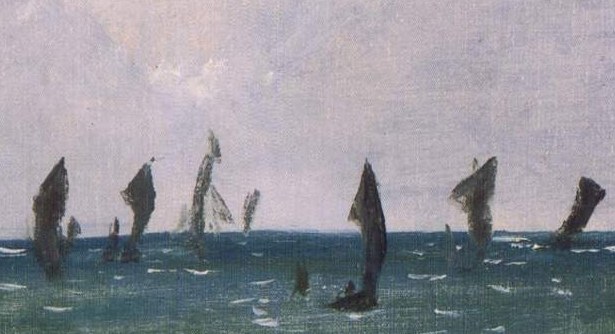
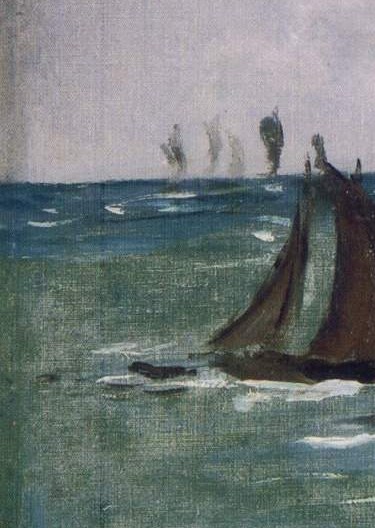
Notice how Manet uses bold, visible brushstrokes, especially in the water, to convey movement and immediacy. The distant boats are rendered with remarkable economy, often just a few gestural marks that suggest their presence against the horizon. The dark, imposing sails of the foreground vessels contrast sharply with the pale sky, anchoring the composition.
Manet, a pivotal figure in the transition from Realism to Impressionism, was known for his innovative approach to painting. Here, he transforms what could be a traditional marine painting into something fresh and vibrant. Look for the artist's faint signature in the lower-left corner, a subtle mark of his presence in this powerful depiction of the open sea.
What details do you find most striking in this turbulent scene?
Details

Transcript
This painter was obsessed with modern life. Even a turbulent seascape like this feels immediate, right now. He renders distant boats with just a few strokes. He makes the sea the real subject of the painting. Look closely at the lower left corner. There, faintly, is the artist's own signature.