Woman Ironing by Degas, Edgar
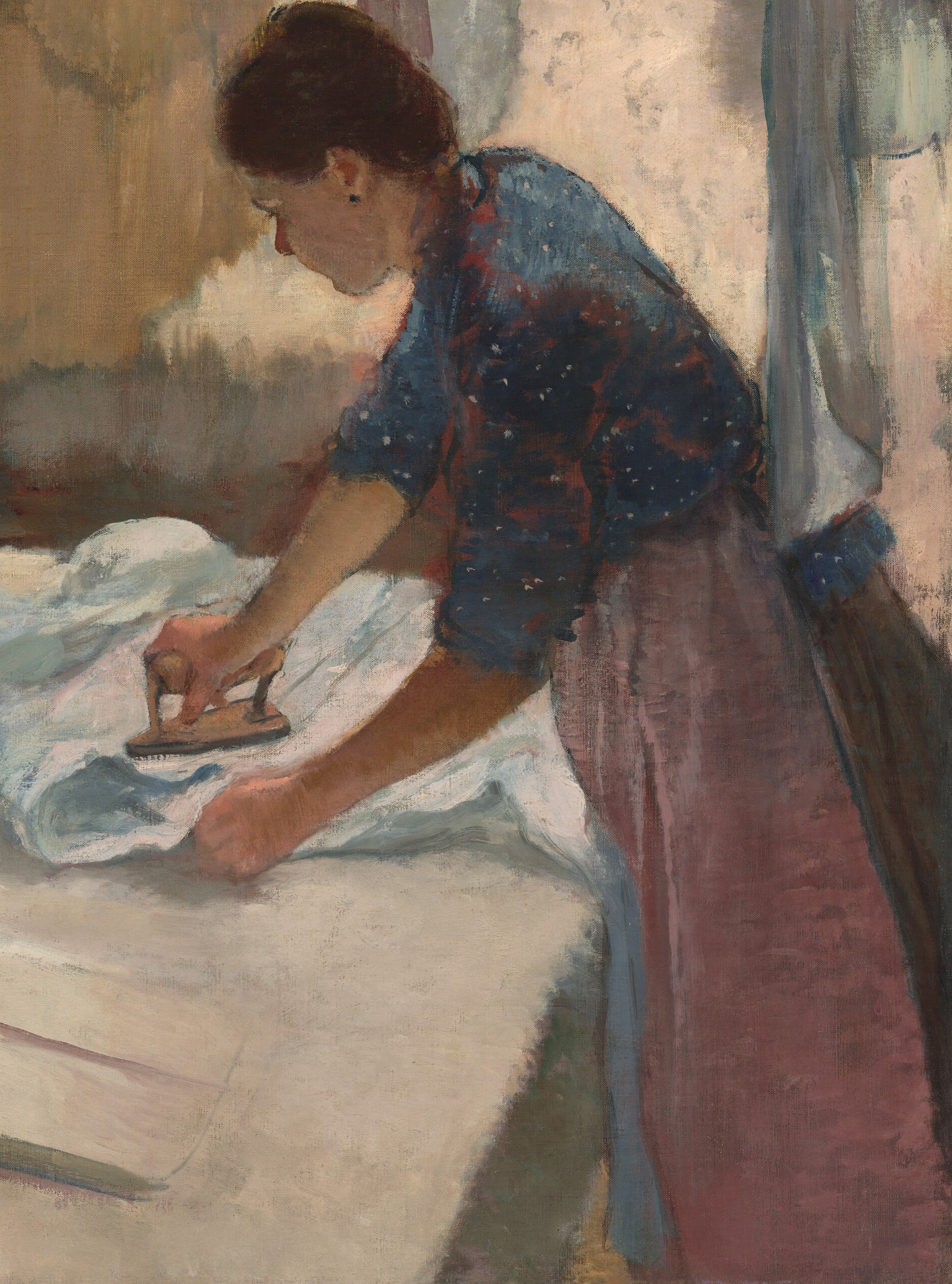
Edgar Degas kept *Woman Ironing* in his studio for over a decade. He began it around 1876 and did not consider it finished until roughly 1887. During those same years, Paris was being physically torn apart and rebuilt into the city of wide boulevards we know now, a transformation that pushed working lives like hers into the margins. The painting now belongs to the National Gallery of Art in Washington, D.C.
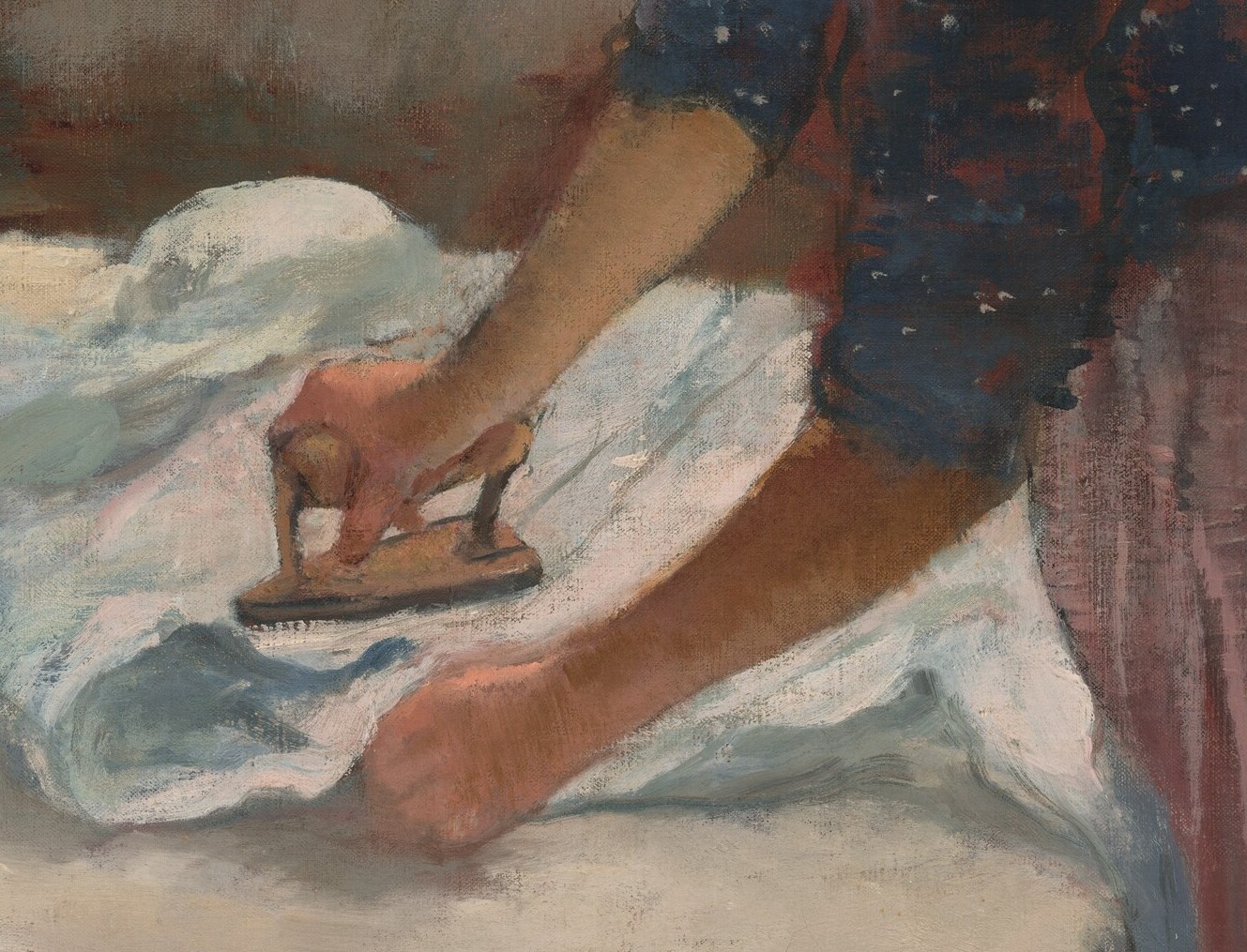
Her face is the film's quiet climax. Degas gives her no eye contact, no pause. Her gaze stays down, fixed on the white shirt, and her hands grip the iron with the tension of real effort. The small bowl beside her likely held water or starch, the invisible tools of her trade. The background recedes into shadow, leaving her body as the only solid, illuminated thing in the room.
Degas called himself a realist, not an Impressionist, and his laundress pictures are among the most unflinching documents of Parisian working women. This is not a portrait commissioned by a wealthy sitter. It is a study of labor, built slowly, kept privately, never exhibited in his lifetime. X-rays show he reworked her shoulders repeatedly, as if the physical weight of the task mattered to him more than the finish.
The painting asks nothing from you. It simply holds a moment of uninterrupted concentration. A woman working. A painter watching. A decade passing.
Details
Transcript
She has been at this table for hours. Paris, the mid-1870s. The city was being rebuilt. Grand boulevards above. Windowless workrooms below. Degas began this painting in 1876. He kept it in his studio for over ten years. Returning to her shoulders. The weight of the iron. The heat. He never sold it. He never showed it publicly. A private record of a woman rarely asked to look up.