Castle Gondolfo, Lake Albano, Italy by Cranch, Christopher Pearse
The most surprising thing about Christopher Pearse Cranch's "Castle Gondolfo, Lake Albano, Italy" is that it holds no hidden allegory. In an era when many European landscapes were stuffed with coded symbols, skulls, snuffed candles, broken columns, Cranch painted exactly what he saw. The painting, completed in 1852 during his travels abroad, now lives in a collection of 19th‑century American art.
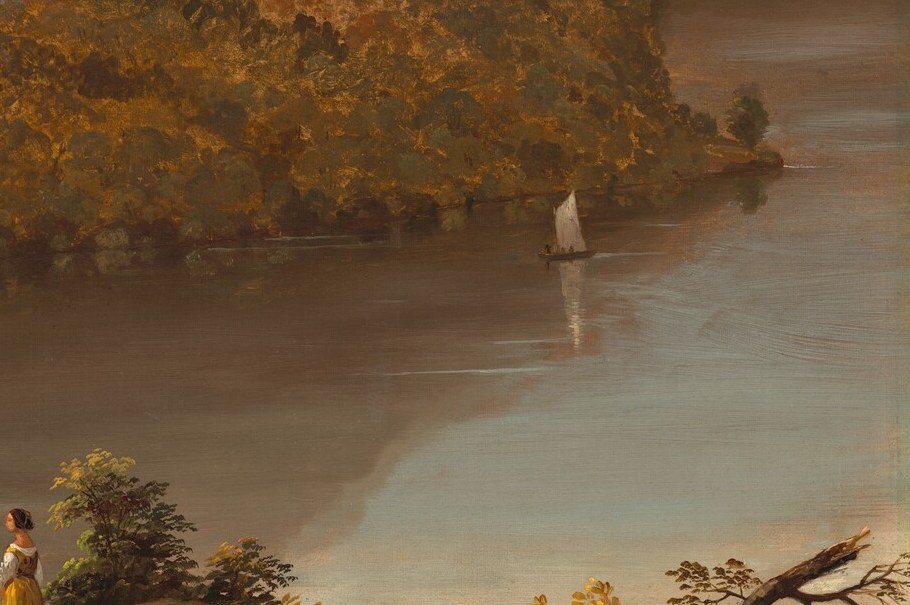
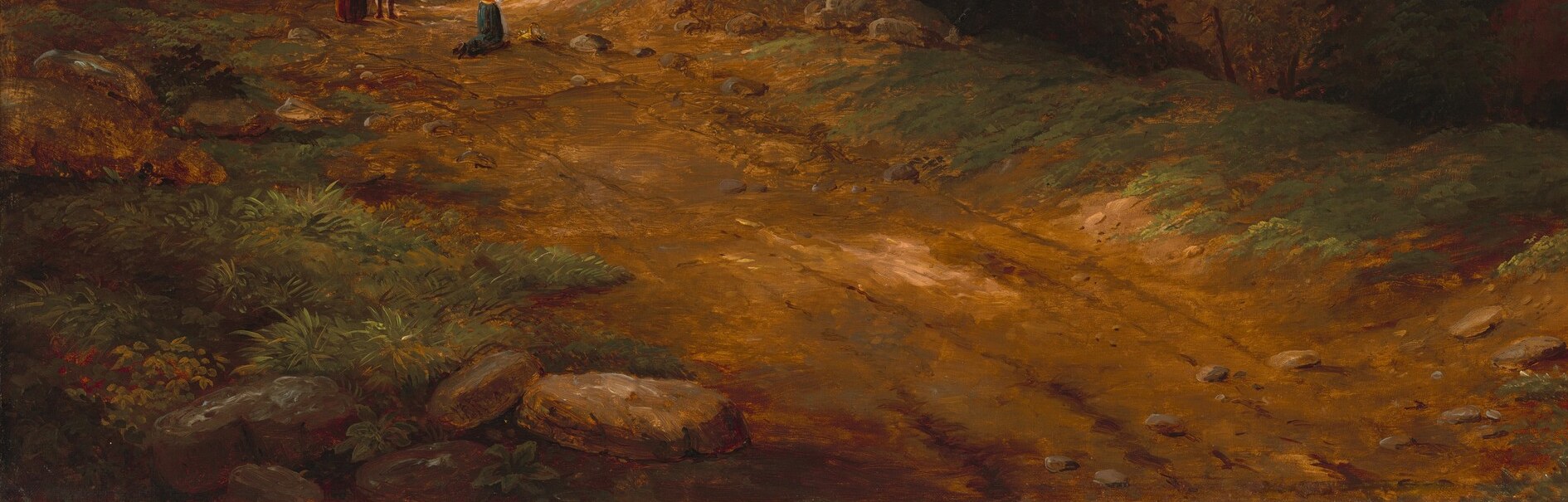
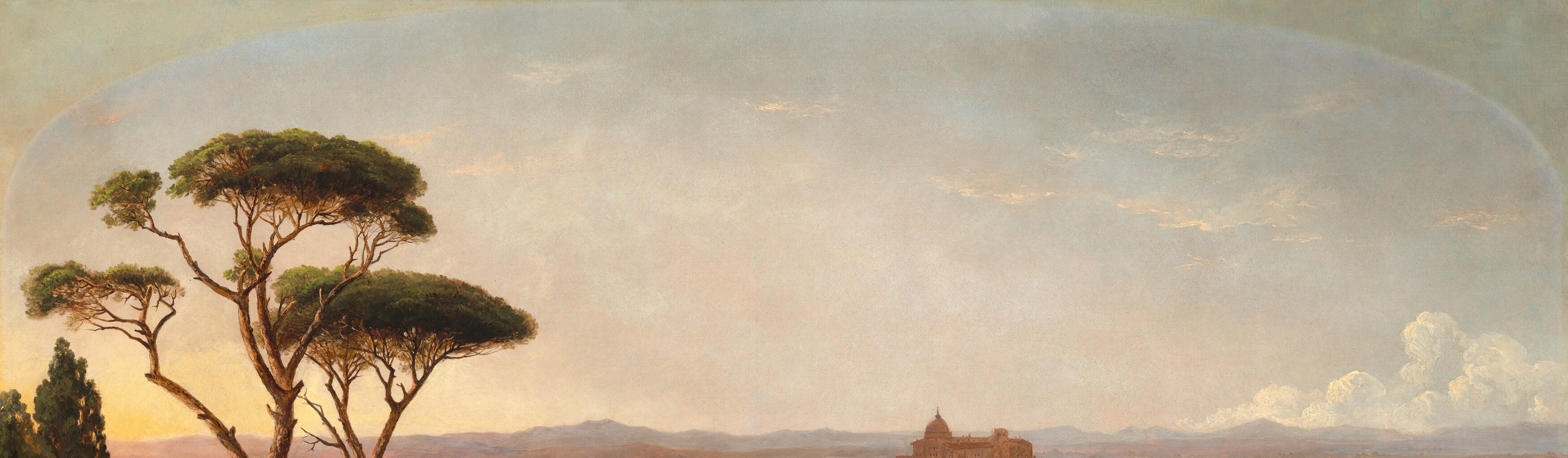
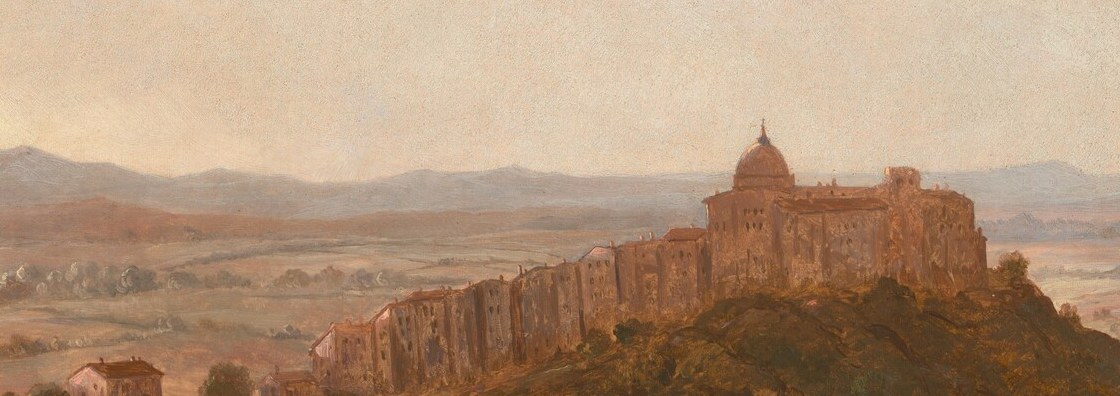
Let your eye follow the winding dirt path in the foreground. It passes a small stone pavilion and a few tiny figures before widening out onto the calm surface of Lake Albano. A sailboat sits in the distance, and the medieval castle rises on the hill, softened by the haze.
Cranch wasn't just a painter, he was an ordained Unitarian minister and a member of the Transcendentalist circle around Ralph Waldo Emerson. Transcendentalists believed that the natural world was a direct expression of the divine. For Cranch, recording this Italian view with quiet accuracy was a spiritual act.
So in a way, this *is* a coded painting. The code is light. It is air. It is the belief that the truth sits right before your eyes.
Details
Transcript
There is no secret code hidden in this landscape. The painter was a Transcendentalist minister. For him, nature *was* the message. No skull, no snuffed candle. Just a path opening onto a quiet lake. Cranch believed the divine was found in light and air. So the truth of this painting is exactly what you see.