Madonna and Child by http://www.wikidata.org/.well-known/genid/ab29056d985d9fd3e27cbf6eac2567f6
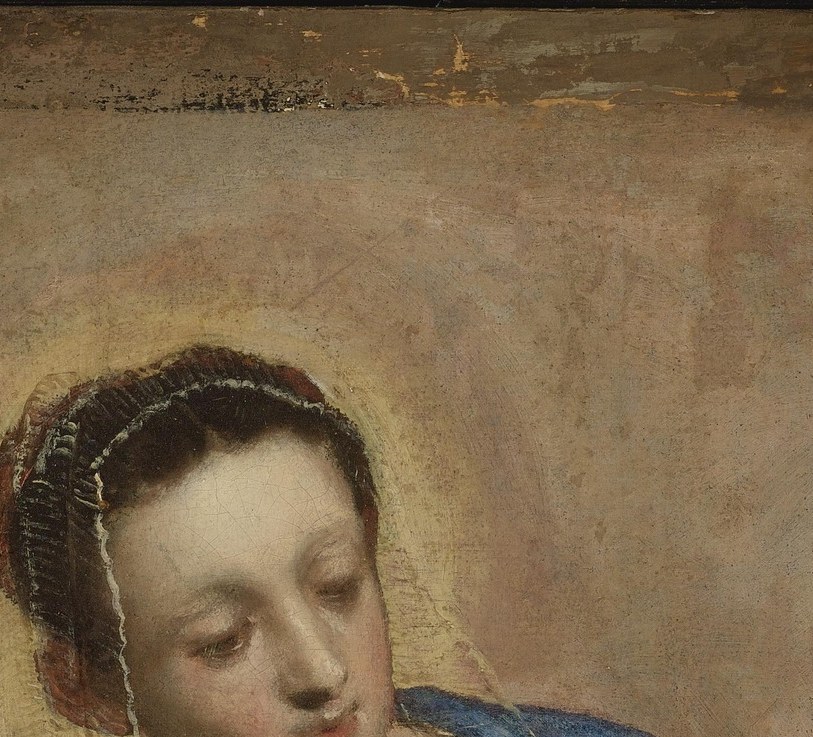
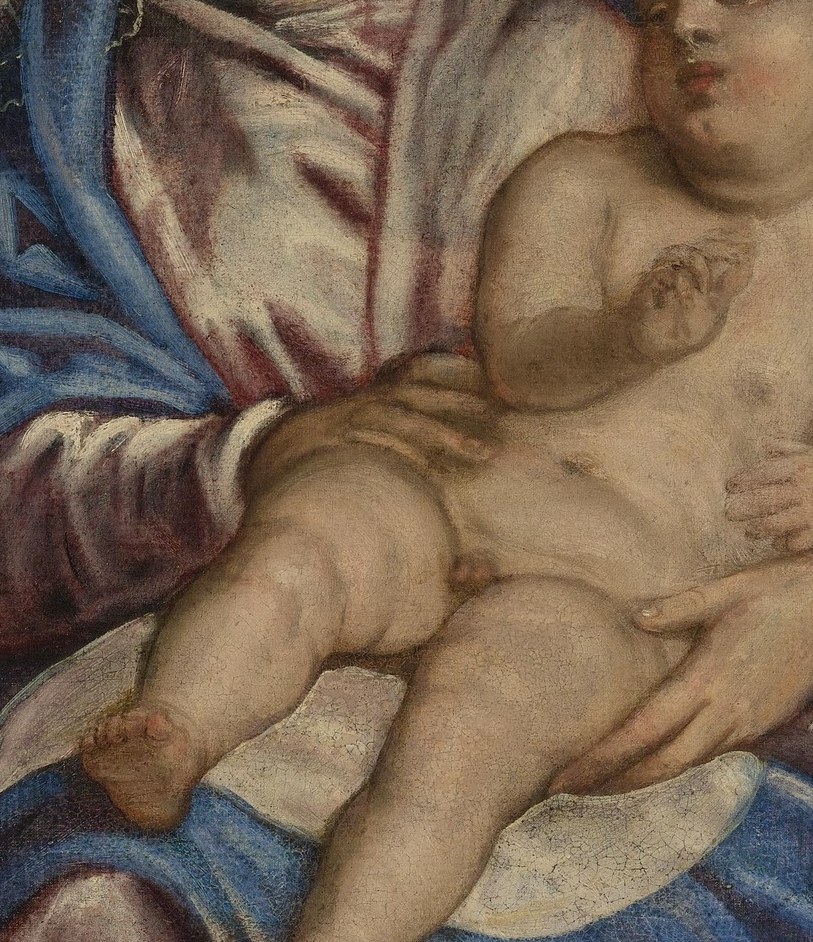
This is Carlo Dolci's "Madonna and Child," painted around 1670 and now in the Palazzo Pitti in Florence. It was briefly a scandal. Church officials ordered it removed from view because the Christ Child was painted entirely nude, not with the traditional sheer veil or loincloth, but fully exposed as a real infant body.
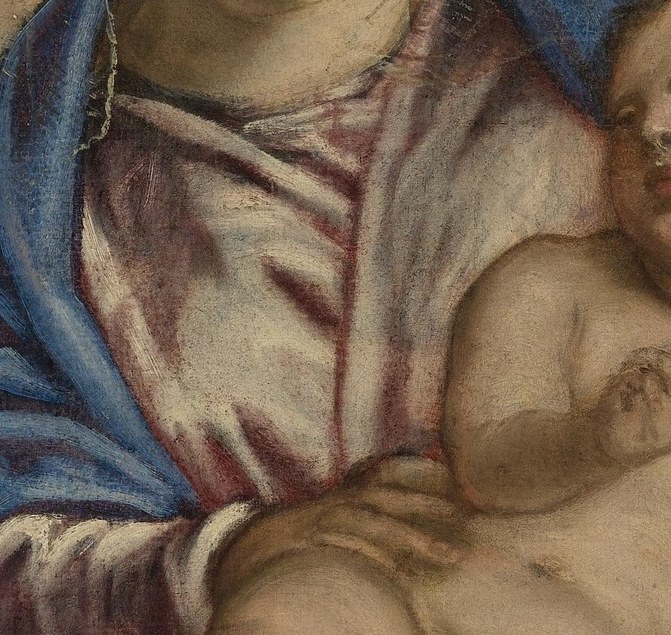
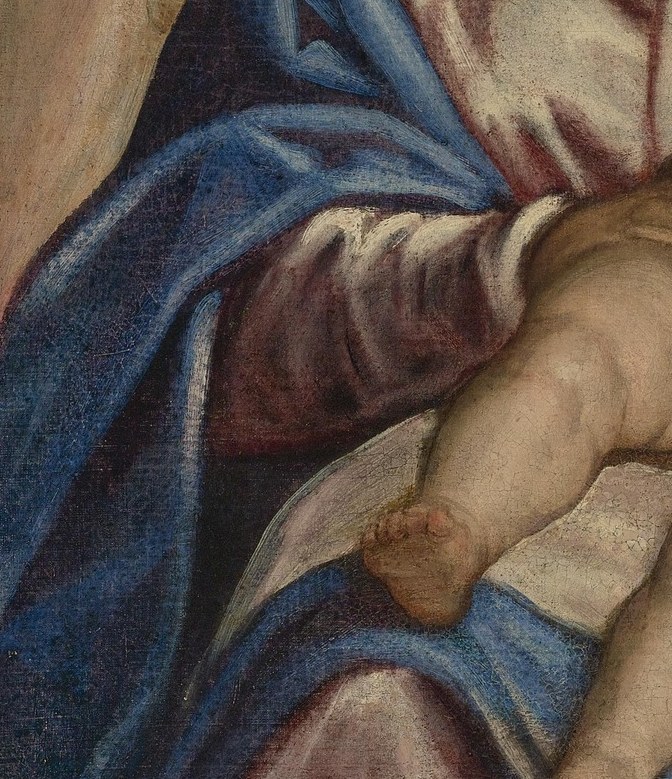
Look at the child's hand resting on Mary's chest and the calm, upturned face meeting her downward gaze. Dolci built the entire emotional logic of the painting around the physical reality of the child, the soft torso, the unposed arm reaching outward, the natural weight of him in her hands. That very realism is what the censors objected to. A symbol of the Incarnation was doctrinally acceptable; a baby you could count the ribs on was not.
The nude Christ Child had been a standard motif for centuries, especially in Northern Renaissance painting, where it signified Christ's full humanity, God made vulnerable flesh. But by the late 1600s, post-Tridentine standards in Catholic Europe had tightened. Dolci, a devout and famously meticulous Florentine, likely believed he was painting a more honest, tender devotion. His patrons initially agreed, until the church authority in charge of the commission did not.
Dolci was forced to add a covering or withdraw the work. The version we see today may be the original, uncensored state, or one of several copies he made, but the dispute itself is documented. A painting about a mother and child, deemed too indecent to look at.
Details
Transcript
She looks like any young mother, lost in a quiet moment. And he is simply her child, calm, trusting, entirely at ease. But this painting was removed from public view. Church officials deemed it indecent. The problem was his body: fully exposed, unmistakably human. Painters had shown the Christ Child nude for centuries, as a symbol of the Incarnation. But this was not a symbol. This was a real baby. Censors saw only flesh. The painter was ordered to cover him, or lose the commission.