Slaves' Dance - Saukie by Catlin, George
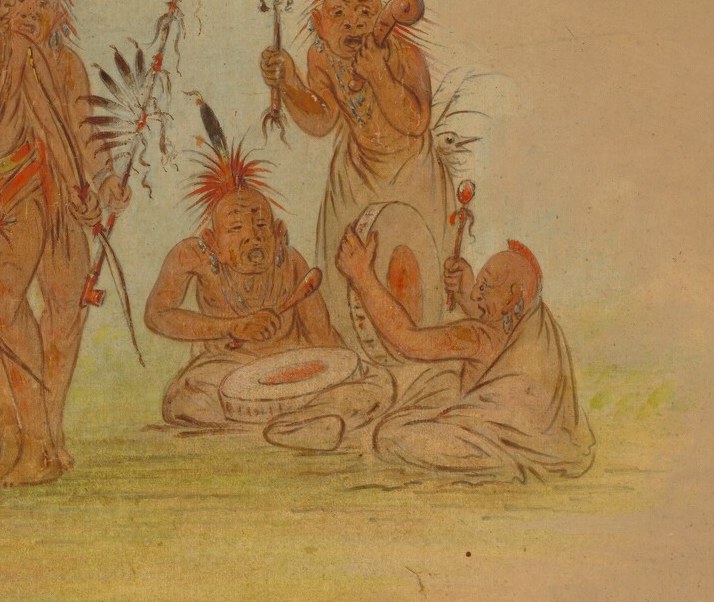
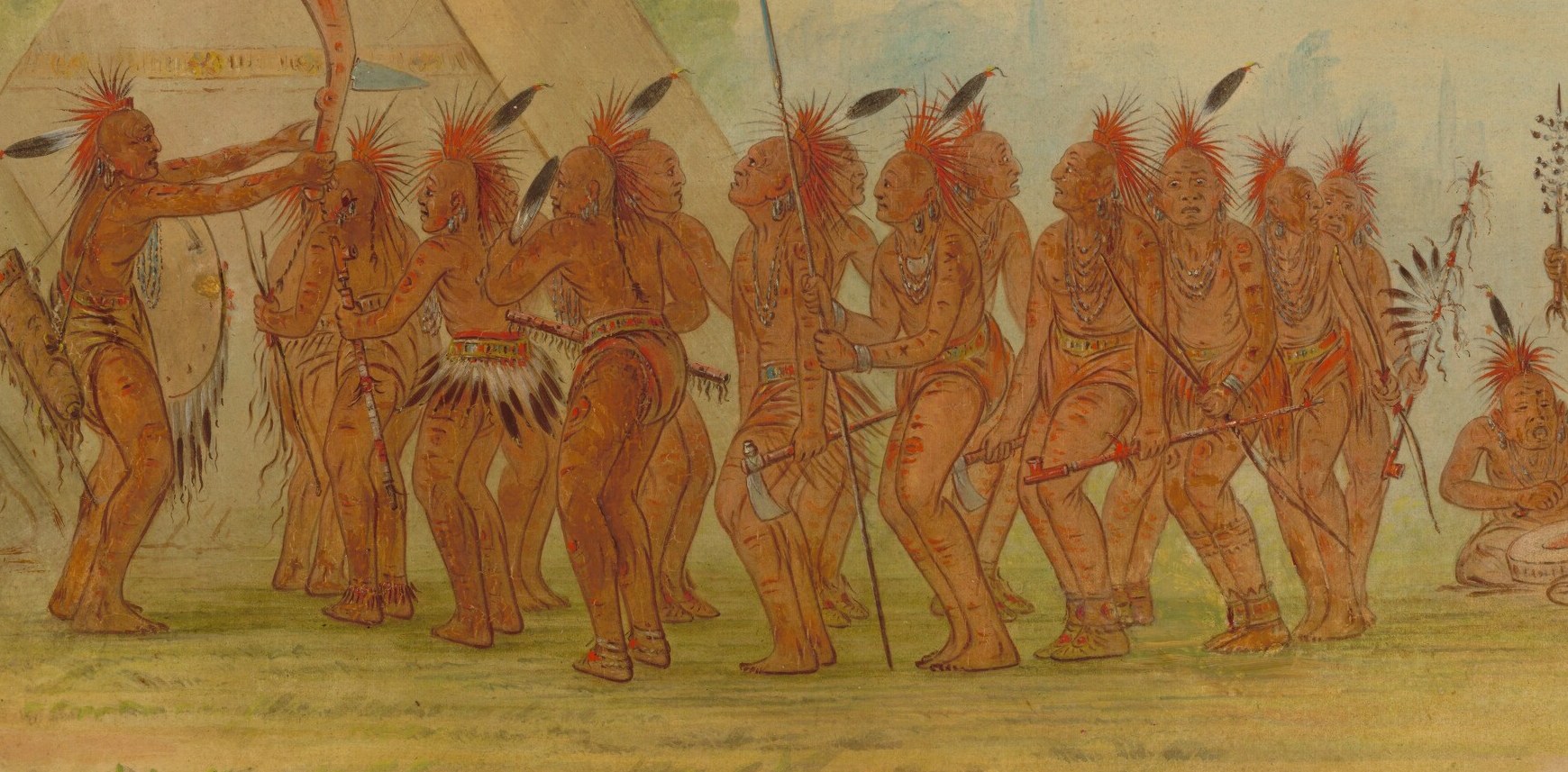
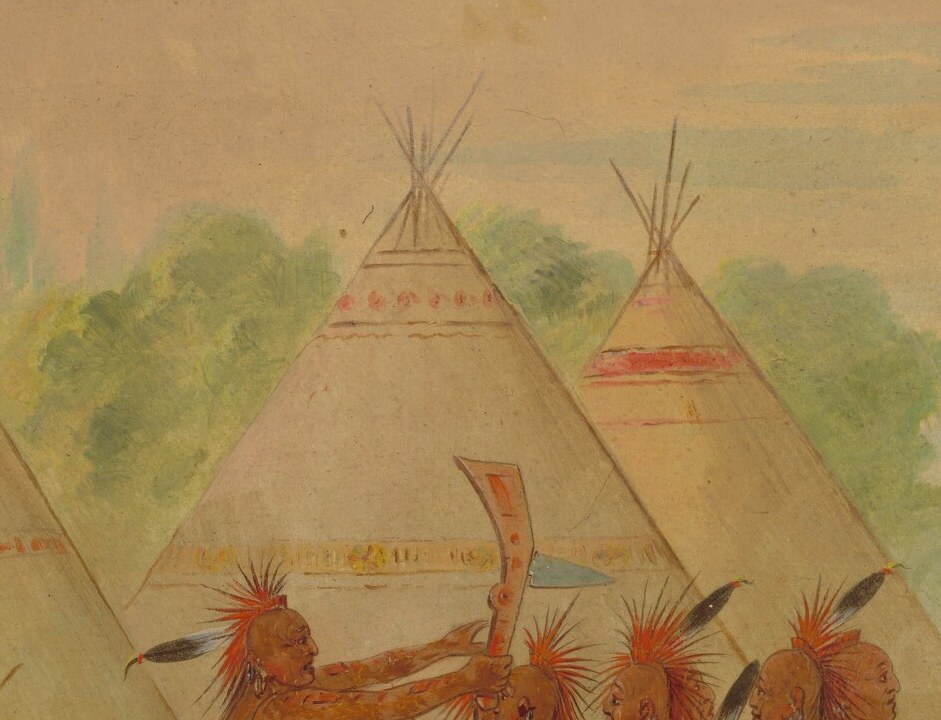
George Catlin's 'Slaves' Dance - Saukie' (1861) is a small but striking oil painting on card, part of the artist's extensive collection now held by the National Gallery of Art in Washington, D.C.
Look at the brushwork. Catlin painted loosely, using quick, fluid strokes to convey the texture of the men's clothing and the shimmer of leaves in a bright, almost radiant light. The scene is anchored by a solitary tree, under which three men dance with a drummer and a figure holding a rattle.
Catlin completed this work in 1861, the year the American Civil War began. He is famous for his portraits of Native Americans, having traveled the frontier five times in the 1830s. This painting turns his documentary eye toward a different group of people, recording a cultural expression that persisted despite the profound oppression of slavery.
It is a note from the edge of a catastrophe, painted by a man who spent his life trying to witness what others would not.
Details
Transcript
They dance under a single tree, in bright, almost radiant light. A drummer keeps time. A man with a rattle marks the rhythm. The title is 'Slaves' Dance - Saukie.' The year is 1861. The Civil War had just begun. Debates over slavery were tearing the country apart. George Catlin was known for painting Native American life. This is a different record. He captured a moment of cultural expression persisting through enormous pressure.