Durán Madonna by Rogier van der Weyden
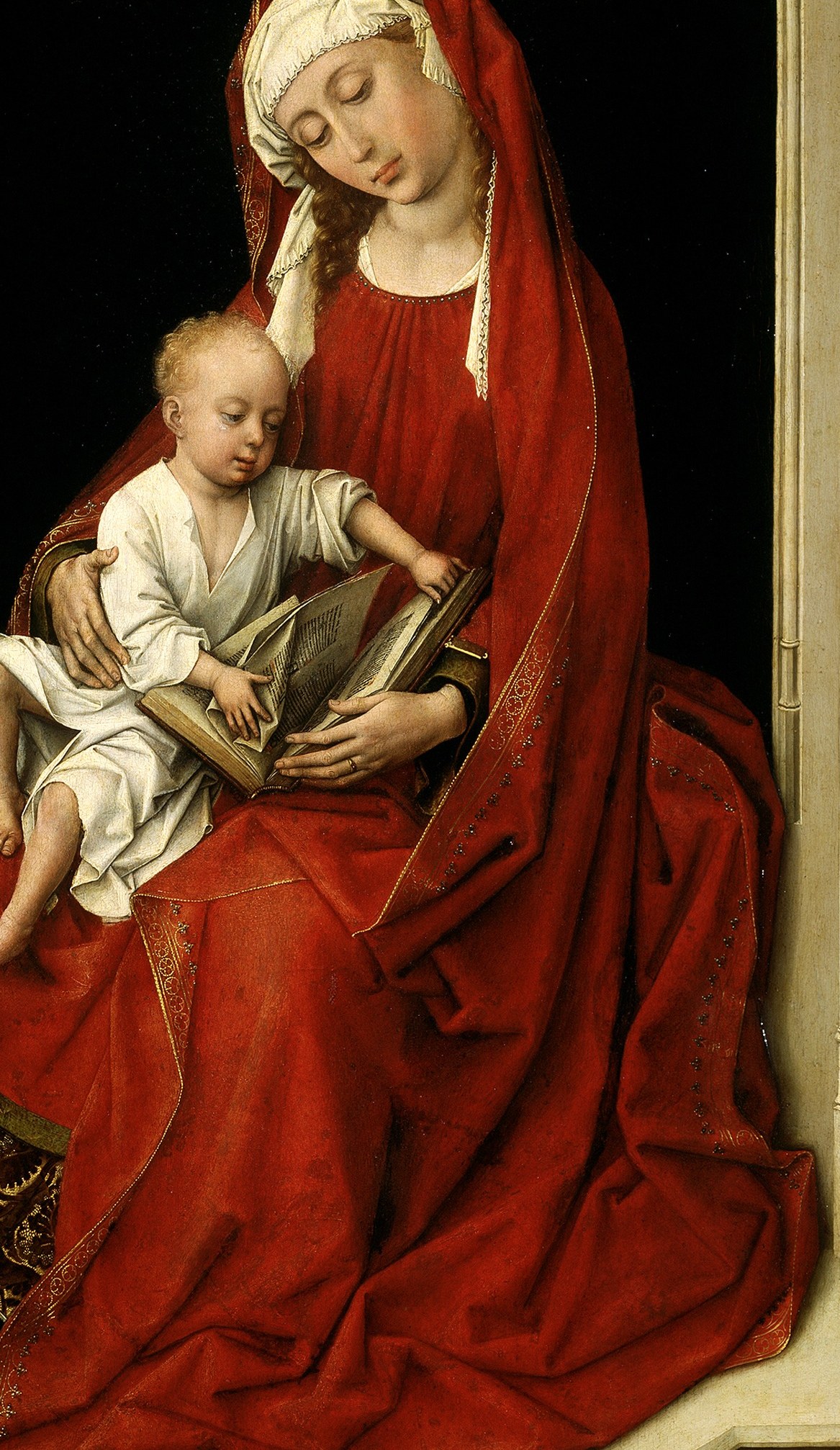
Painted around 1435, Rogier van der Weyden’s Durán Madonna in the Prado Museum, Madrid, offers a glimpse into 15th-century Netherlandish devotional art. This oil on oak panel work, a significant influence in its time, presents a serene Virgin Mary and Child Jesus with profound symbolism.
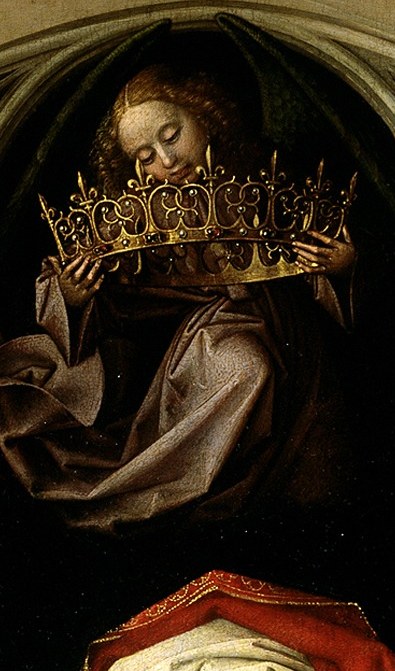
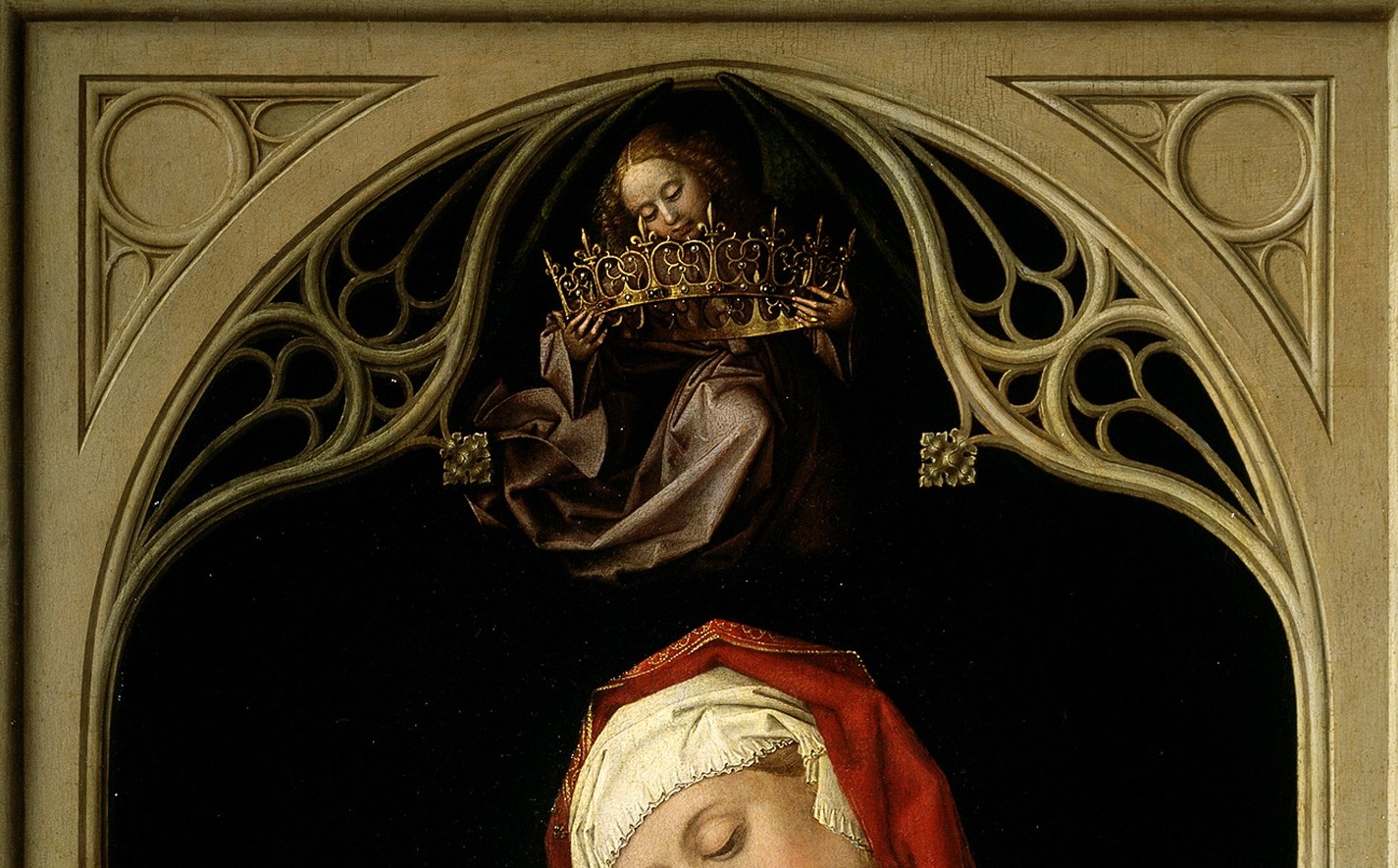
Observe the rich red robe of the Virgin Mary, lined with gold, which signifies royalty and divine love. An angel crowns her, emphasizing her role as Queen of Heaven. Both figures are engrossed in an open holy book, a detail that underscores the era's focus on scripture and divine knowledge.
Van der Weyden adapted compositions by artists like Jan van Eyck, but he innovated by placing his figures on a projecting plinth within a Gothic niche. This technique gave the sacred figures a sculptural, three-dimensional presence, moving away from flatter backgrounds and creating a deeper sense of space.
The Durán Madonna became a widely imitated model, reflecting the changing tastes and artistic experiments of the early 15th century. What details in the painting speak to you most about its time?
Details
Transcript
In the 1430s, this is how artists showed sacred figures. The Virgin Mary is crowned, signifying her Queen of Heaven status. Her rich red robe symbolizes royalty and divine love. She cradles the Child Jesus, both gazing at a holy book. Artists emphasized the divine, but also intimacy and scripture. This painting set a new trend for devotional imagery.