Shawano Indians by Catlin, George
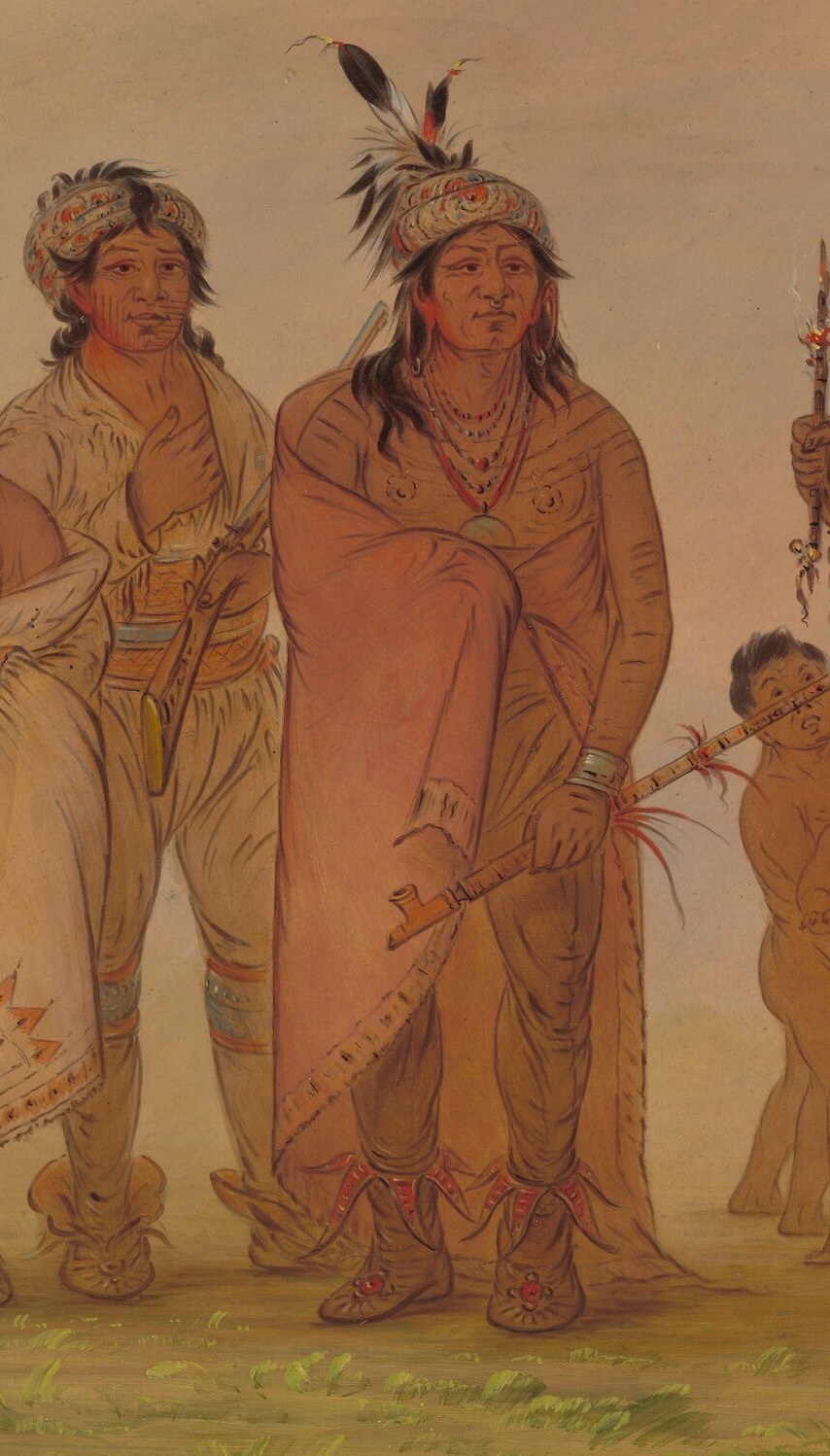
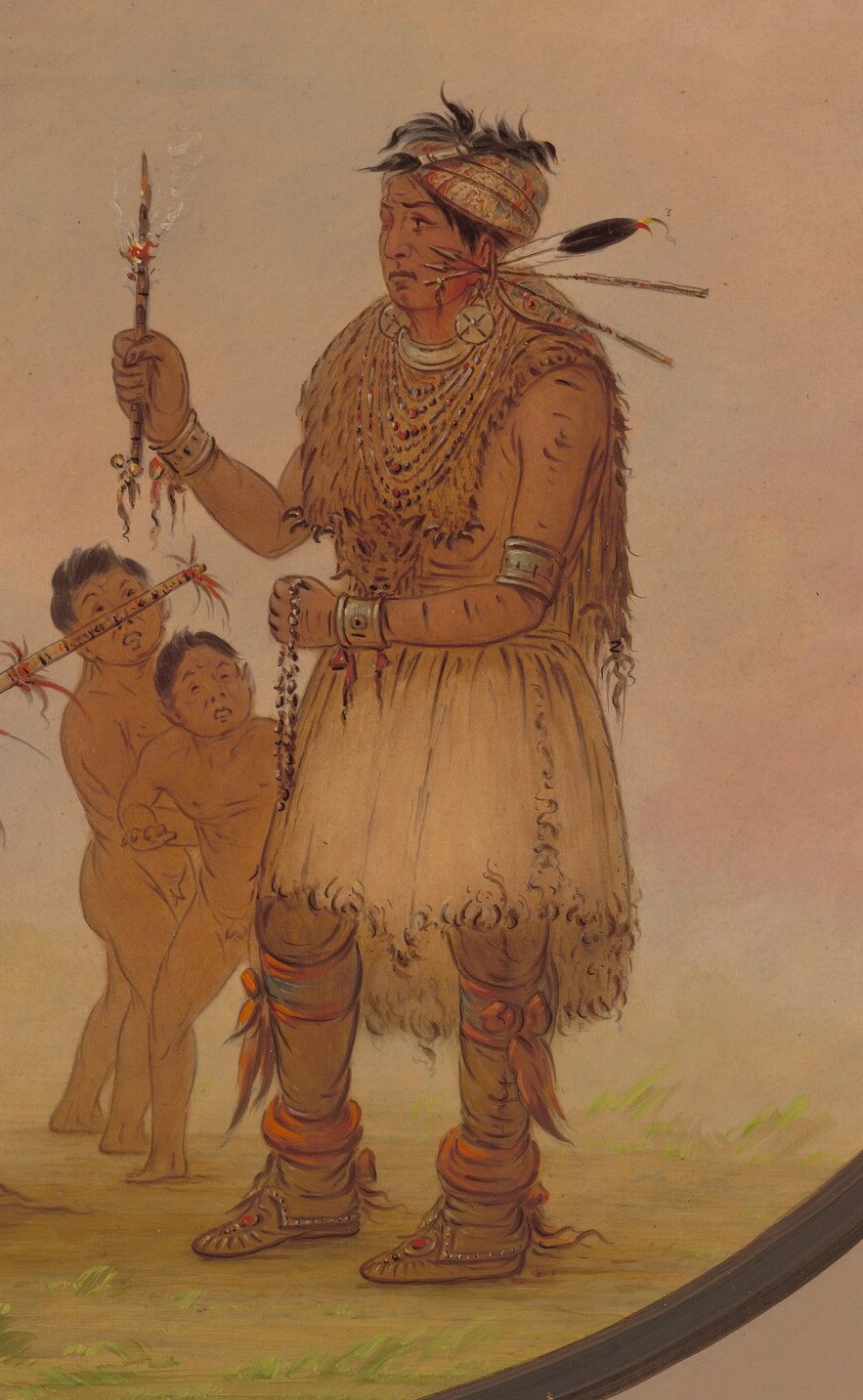
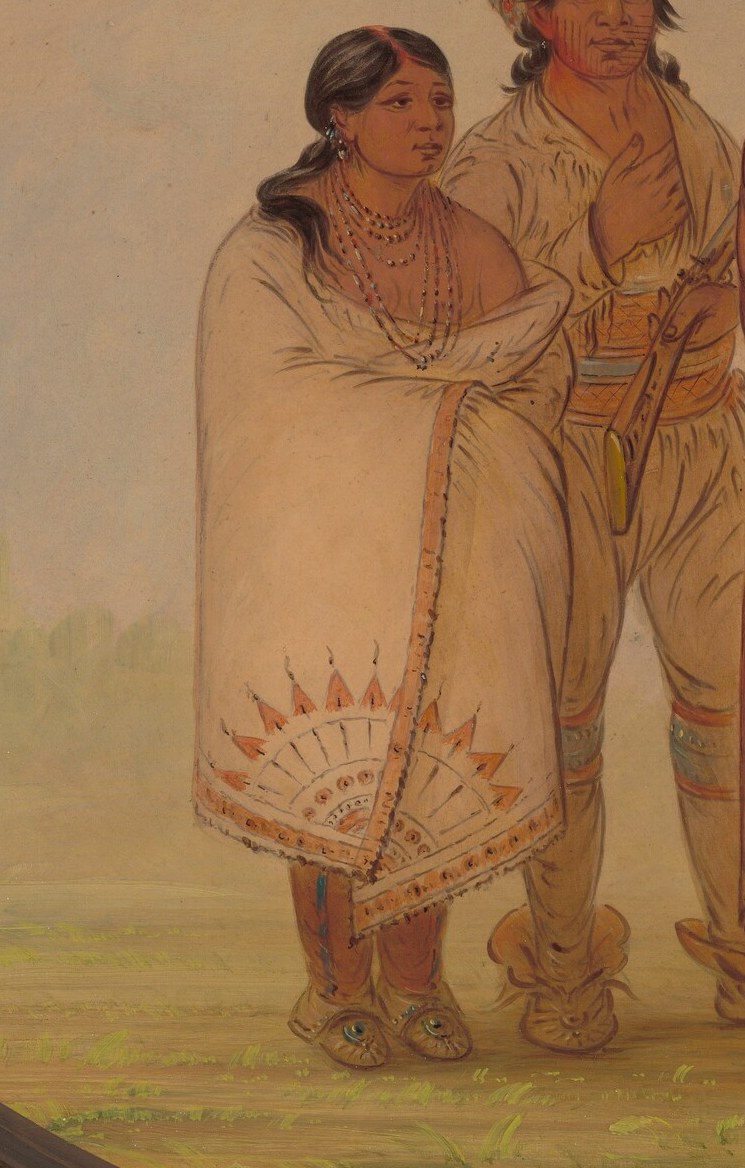
This is George Catlin's 'Shawano Indians,' painted in 1865. Catlin was a lawyer who abandoned his practice to travel the American frontier, convinced he was witnessing the final chapter of Native American life. He painted furiously, creating a visual record he believed would be all that remained.
Look closely at the details. The tall feathered headdresses, the beaded necklaces, and the fan-like pattern on the woman's white robe are not generic decoration. Catlin was a field ethnographer with a brush, and every element he recorded was a specific cultural marker of Shawnee identity in the mid-19th century. The two children in the foreground, looking directly outward, anchor the scene in a present and a future, not a vanishing past.
The irony of Catlin's work is that his central thesis was wrong. While he painted under the assumption that these cultures were dying, they were adapting and surviving. His paintings, meant as an obituary, became a historical document of resilience. The 'Indian Gallery' he toured across the country and Europe eventually fell into financial failure, but the images remain a complex, contested, and invaluable record.
A painting meant to say goodbye instead became a way to look back and remember.
Details
Transcript
He was a lawyer who left the courtroom for the frontier. George Catlin painted over 500 portraits of Native Americans. Look at the headdress. Each feather is a recorded fact. He saw himself as a preservationist, capturing a dying world. He called his collection his 'Indian Gallery' and toured it. But the 'dying race' narrative was a political myth. The Shawnee endured. Catlin's work became a record of survival.