Still Life with Goose and Game before a Country Estate by Weenix, Jan
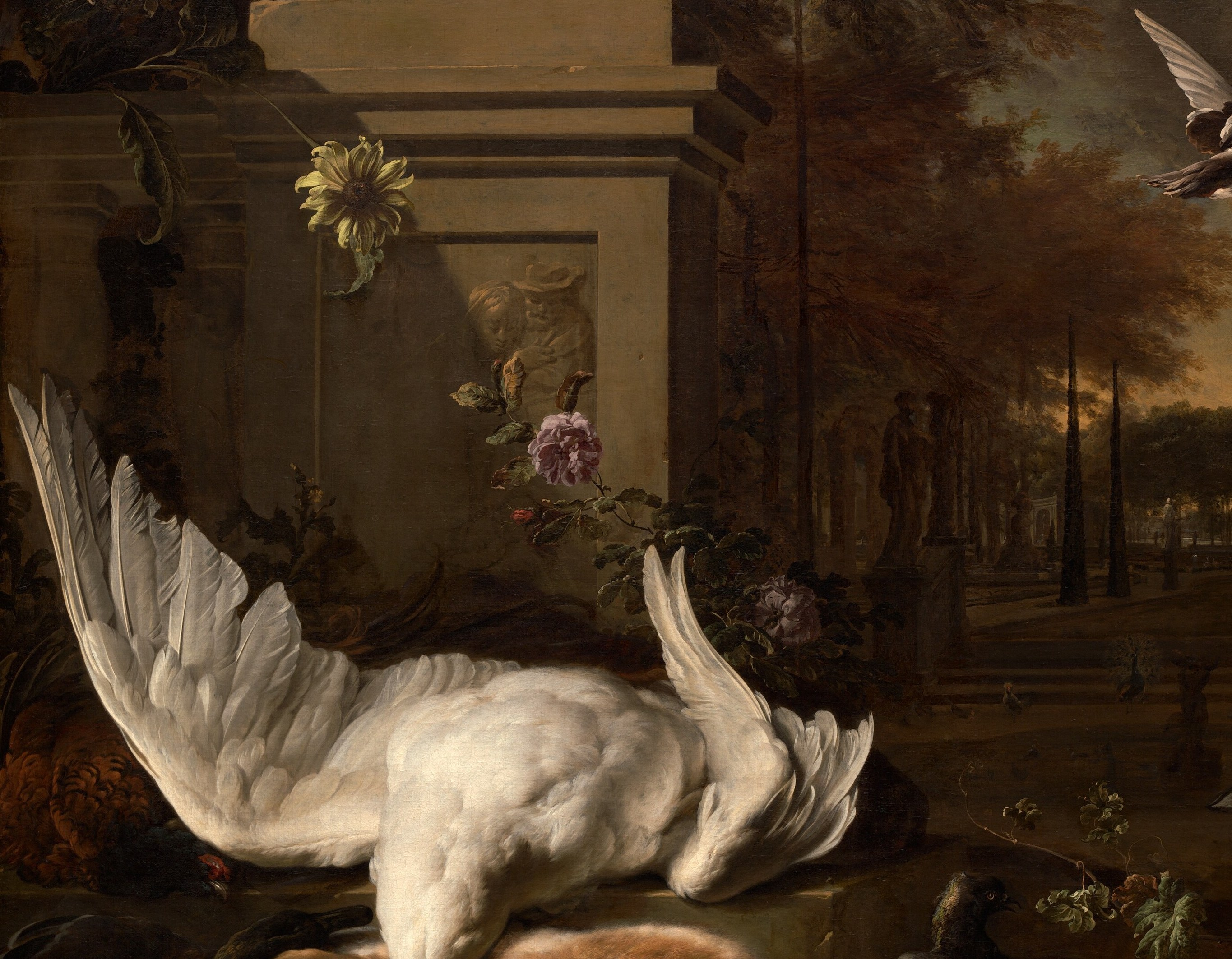
Jan Weenix painted this lavish display of dead game around 1685. It hangs now at the Rijksmuseum, but it was made for a private country house, a trophy room in oil paint.
The sheer white goose dominates the foreground, every feather barb rendered with unnerving precision. Scan the painting and you'll find a hare, pheasants, and smaller birds piled in a cascade of fur and plumage. The estate visible through the stone archway isn't scenery; it's the owner's property, the literal ground where this hunt took place.
Weenix was the son of Jan Baptist Weenix and trained alongside his cousin Melchior d'Hondecoeter, a family workshop that cornered the Dutch market for game still lifes. These paintings were commissioned by wealthy merchants who paid for exclusive hunting rights and wanted permanent proof of their status. The signature itself is carved into the stone ledge, as if the painting were part of the house.
Dead game paintings are easy to scroll past. But they're some of the most honest status symbols the Dutch Golden Age produced: nothing allegorical, just this is what I own and this is what I killed.
Details
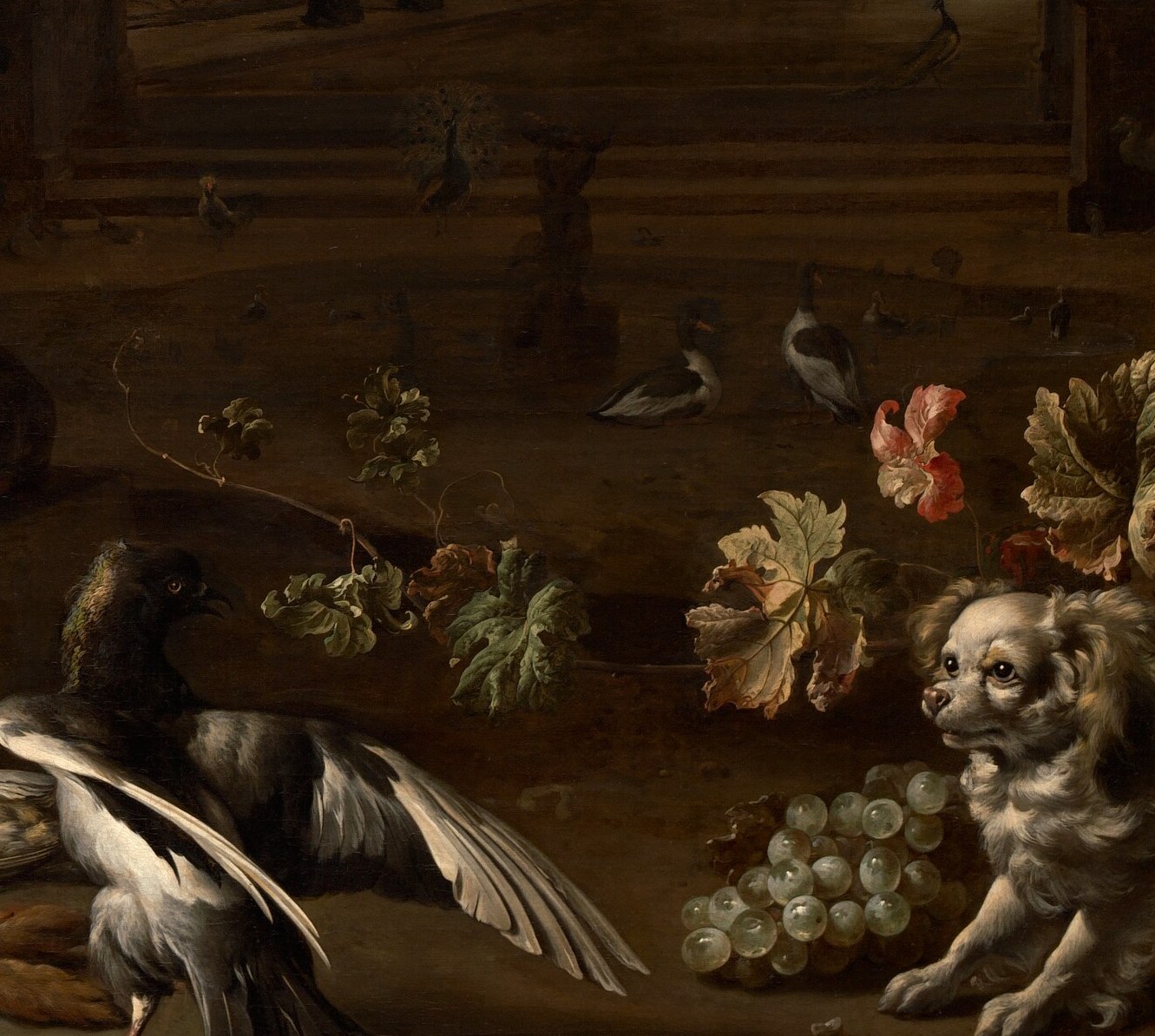
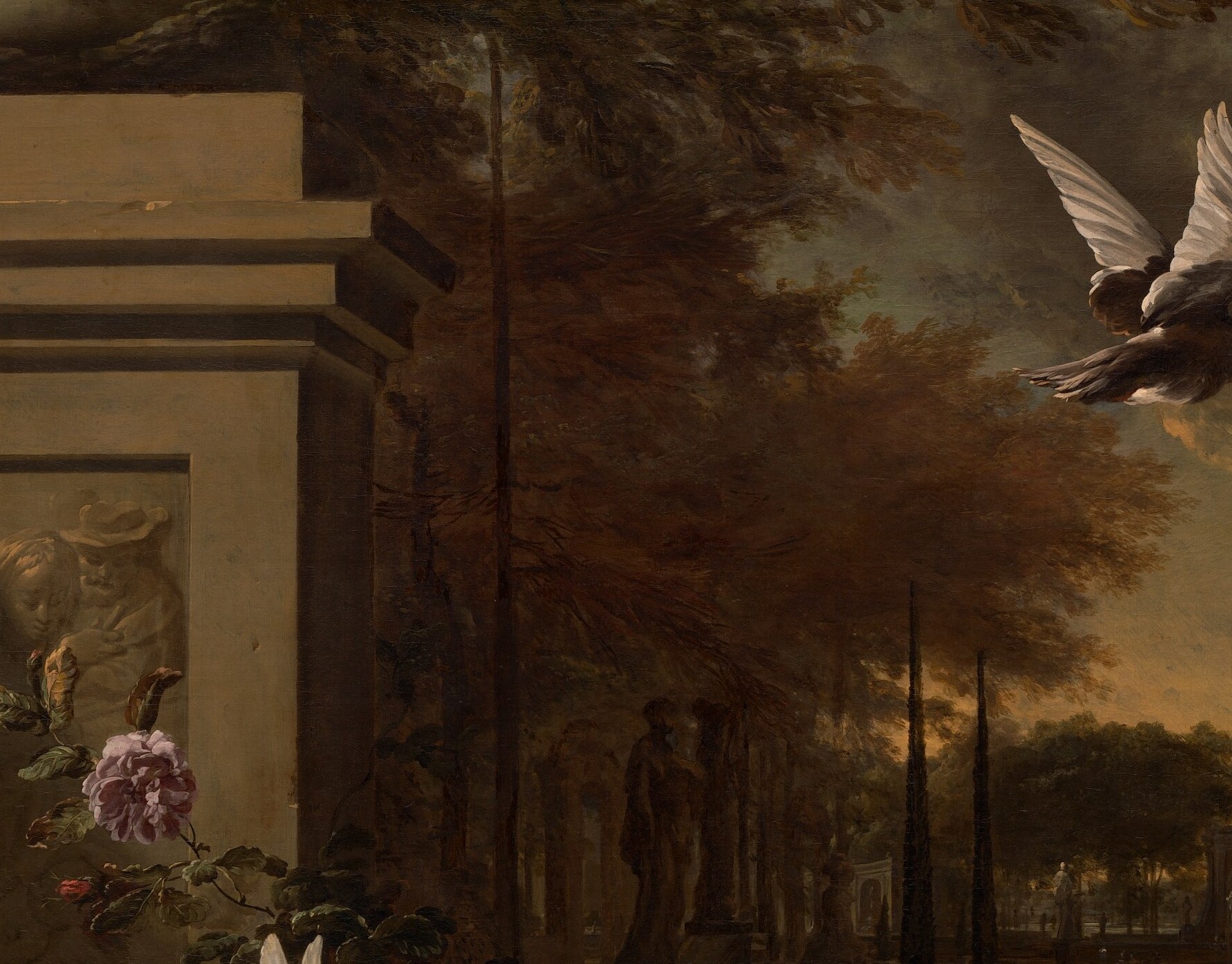
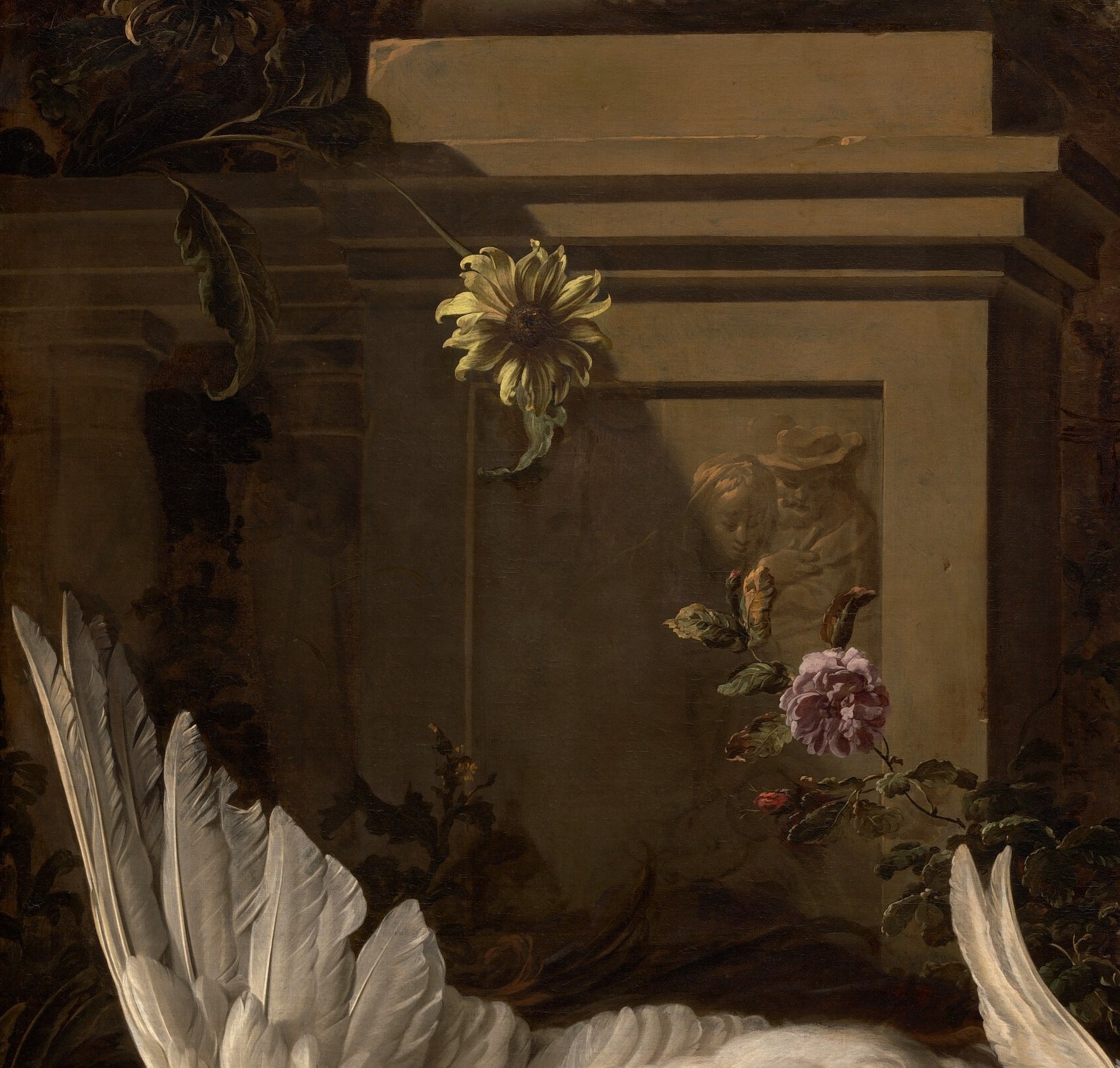
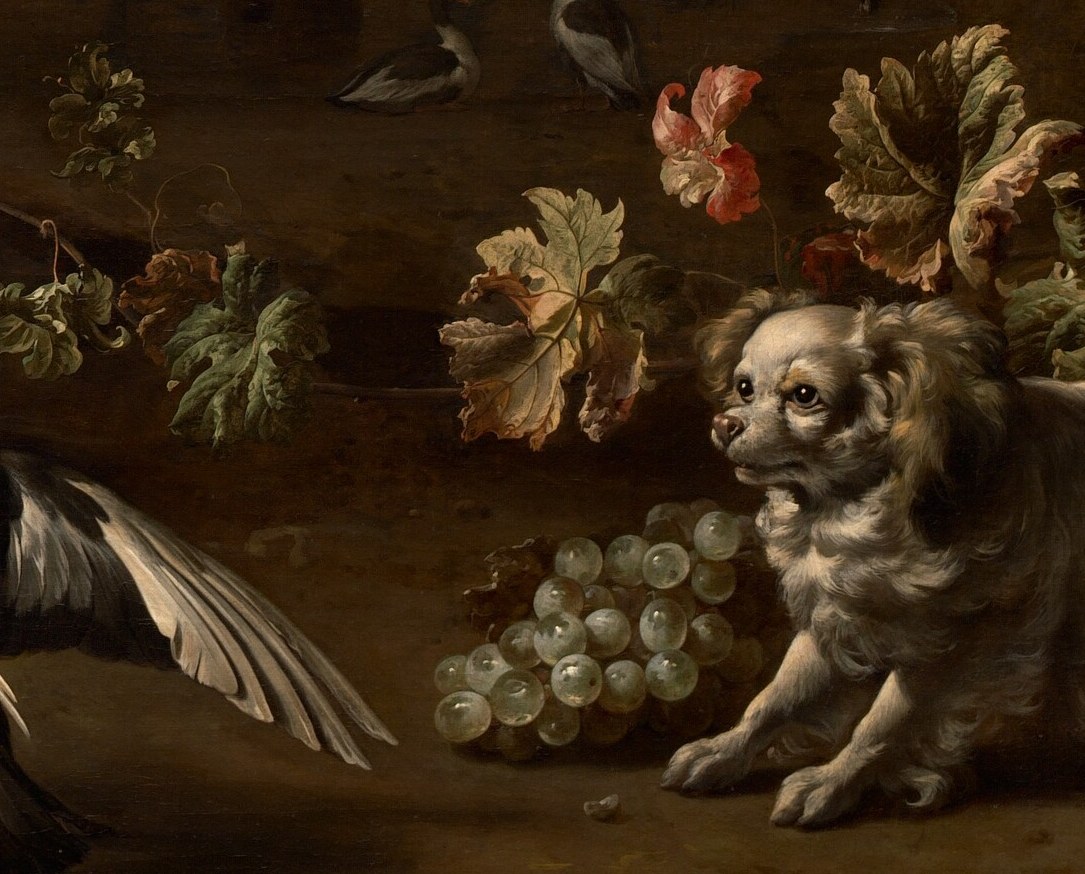
Transcript
This is not a kitchen scene. It's a trophy wall. A goose, a hare, pheasants, all laid out like a ledger of one day's hunt. The estate behind them is not a backdrop. It's the point. These hung in the country houses of Amsterdam merchants who paid fortunes to prove they owned hunting rights. Every feather is a receipt. Look at the wing. Weenix painted individual barbs so precisely the bird looks taxidermied, still, but permanent. And on this ledge, if you look closely: the artist's signature, carved into the stone.