Don Manuel Osorio de Zuniga by Francisco Goya
View the artwork: Don Manuel Osorio de Zuniga →
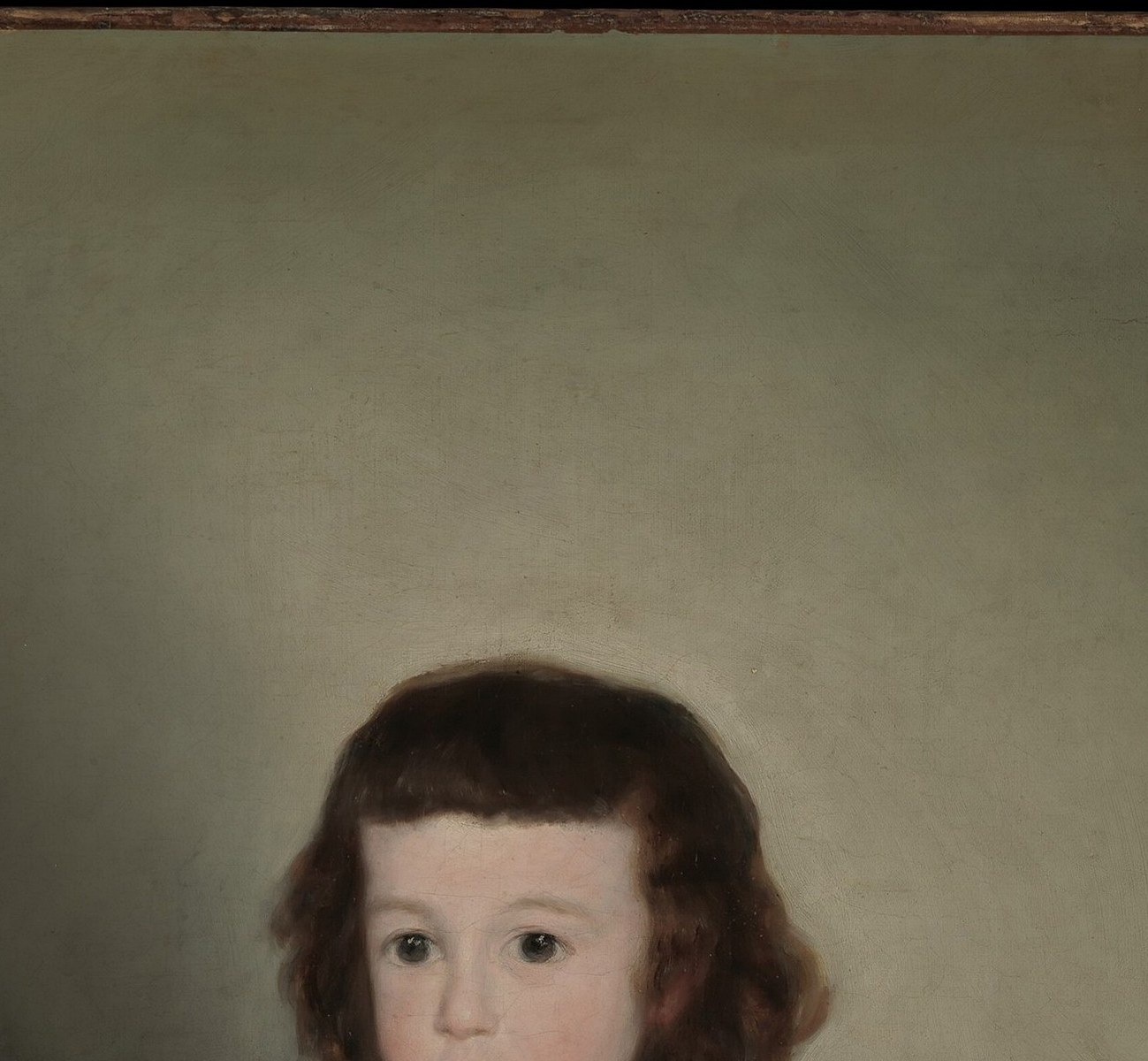
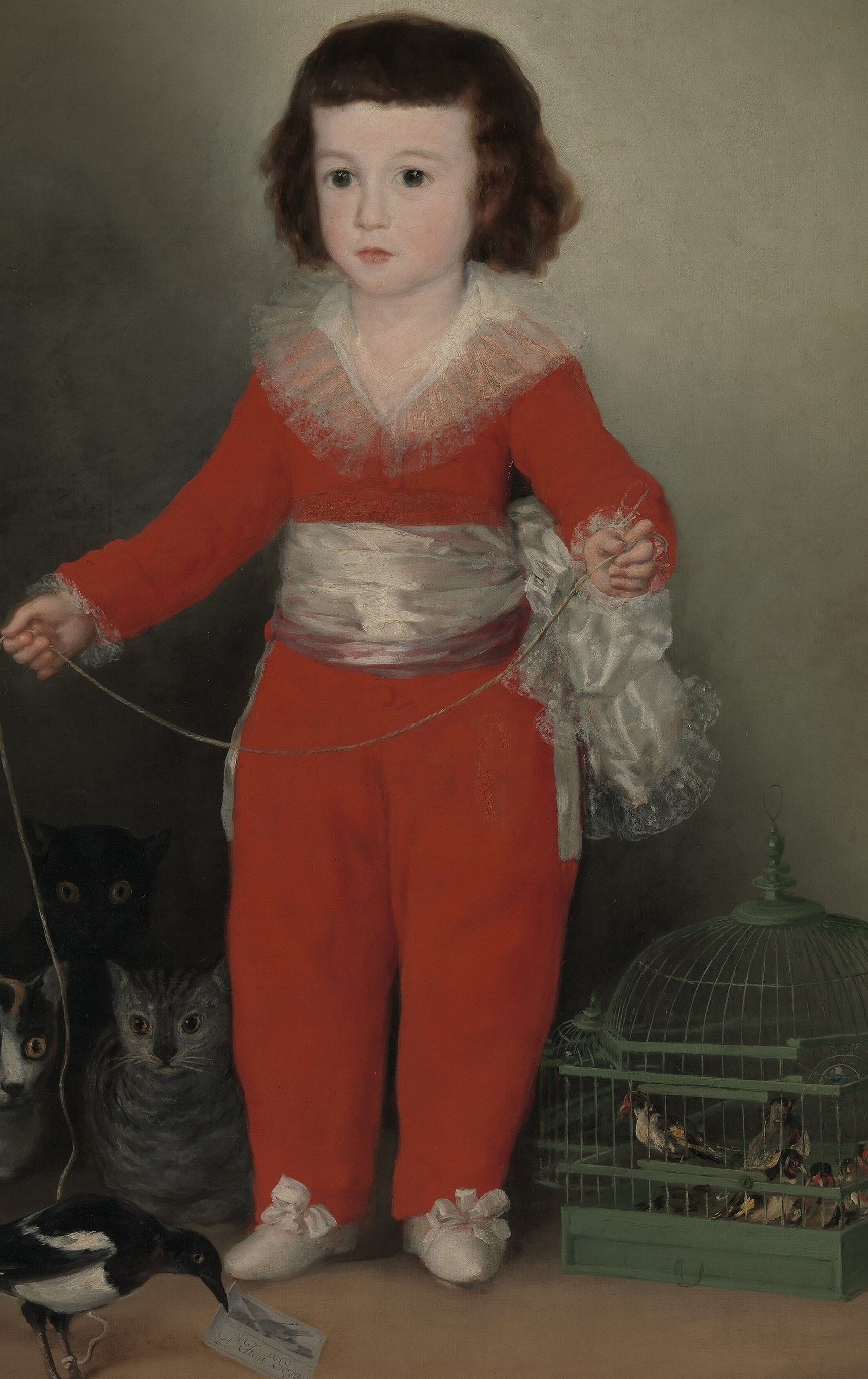
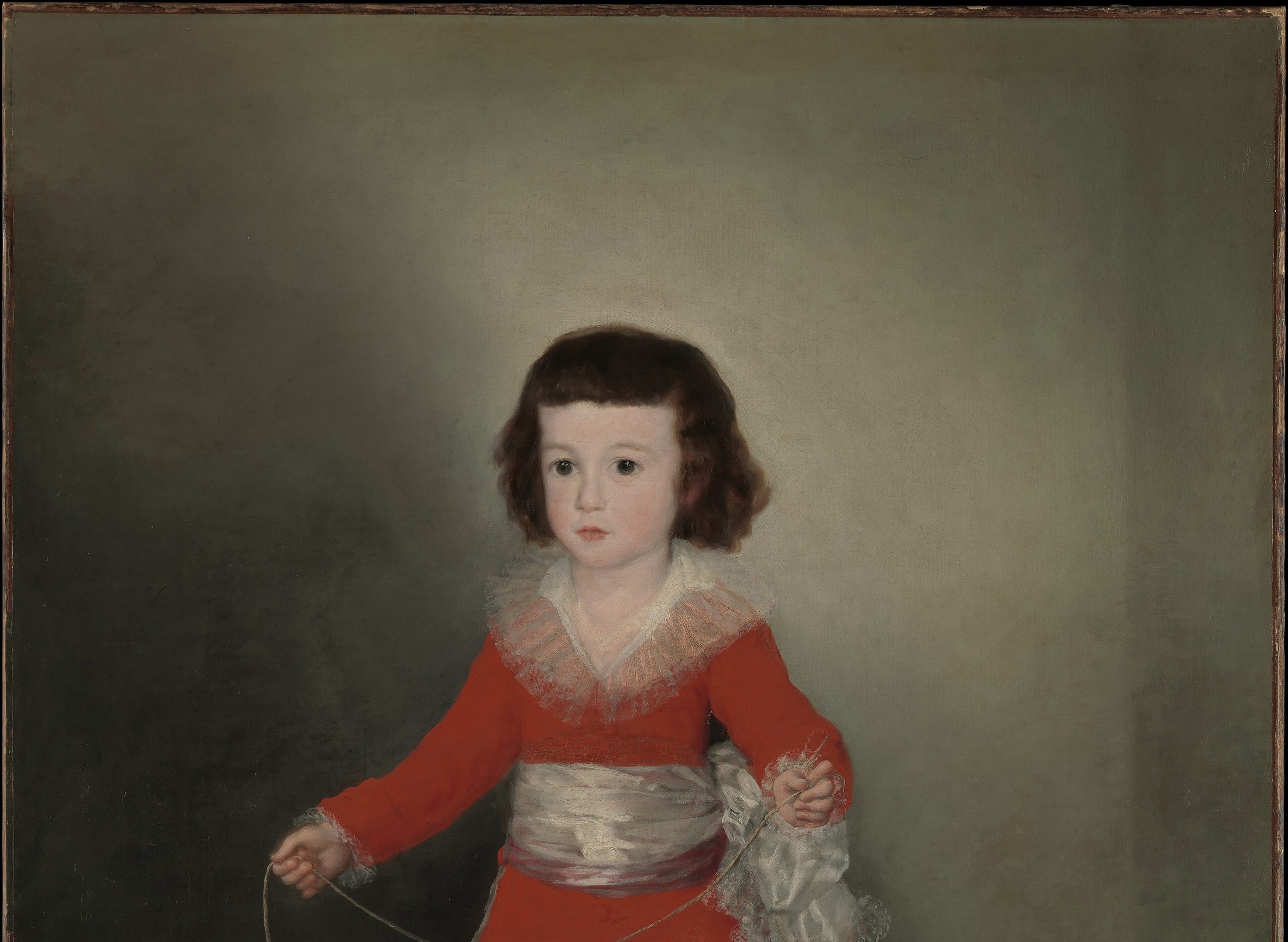
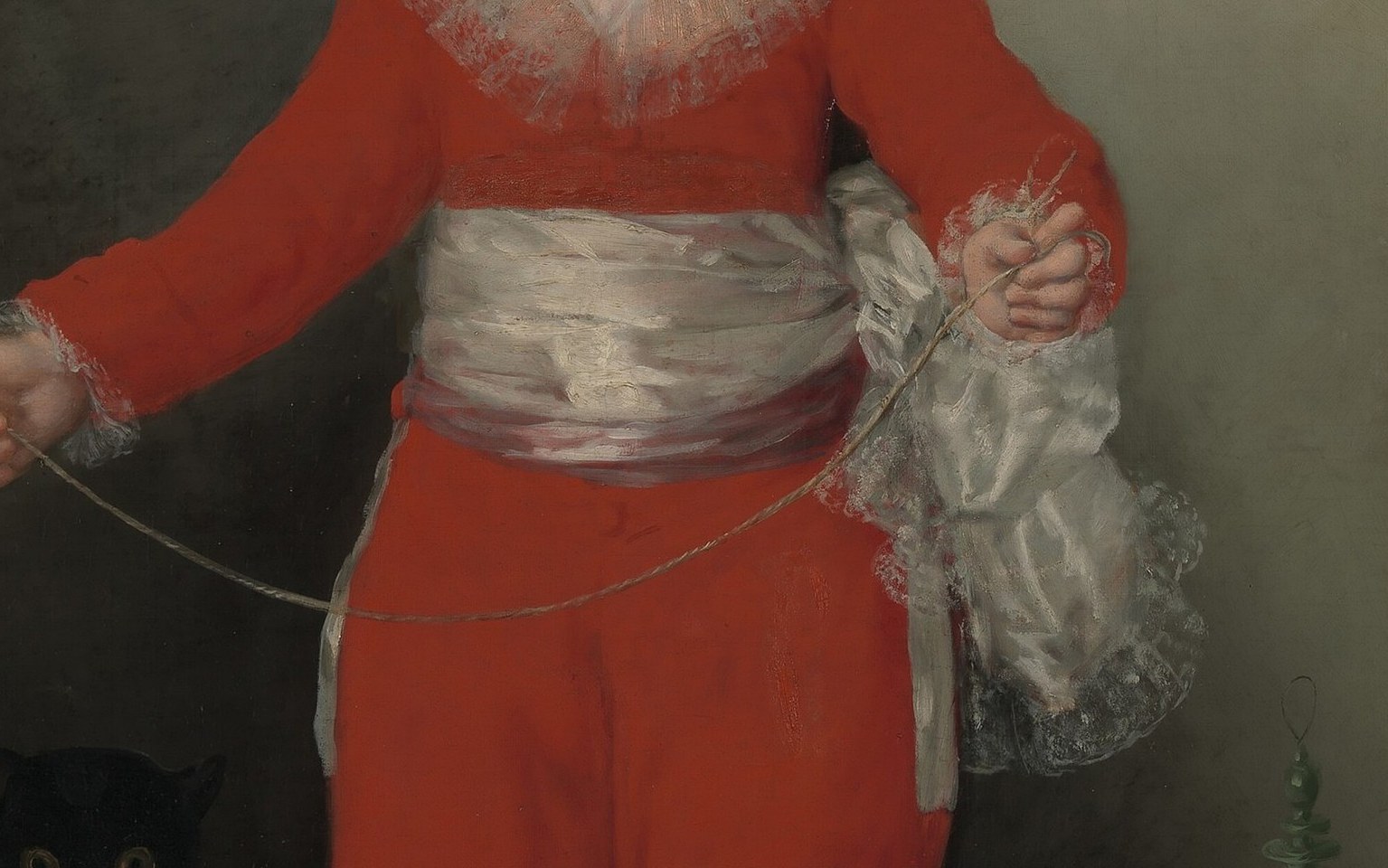
Francisco Goya painted "Don Manuel Osorio de Zúñiga" around 1787, and it hangs today at the Metropolitan Museum of Art in New York. The first thing that hits you is the suit, an almost unreal crimson that burns against the empty background and announces the child's aristocratic rank before you even see his face.
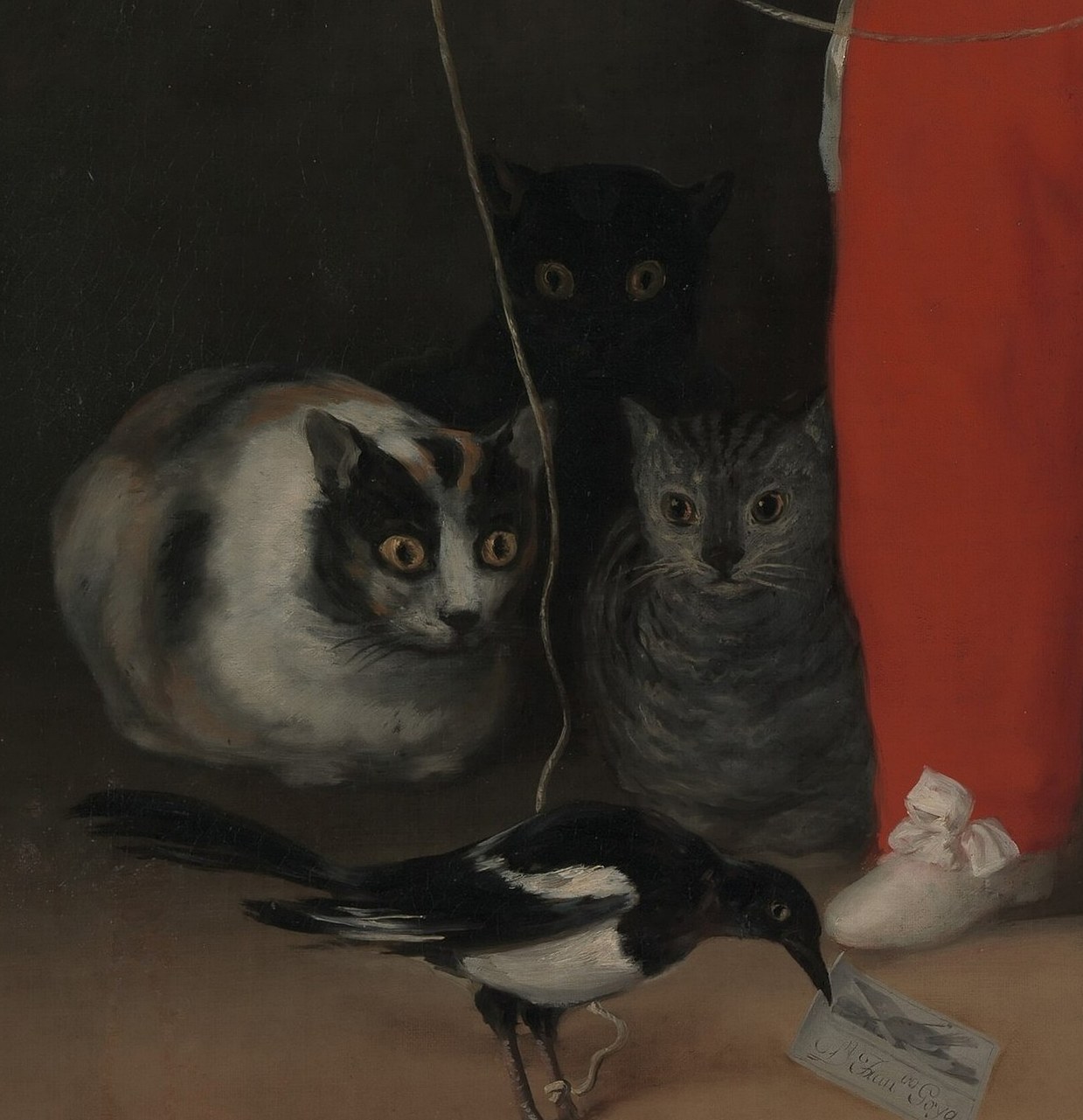
Look at the magpie. It holds a calling card in its beak, and on that card is Goya's own name. This was a private wink, the artist inserting himself into the picture at a time when he was becoming the most sought-after portraitist in Spain. The boy holds the bird's leash with a grip so casual it is unnerving; freedom could slip away at any moment.
Then your eye adjusts to the shadow. In the bottom left corner, barely distinct from the darkness, three cats are fixed on the magpie with undisguised hunger. Goya does not soften them or push them deeper into the background, he leaves them right there, patient and alert, beside the caged finches. The contrast between the glowing red child above and the stalking animals below turns a formal portrait into a memento mori, a meditation on watchfulness and vulnerability.
What does it do to you, noticing the cats after you have already looked at the boy? The whole painting shifts. It stops being about a child in fine clothes and starts being about what waits in the dark for the things we hold lightly.
#arthistory #franciscogoya #metmuseum
Details
Transcript
A boy in a blazing red suit. A very important child. He holds a magpie on a string. A calling card is tucked in the bird's beak: the artist's own. Goya painted this boy in 1787, for a family of immense power. Now look into the darkness, bottom left. Three cats stare at the bird. You missed them, didn't you? Goya planted predators beside innocence. The threat is real.