For the Track by Peto, John Frederick
John Frederick Peto's 1895 painting, "For the Track," is a fascinating still life that invites close inspection to reveal its true nature. What appears to be a collection of forgotten objects on an old door tells a story of horse racing and betting.
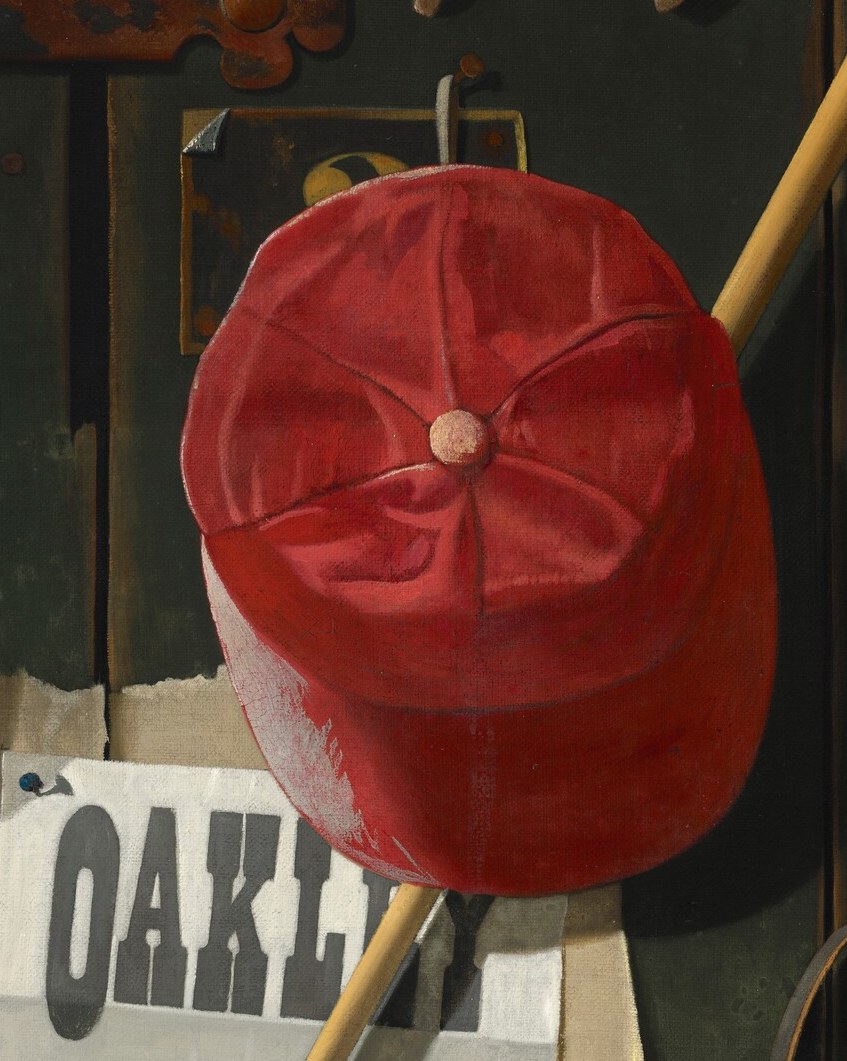
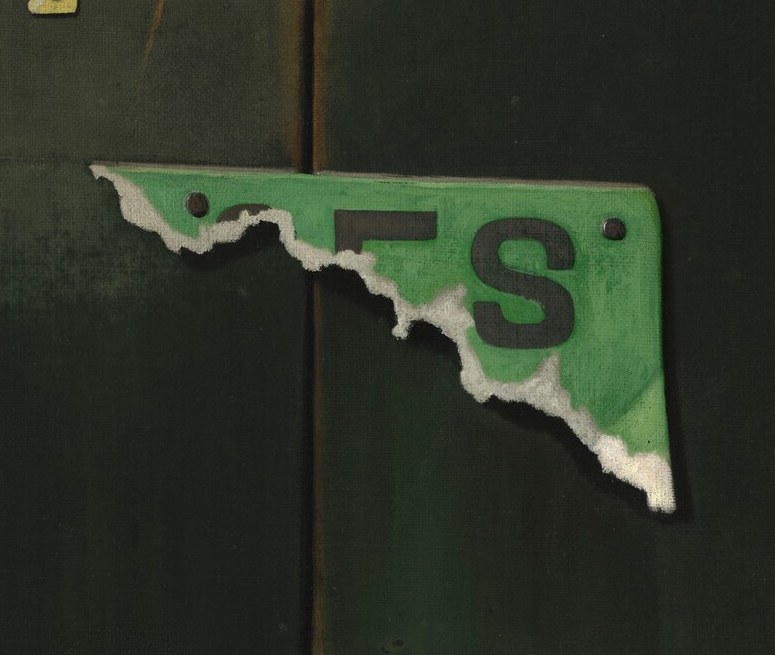
The canvas is filled with clues: a jockey's cap, a horse bridle, a lucky horseshoe, and torn racing tickets. These details suggest a world of excitement and perhaps past glories, all rendered with Peto's meticulous attention to detail.
Peto, known for his trompe l'oeil technique, often made ordinary objects extraordinary. Here, even his signature and the painting's date are incorporated as if part of the scattered ephemera, a clever touch that reinforces the painting's illusion.
"For the Track" is held in a private collection. What other secrets do you think Peto might have hidden in his paintings?
Details
Transcript
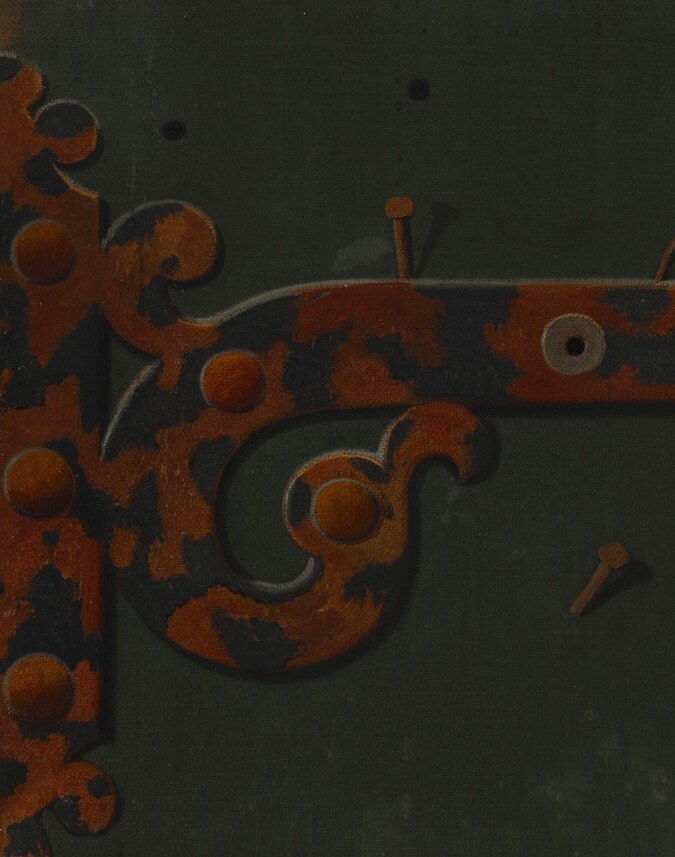
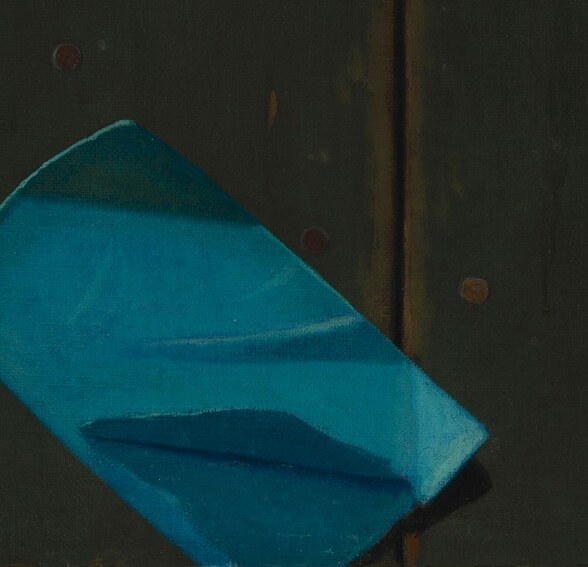
At first glance, this is a still life of forgotten things. A red jockey cap, a horse's bridle, a lucky horseshoe. They are all tacked to an old wooden door. Torn papers hint at the world these objects came from. This worn ticket confirms it: the track, and the bets. But look closely, there is another message hidden here. The artist signed and dated it, in plain sight.