Aurora by Will Hicok Low
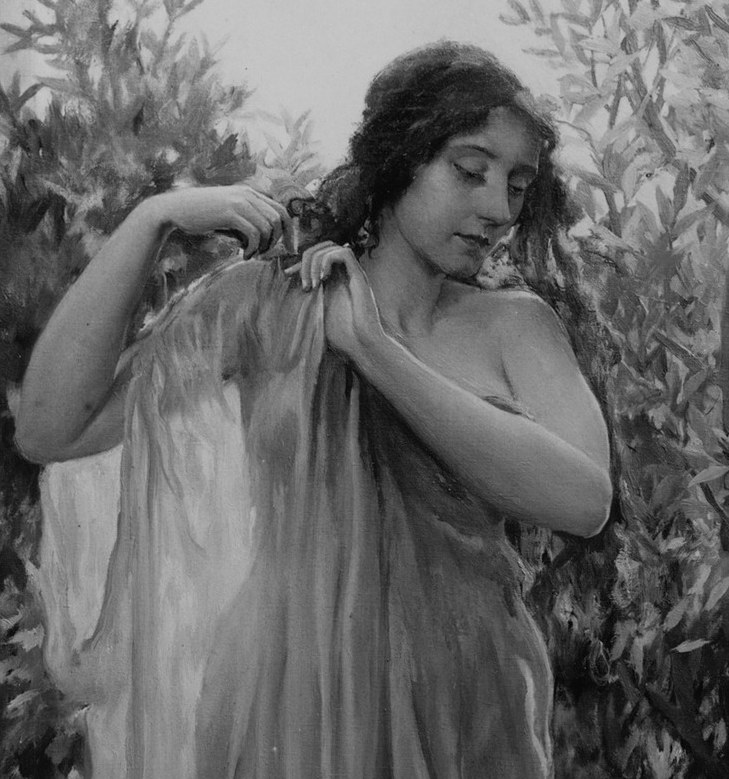
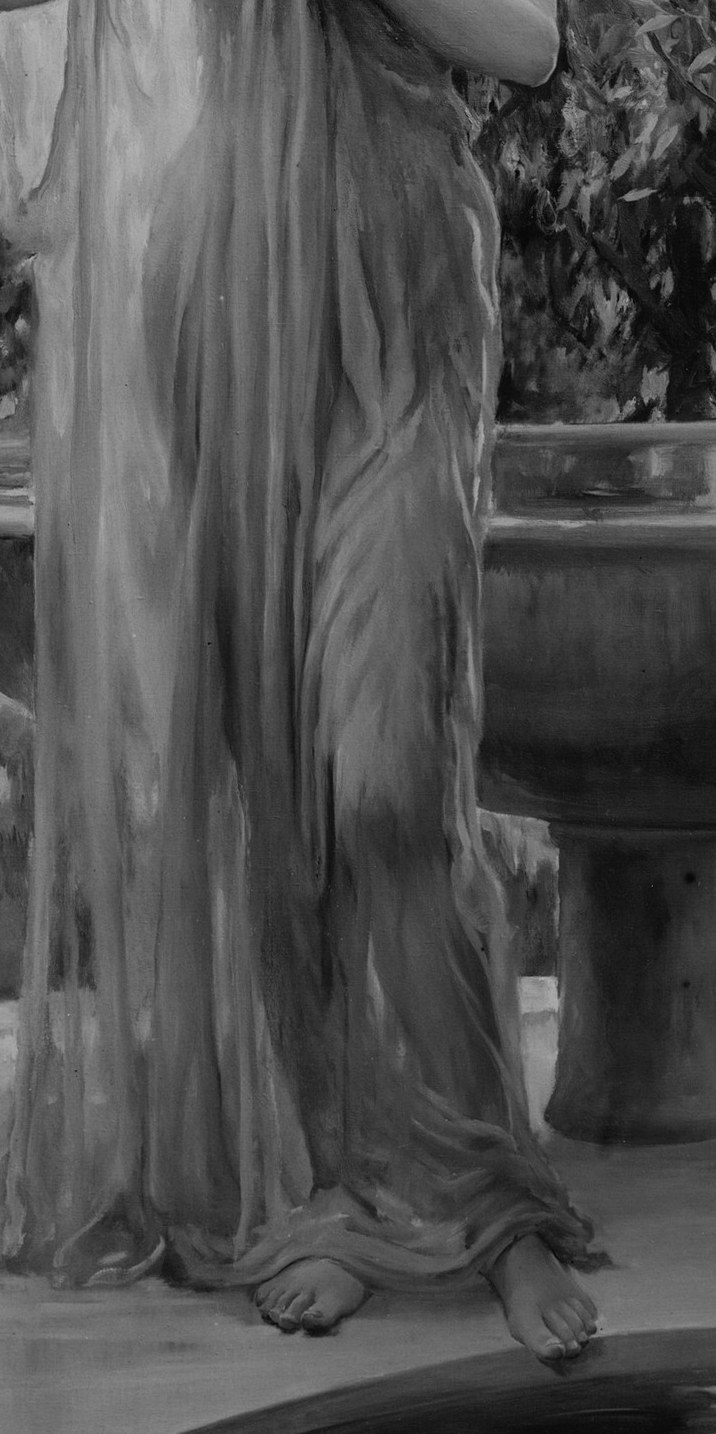
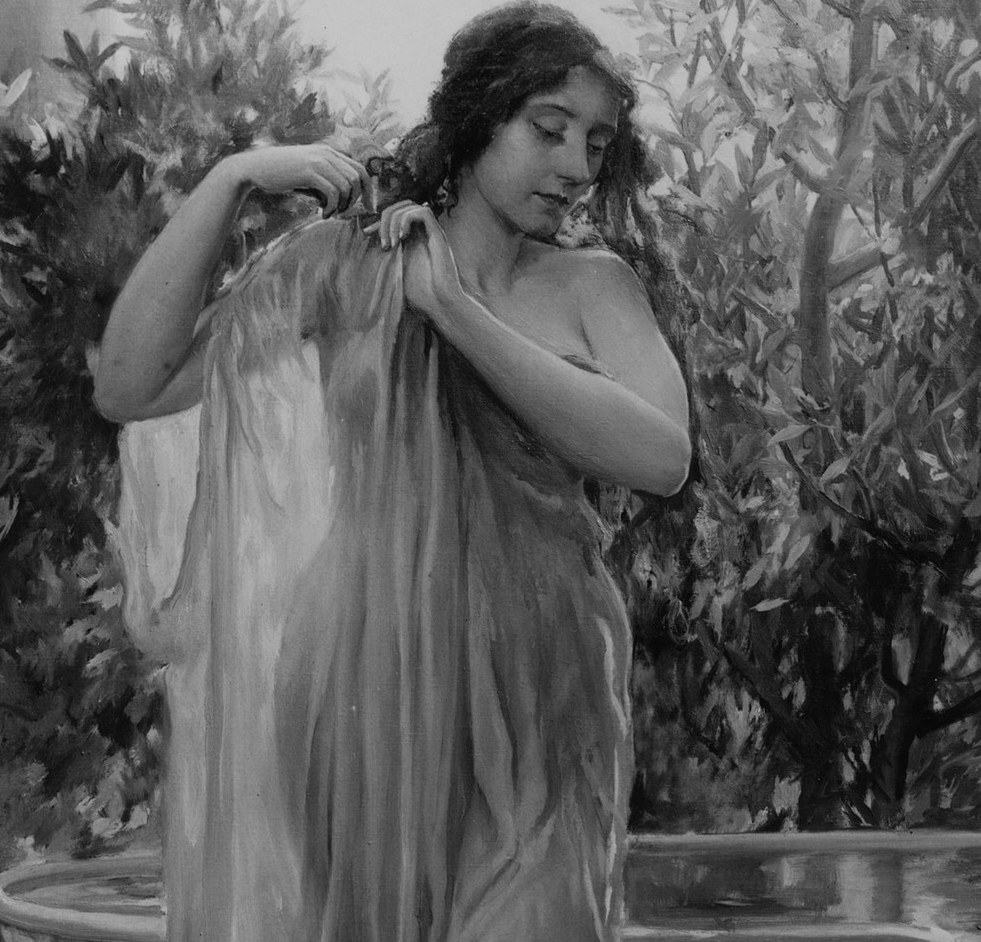
Will Hicok Low painted Aurora in 1898, and it hangs now in the Metropolitan Museum of Art. It is easy to read as a simple mythological scene, a goddess at a fountain, lifting a veil to the morning sky.
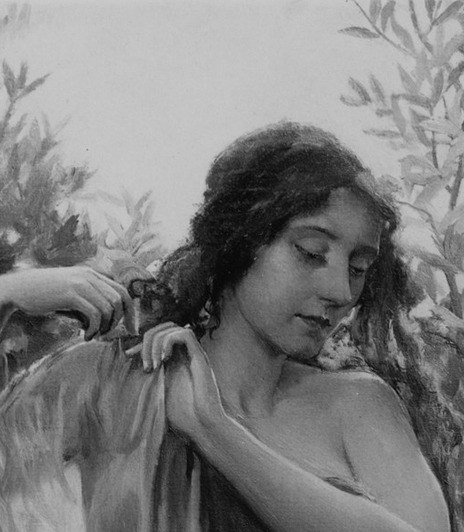
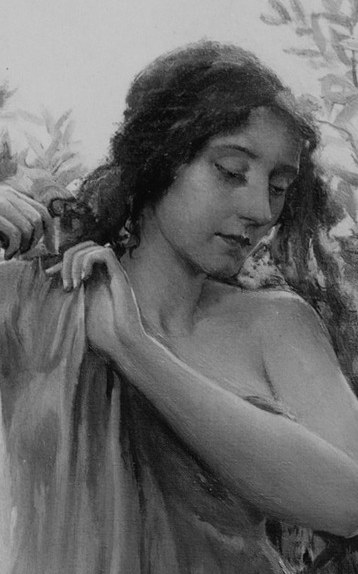
But the figure is not an impersonal Venus. Look at her face. The downward gaze, the stillness of the hands, the flowers in her hair. Low was not a young artist chasing a fashionable classical subject. He was a man in his forties, a respected painter and writer, who had lost his wife years before and chose never to marry again.
He painted the dawn goddess as a woman he would see only in memory. The translucent veil billowing above her head is the painting's technical showpiece and its emotional center, light passing through fabric that is almost not there, a presence made of air and paint.
Aurora scattered flowers across the sky each morning. Here, she wears them. She is the light returning.
Details
Transcript
She looks like a goddess caught at dawn. Her hands lift a veil that barely exists. But this is not a myth. It is a portrait of loss. The painter’s wife died young. He never remarried. Look at the light on her cheek. He painted her as the dawn itself, returning each morning.