Conversation Piece (The Sense of Smell) by Jan Ekels the Younger
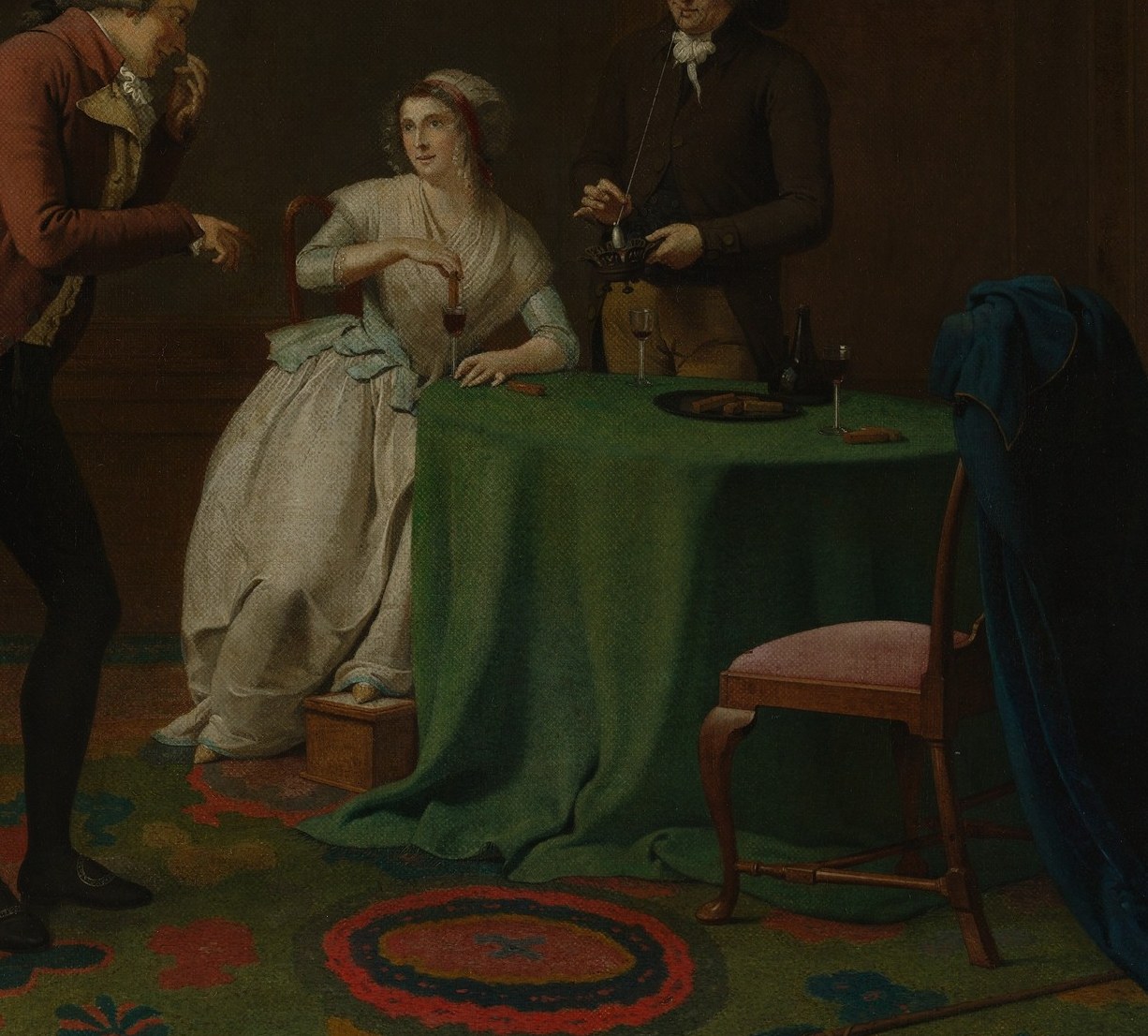
Jan Ekels the Younger finished "Conversation Piece (The Sense of Smell)" in 1796, and then he died. He was thirty-four. A stroke took him suddenly, and this quiet domestic scene, full of leaning postures and half-told gestures, became his accidental goodbye.
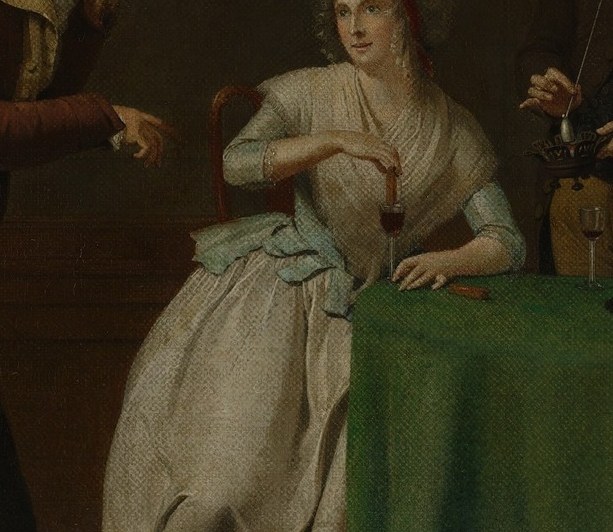
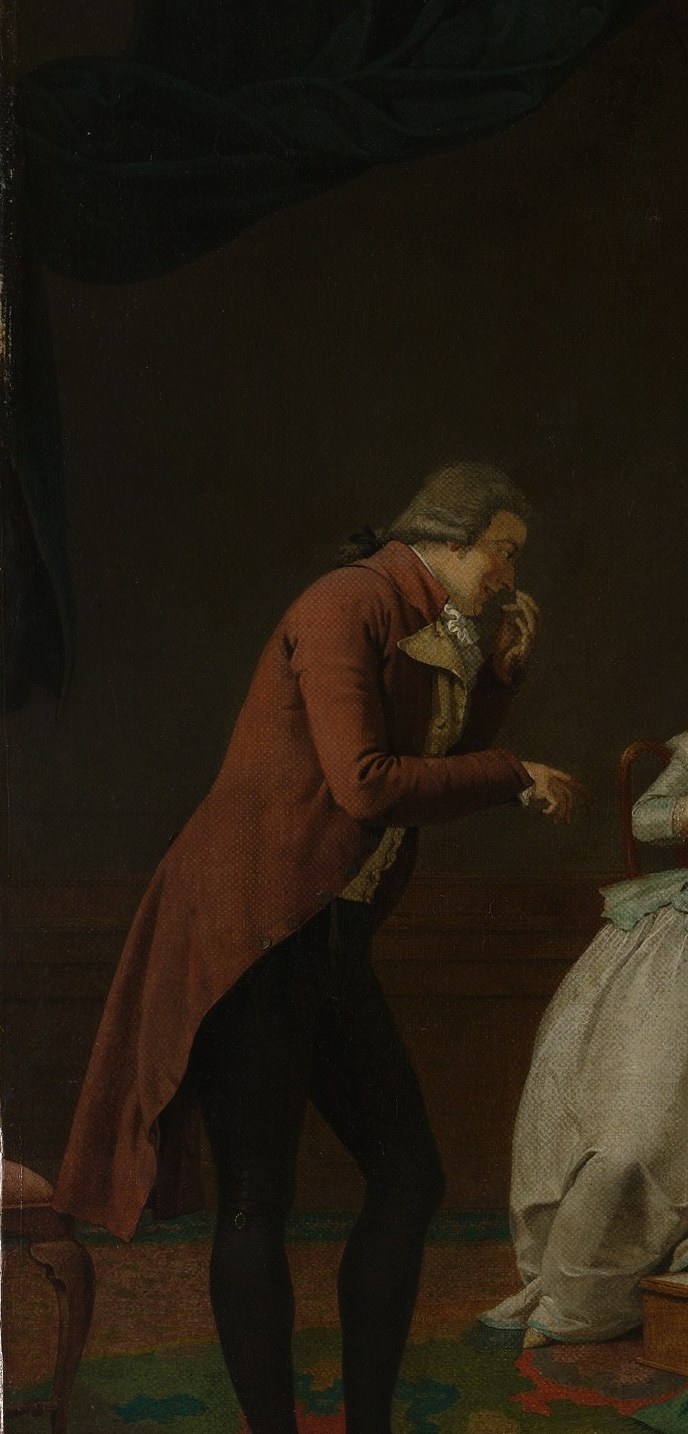
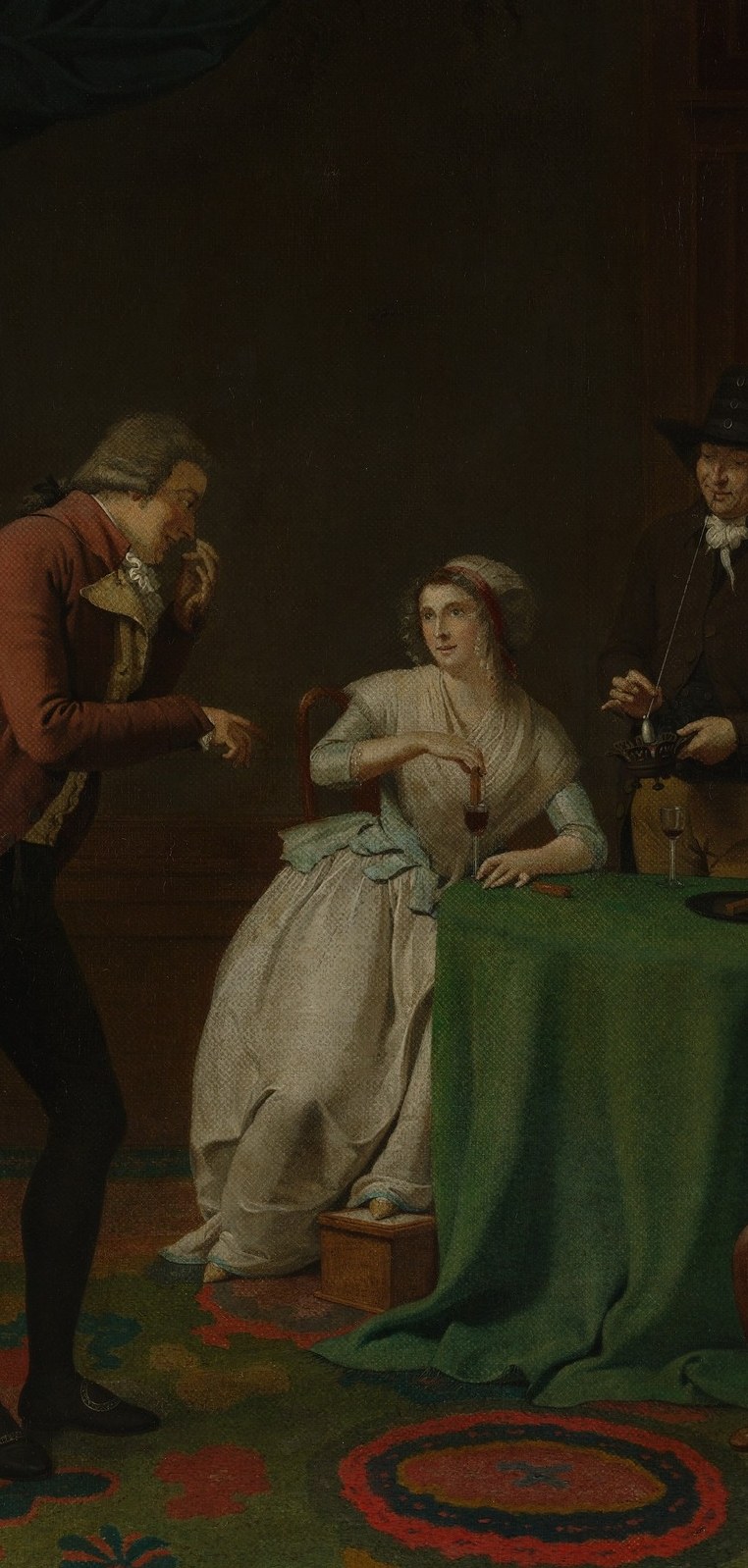
The painting stages one of the five senses. A man in a blazing red coat leans toward a seated woman in white. She holds something fragrant near the edge of the table. The title tells us this is smell, but the real subject is the gap between her composure and his eagerness. A second man watches from the right, dark-coated, detached, turning the exchange into a social triangle.
Ekels trained in Amsterdam under his father, then spent two years in Paris studying Chardin and the French neoclassicists. His Dutch eye never left him: the green tablecloth, the circular rug, the silk of the woman's dress all owe a debt to Ter Borch and Metsu. He won first prize at the Amsterdam drawing academy in 1781, traveled the Rhine, and never married. He lived alone in an expensive hotel on Nieuwe Doelenstraat after his mother died.
The Met now holds the painting. A small, skillful, unassuming work by a painter who ran out of time. What perfume is she offering him, and does the man in the shadows already know?
Details

Transcript
Jan Ekels the Younger was thirty-four when he painted this. He died the same year. A stroke, out of nowhere. Look at the man in red. He leans in, hungry for the scent. She holds the perfume. She is the one in control. This was his last conversation piece. No one knew it at the time.