Philip II on Horseback by Peter Paul Rubens
Peter Paul Rubens' *Philip II on Horseback*, painted in 1635, captures the Spanish monarch as a formidable and victorious leader. Housed in the Museo del Prado, this oil painting showcases Rubens's signature Baroque style.
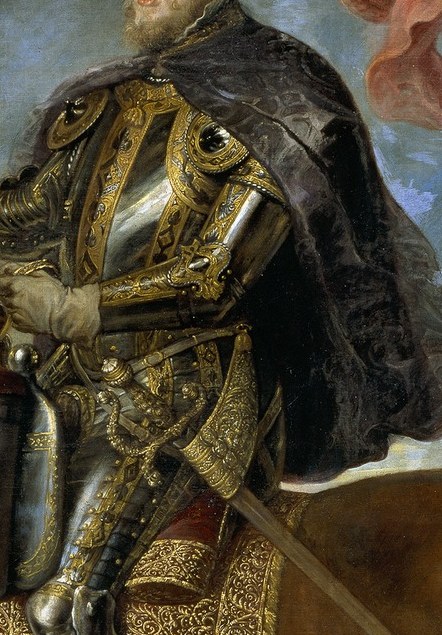
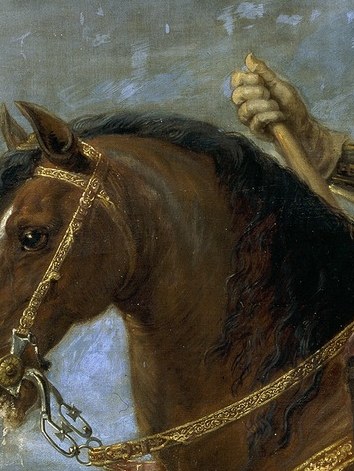
Observe Philip II's commanding presence, clad in gleaming armor and astride a powerful horse. The winged figure, interpreted as Victory, presents him with a laurel wreath, a classical symbol of triumph and honor.
Rubens, a celebrated Flemish artist and diplomat, often blended classical allegory with political portraiture. This work positions Philip II within a lineage of heroic rulers, a common practice in 17th-century court imagery that solidified a monarch's power and legacy.
What do you notice first about this dynamic composition?
Details
Transcript
This Spanish king, Philip II, was a complex figure. Rubens painted him here as a powerful, victorious ruler. A winged figure, symbolizing Victory, hovers above him. She offers the king a laurel wreath, a classical sign of triumph. His ornate armor and sword highlight his martial authority. The dramatic sky emphasizes his steadfast leadership amidst conflict.