Tropical Forest with Monkeys by Rousseau, Henri
View the artwork: Tropical Forest with Monkeys →
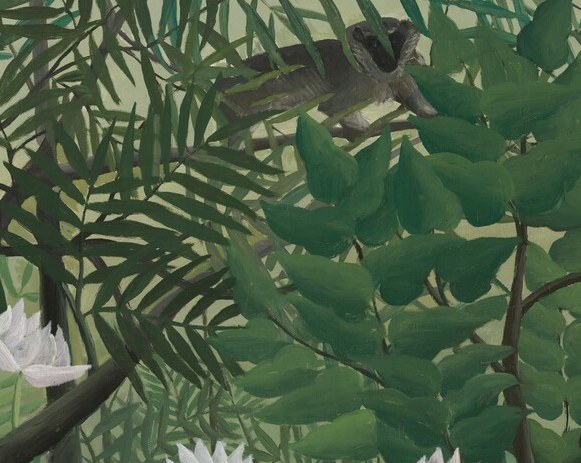
Henri Rousseau never left France. He painted "Tropical Forest with Monkeys" in 1910, the last year of his life, from a studio in Montparnasse, using the Jardin des Plantes and illustrated books as his jungle. The result is a world built entirely from imagination and close looking at captive things.
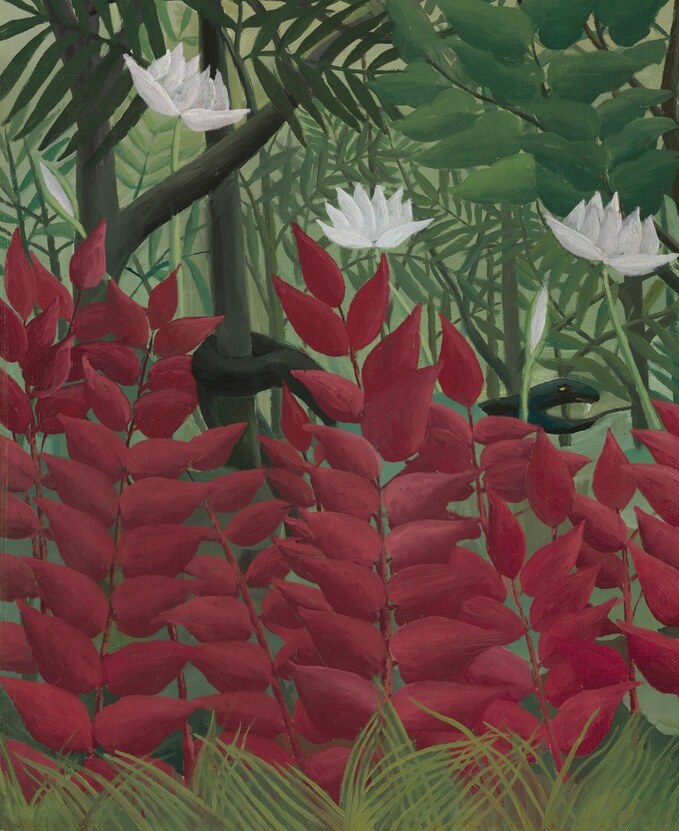
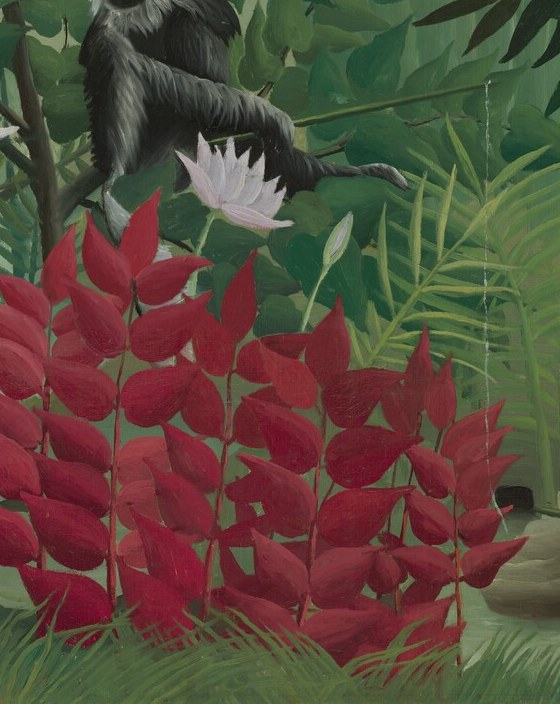
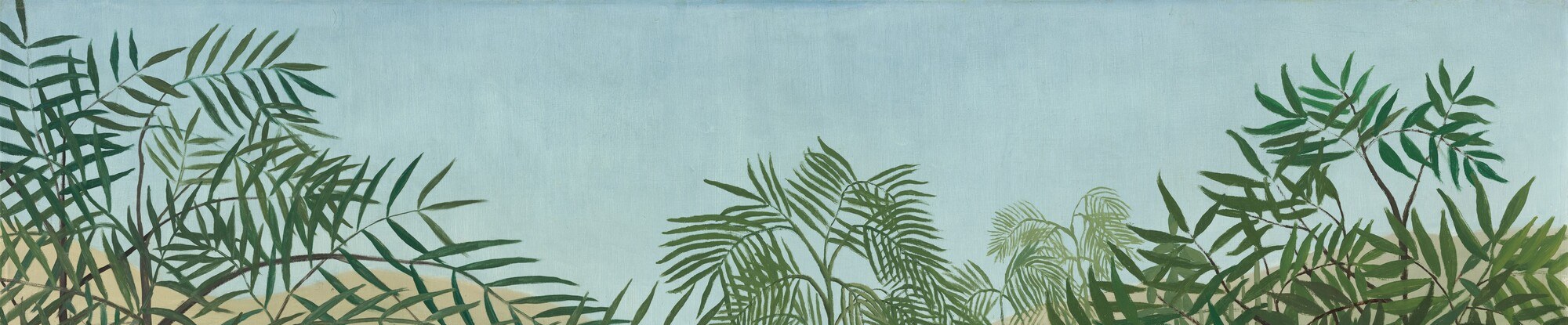
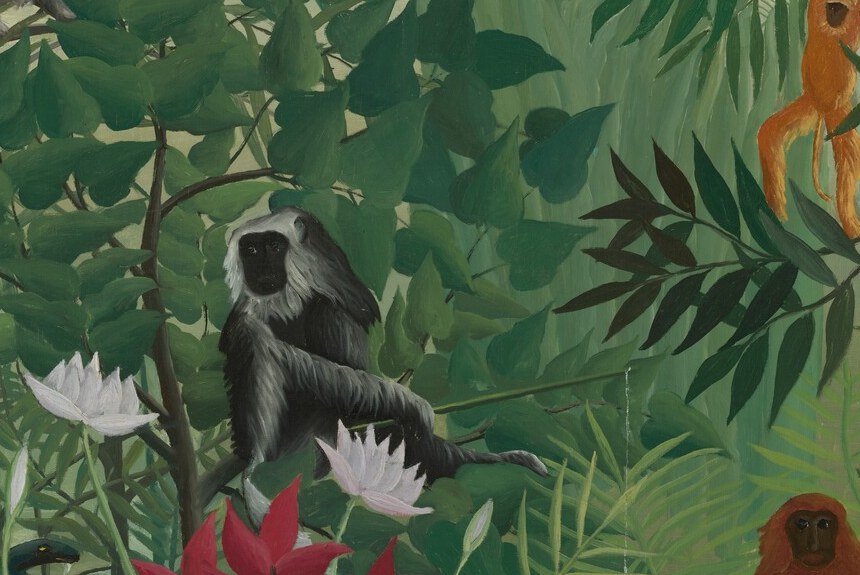
Most people see the large monkey first. Stay with the painting and a snake emerges from the mid-canopy leaves, rendered in the same dark greens, almost invisible until you find it. Then the eye drifts right and lands on the most surprising element: a human figure with a fishing rod, placed at the margin with no fanfare, as if the jungle were a Sunday afternoon spot.
The man's presence is the painting's quiet provocation. In 1910, France's colonial empire was at its peak, and images of exotic landscapes were popular. Rousseau, a retired toll collector nicknamed "Le Douanier," was painting the fantasy of the tropics that ordinary Parisians carried in their heads. Adding a fisherman turns the jungle into leisure, a place to visit rather than a wilderness to fear.
Rousseau died in September 1910 from an infected leg wound and was buried in a pauper's grave. A year later a retrospective cemented the reputation of the self-taught painter whose flat, meticulous jungles the critics had mocked. The fisherman is still there, tucked in the corner, waiting to be noticed.
#arthistory #henrirousseau #naiveart
Details
Transcript
He never saw a jungle. Rousseau built his tropics from the Paris zoo and botanical gardens. Look past the monkey. A snake threads through the leaves. Now the edge of the canvas. A man fishes here as if the jungle were a city park.