The Voyage of Life: Manhood by Cole, Thomas
View the artwork: The Voyage of Life: Manhood →
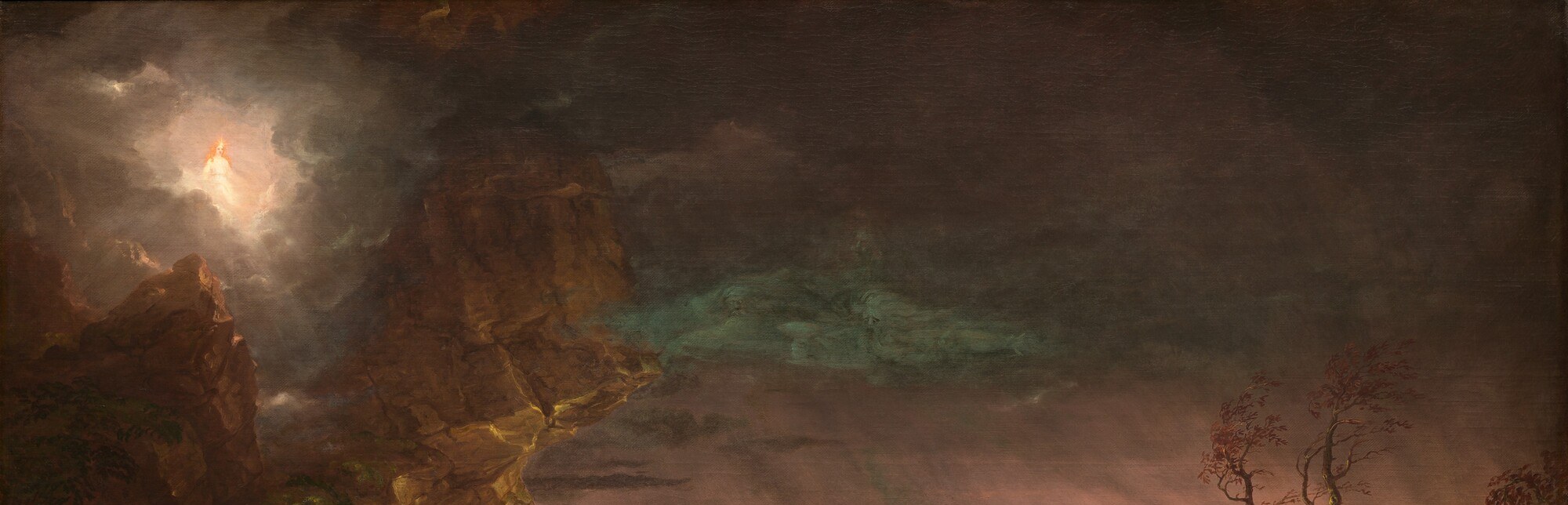
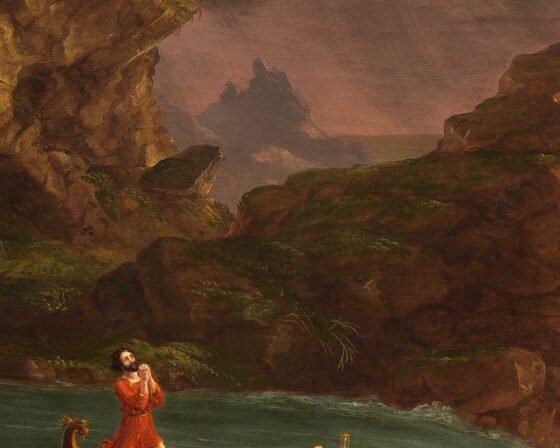
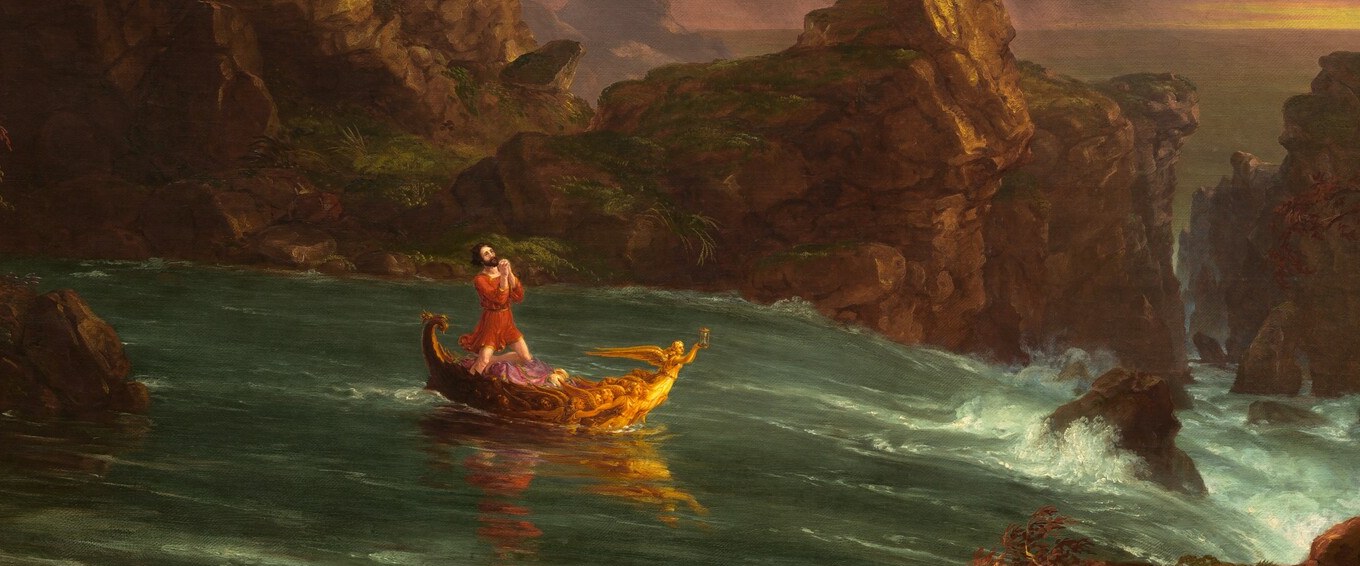
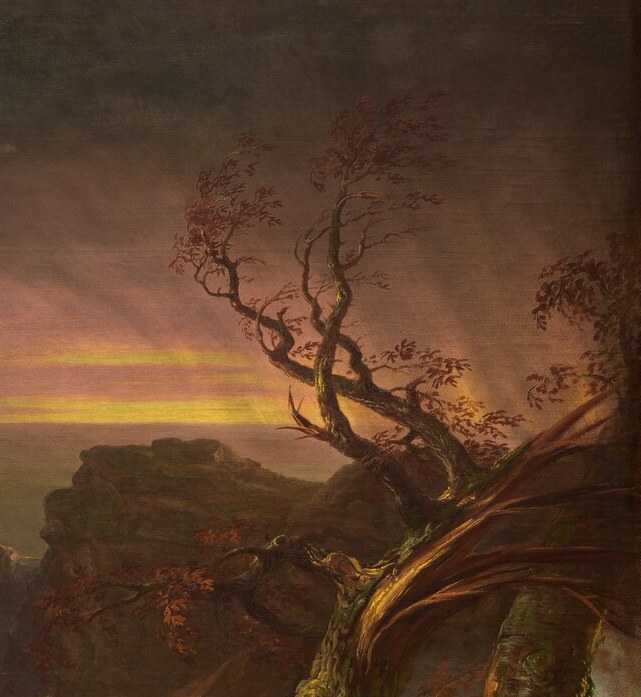
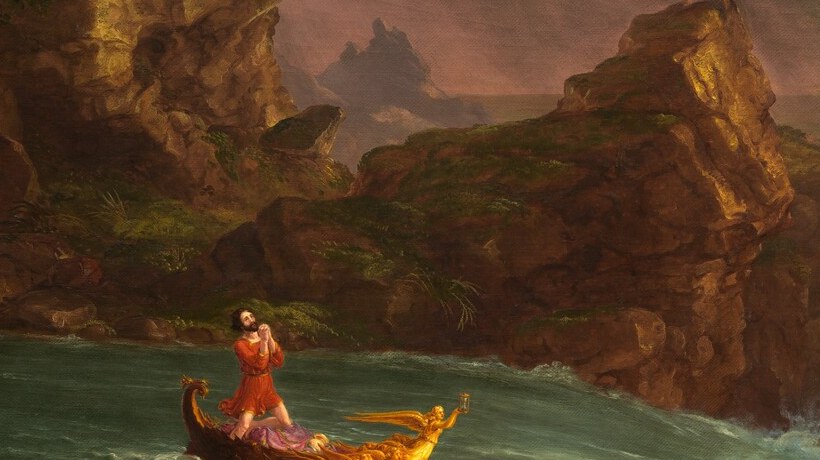
Thomas Cole painted his fears into the weather. The Voyage of Life: Manhood (1842) is the third painting in his four-part allegorical series, now at the National Gallery of Art. At a glance it reads as Romantic landscape: a lone traveler, a battered boat, rapids, and a storm. But Cole, a devout man prone to anxiety, gave the clouds a secret.
Look into the storm mass at the upper right. At first you see roiling darkness. Then the shapes resolve: faces. Cole wrote that he painted the demons of midlife, Manhood, Intemperance, and Suicide, directly into the clouds. They are not symbolic in a loose sense; they are rendered faces pressing down on the figure. The discovery changes the painting from mood piece to moral warning.
The series was commissioned by the banker Samuel Ward after the death of a patron. Cole delivered four canvases tracing the human journey down the river of life: Childhood, Youth, Manhood, and Old Age. Manhood is the crisis panel. The angel who guided the boat in earlier scenes has withdrawn to a distant break in the sky. Cole believed divine presence does not intervene in adult struggles; it must be sought. The traveler prays, and the demons leer, and the gorge offers no exit.
A decade earlier Cole had painted a dead man’s body floating face down in a forest pool. A critic called it a disgrace. Cole never painted a corpse again. He learned to hide his horrors in plain sight, as clouds.
#arthistory #thomascole #hudsonriverschool
Details
Transcript
A man alone in a boat, praying. The river is rapids. The cliffs offer no shore. Thomas Cole painted this in 1842 as the third panel of a life cycle. Now look into the storm. Cole warned that despair takes demonic form. Intemperance. Suicide. Manhood's worst fears, hidden in the clouds.