Artwork
The Voyage of Life: Manhood
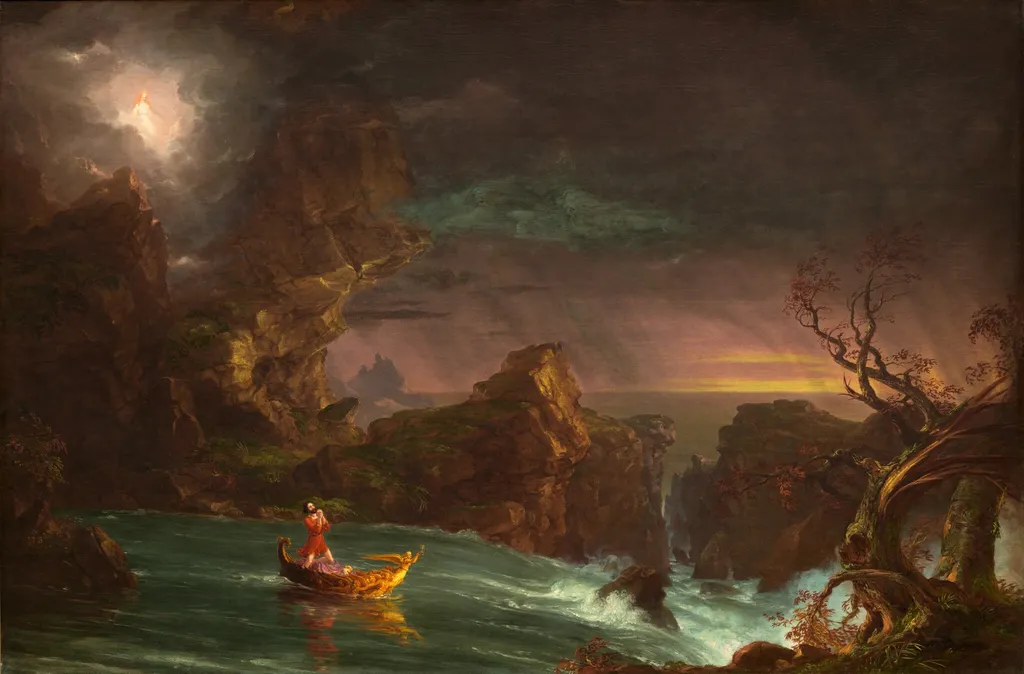
The Voyage of Life: Manhood is an oil painting by the Hudson River School artist Thomas Cole. It dates from 1842 and is held in the collection of the National Gallery of Art.
About this work
Technique & Style
The Voyage of Life: Manhood is an oil painting on canvas created in 1842 by Thomas Cole. It measures roughly 134.3 cm in height by 202.6 cm in width and depicts a boat and a tree within an allegorical landscape. The work is part of Cole's series illustrating the stages of human life, emphasizing narrative and symbolic elements. It is now held by the National Gallery of Art, Washington, D.C.
History & Provenance
Shoenberger of Cincinnati, likely between 1845 and early 1847, though a May 1846 newspaper reference suggests Shoenberger already owned it by then.
Thomas Cole completed Manhood, part of The Voyage of Life series, in 1842. The artist sold the work to George K. Shoenberger of Cincinnati, likely between 1845 and early 1847, though a May 1846 newspaper reference suggests Shoenberger already owned it by then. After Shoenberger's death on 20 January 1892, the painting passed to his heirs.
In 1908 Ernst H. Huenefeld purchased the work and donated it to the Bethesda Hospital and Deaconess Association of the Methodist Church in Cincinnati. The institution retained ownership until 17 May 1971, when the piece was sold through Hirschl & Adler Galleries, New York, to the National Gallery of Art, Washington, D.C.
Context
Thomas Cole's 1842 oil on canvas The Voyage of Life: Manhood is the pivotal allegorical image in his Voyage of Life series, merging Romantic landscape conventions with moral symbolism. Scholarship places the work within Cole's broader effort to visualize the stages of human existence, linking it to nineteenth-century American art and transcendentalist currents. Documentation of its early ownership by the Cincinnati merchant George K. Shoenberger, its inheritance by his heirs, and its later sale to the National Gallery of Art illustrates the painting's recognised importance within the artist's legacy.
Legacy
The Voyage of Life: Manhood entered the National Gallery of Art's collection in 1971 after a sale through Hirschl & Adler Galleries, confirming its status as a key example of Thomas Cole's allegorical landscape work. The painting, an oil on canvas of 1842, is catalogued in the Gallery's records as both an allegory and a landscape, reflecting Cole's symbolic use of a boat and tree to convey human experience. Its place in a major public collection has sustained scholarly interest and reinforced the series' reputation as a cornerstone of nineteenth-century American art.
Overview
The Voyage of Life: Manhood (1842) is the second panel in Thomas Cole's allegorical series, The Voyage of Life, which traces the human journey from childhood to old age. In this oil on canvas work, a traveler sits in a small boat, gripping the tiller as he navigates a turbulent, dark river flanked by jagged cliffs and a stormy sky. The figure, representing manhood, appears anxious and isolated, contrasting with the serene confidence of the childhood figure in the preceding panel.
A gnarled, leafless tree clings precariously to the rocky shore, symbolizing the fragility of life and the loss of innocence. Cole employs dramatic chiaroscuro and a moody, Romantic palette to emphasize the peril of the middle years, where the path forward is obscured by mist and the waters are rough. Created during the height of the Hudson River School movement, this painting reflects Cole's interest in using landscape to convey moral and spiritual narratives.
The work stands as a definitive example of American Romanticism, illustrating the artist's belief that nature serves as a mirror for the human soul's struggles against fate and the unknown.
Subject & Meaning
In "Manhood," a lone figure in a boat confronts turbulent waters, with a prominent tree on the nearby shore. These elements are integral to the painting's symbolic language, where the boat often represents the individual's life journey and the tree can signify stability or the passage of time. The challenging environment reflects the trials and decisions characteristic of this specific life stage within the overarching narrative of the series.
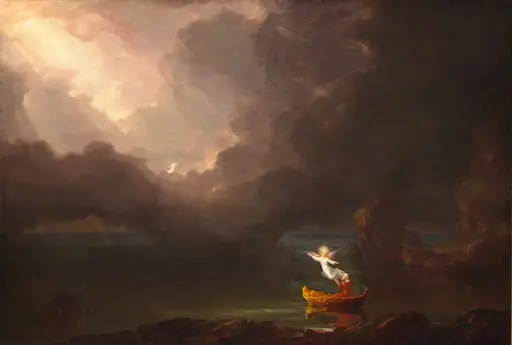
Own this work as a print
Artist & collection
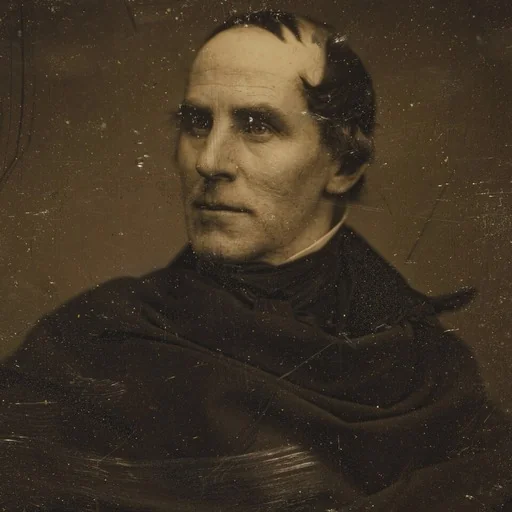
Artist
Thomas Cole (February 1, 1801 – February 11, 1848) was an Anglo-American artist who founded the Hudson River School art movement.

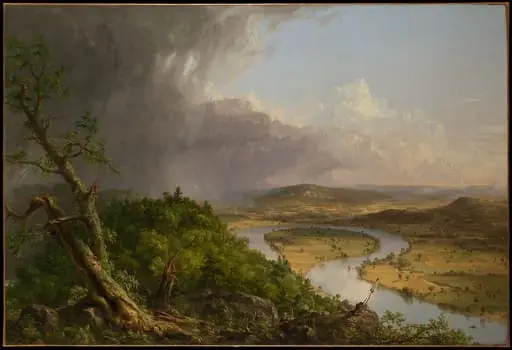 View from Mount Holyoke, Northampton, Massachusetts, after a Thunderstorm—The Oxbow
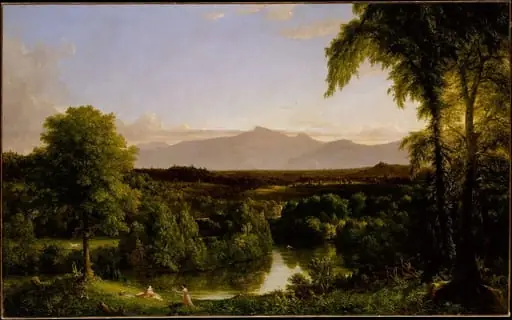 View on the Catskill—Early Autumn
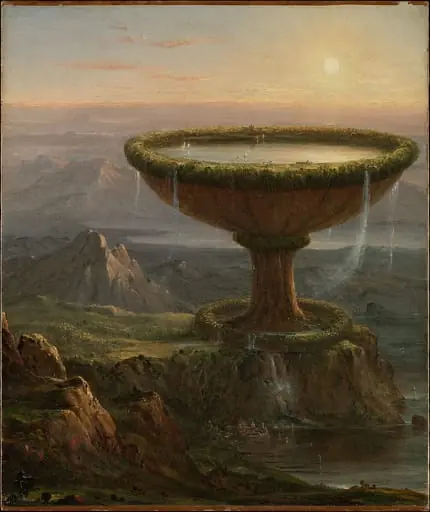 The Titan's Goblet
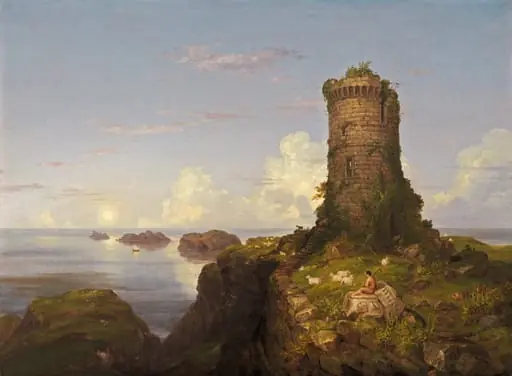 Italian Coast Scene with Ruined Tower
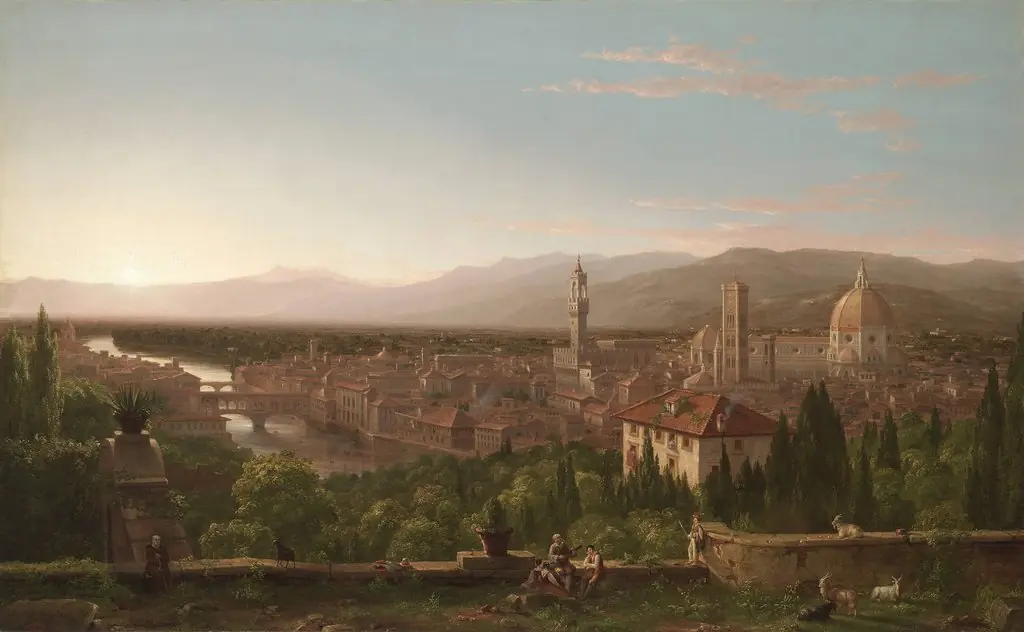 View of Florence
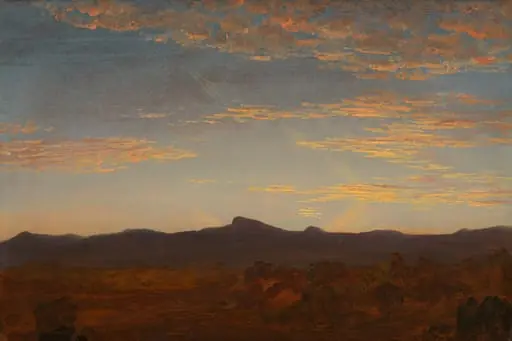 Study for "Catskill Creek"
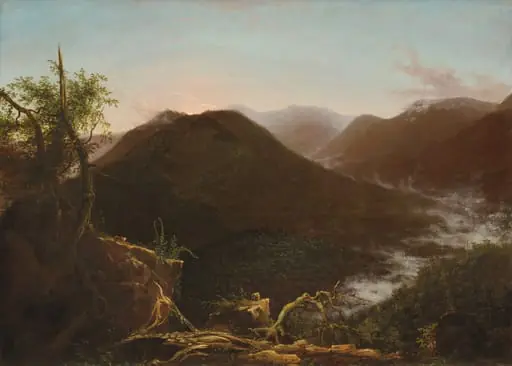 Sunrise in the Catskills
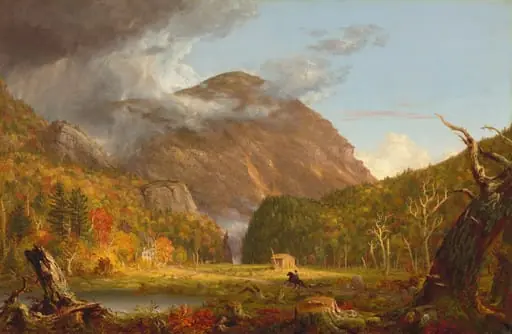 A View of the Mountain Pass Called the Notch of the White Mountains (Crawford Notch)