Abraham Dismissing Hagar and Ishmael by Nicolaes Maes
Nicolaes Maes painted "Abraham Dismissing Hagar and Ishmael" in 1653, when he was just 19 years old and still working in Rembrandt's studio. The influence of his master is unmistakable in the deep shadows and glowing warmth, but the emotional restraint is already Maes's own.
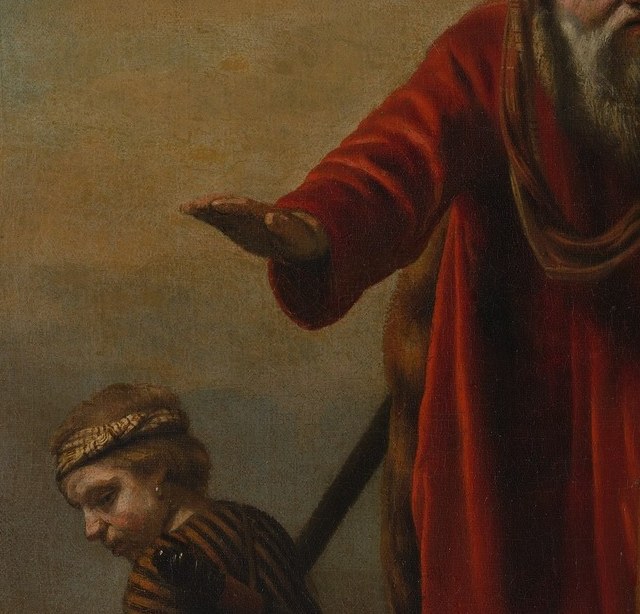
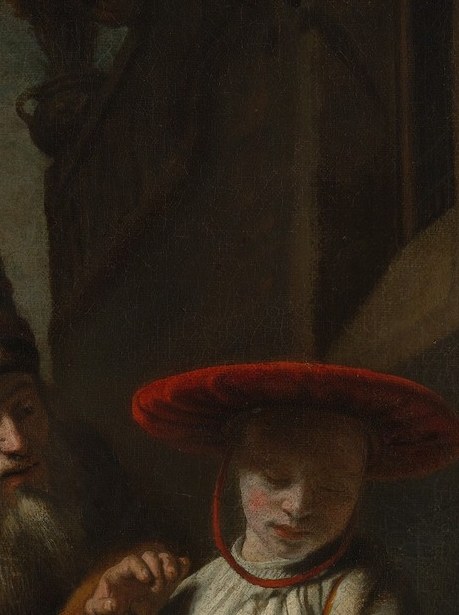
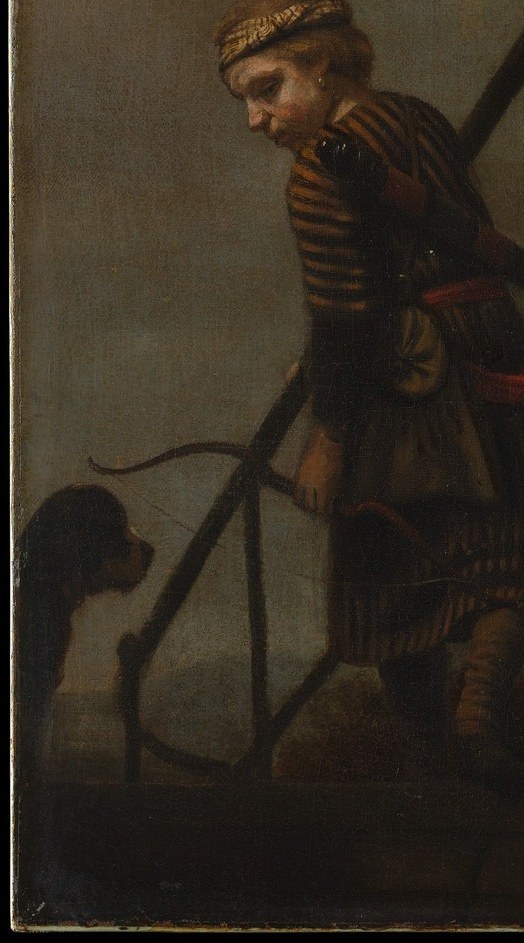
Look at the three faces. Abraham's is a study in conflict, a patriarch ordered by God to send his son away, his expression holding grief and obedience in equal measure. Hagar, her face half-shadowed, does not cry out. Her dignity sharpens the injustice of the scene. And then, nearly swallowed by the darkness in the lower left, Ishmael looks up at the father who is casting him out. He is too young to comprehend the divine drama unfolding over his head.
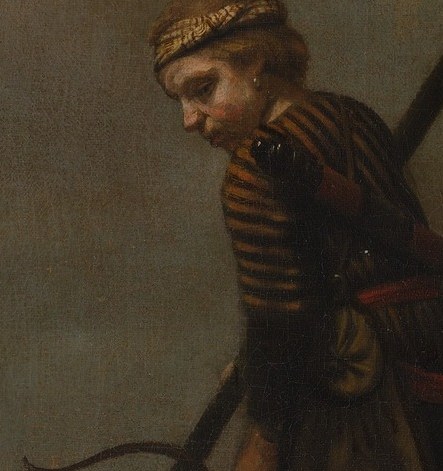
The details carry the weight. Abraham's red robe saturates the canvas with the color of sacrifice and blood. Hagar's bundle of provisions sits at her side, a domestic object that reads, on second glance, as a measure of how little she is given before she is sent into the wilderness. The boy's bow, held slack at his side, points forward to the verse that promises God will make him an archer in the desert.
Maes would leave Amsterdam for Dordrecht shortly after this, spending two decades painting quiet domestic scenes before returning as the city's leading portraitist. This early biblical work is where you can see him learning to build a whole story out of a single, silent exchange.
Details
Transcript
The old man's hand says go. His red robe glows with authority. But it's his face that holds the real story. Grief and obedience locked together. Hagar does not fight. She endures. Now look into the shadows. The child. He looks up at his father, not yet understanding. The painter was Rembrandt's student. He was only 19.