Duchess de Fitz-James by Fantin-Latour, Henri
Henri Fantin-Latour's *Duchess de Fitz-James* (1867) is a portrait where the artist's two worlds quietly meet. The sitter is Marguerite Augusta Marie Löwenhielm, a Swedish-born duchess living in Paris. She is rendered with the unembellished directness of the Realist movement, yet the painting is anything but stark.
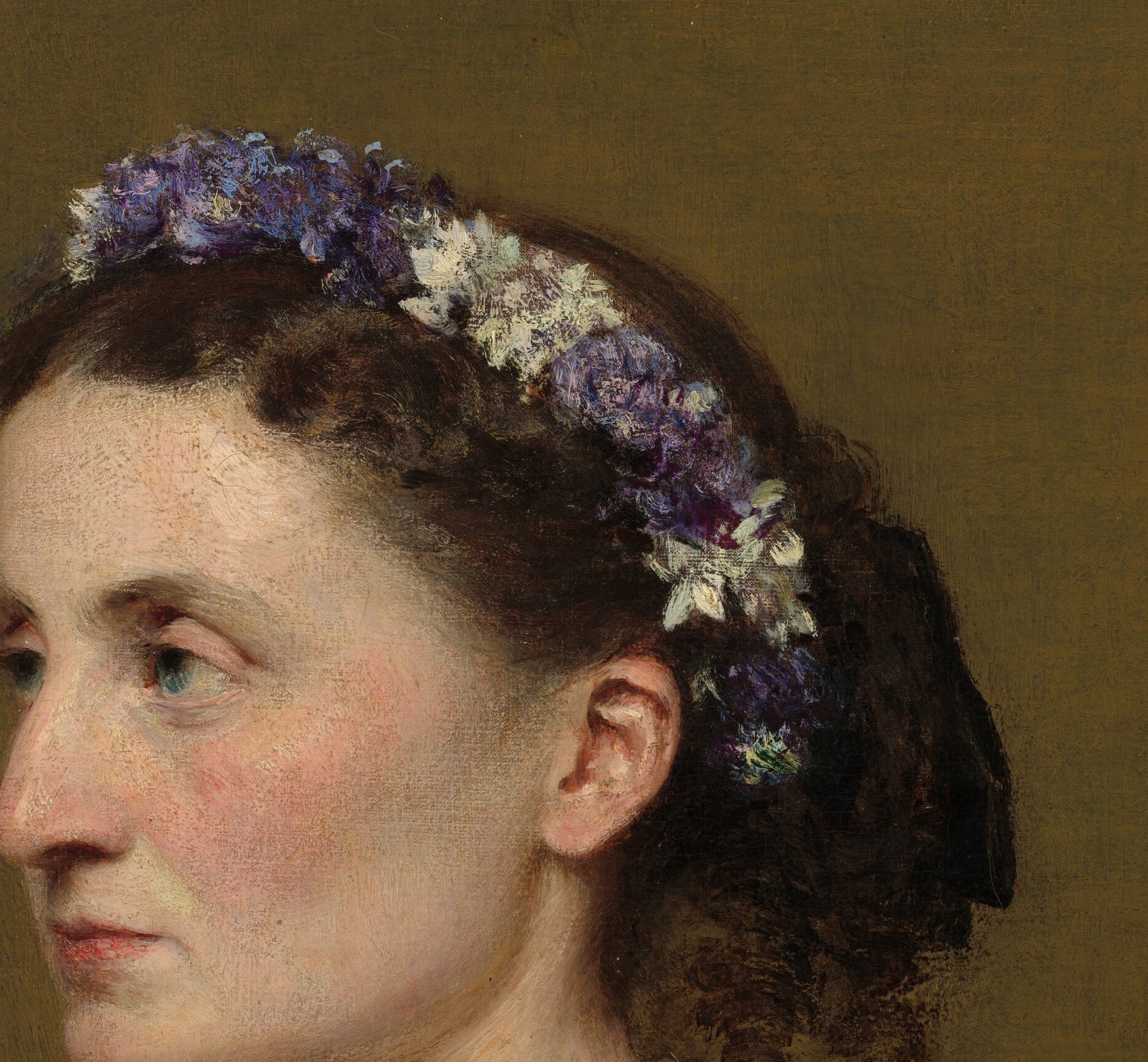
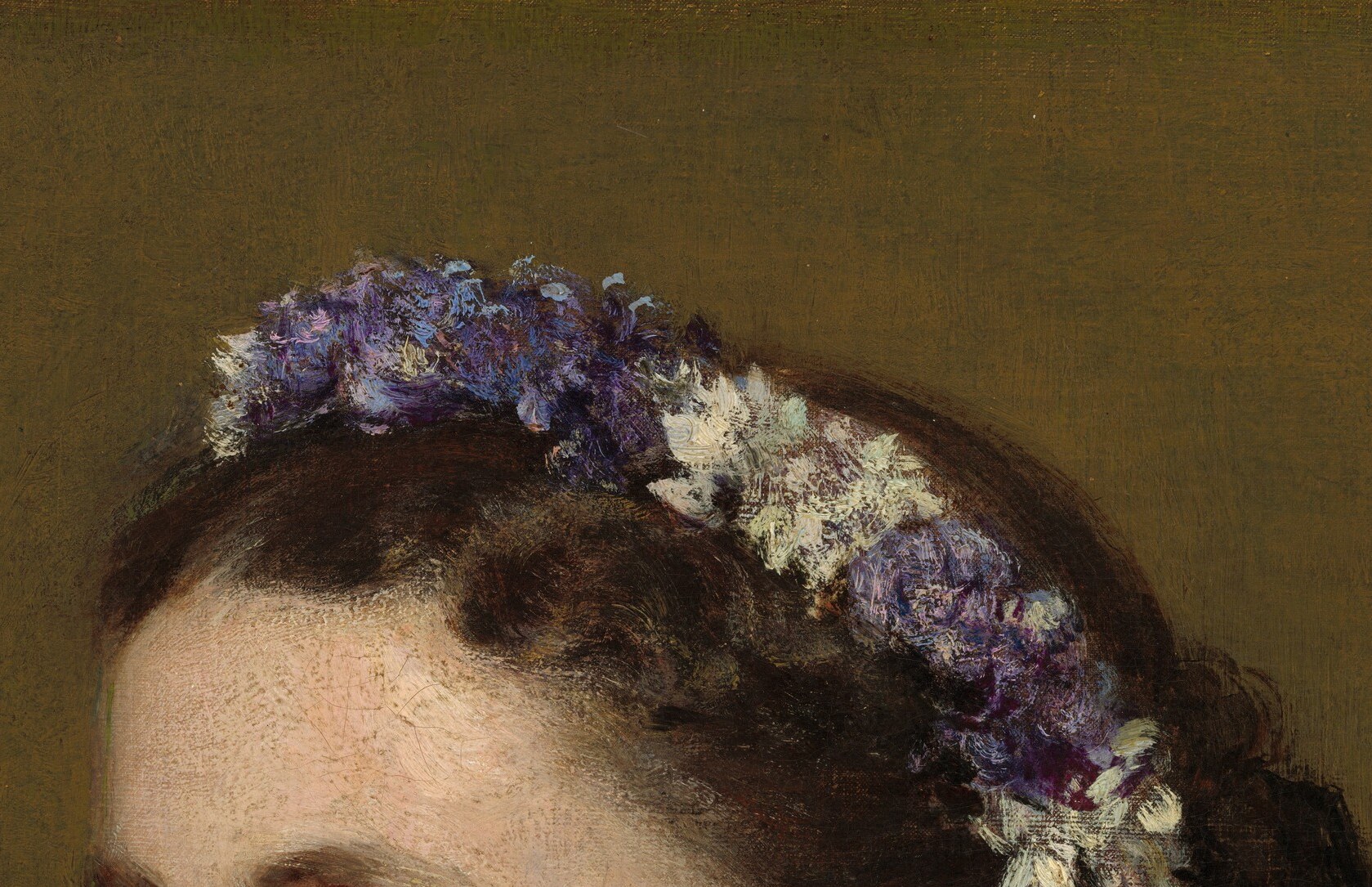
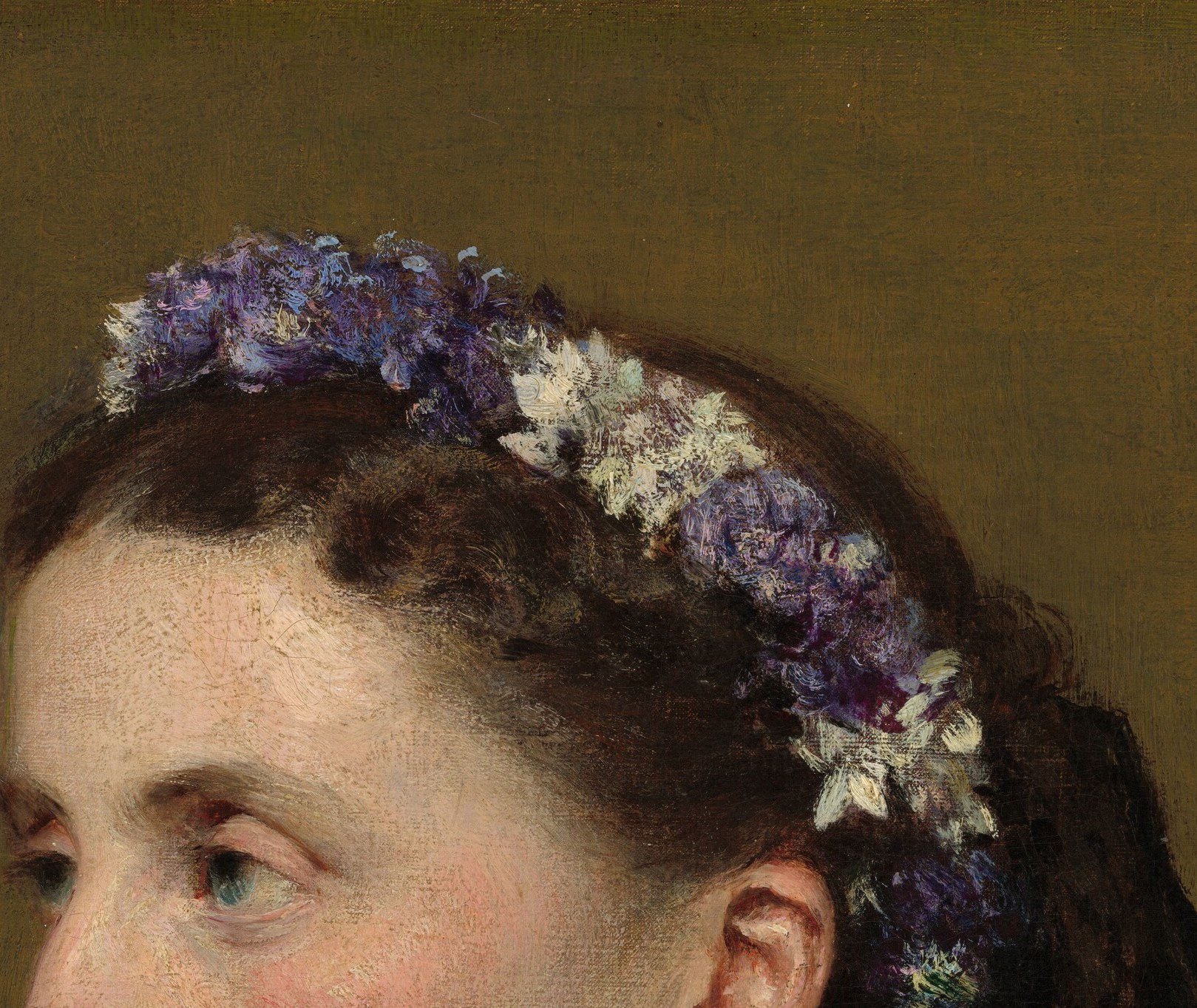
Look at the wreath woven into her dark hair. It's made of purple and white blossoms, the same violet tone as her silk bodice. Fantin-Latour was the great flower painter of his era, celebrated for his luminous still lifes. Here, he literally crowns his aristocratic subject with his own signature genre, merging portraiture and botanical study in a single, composed image.
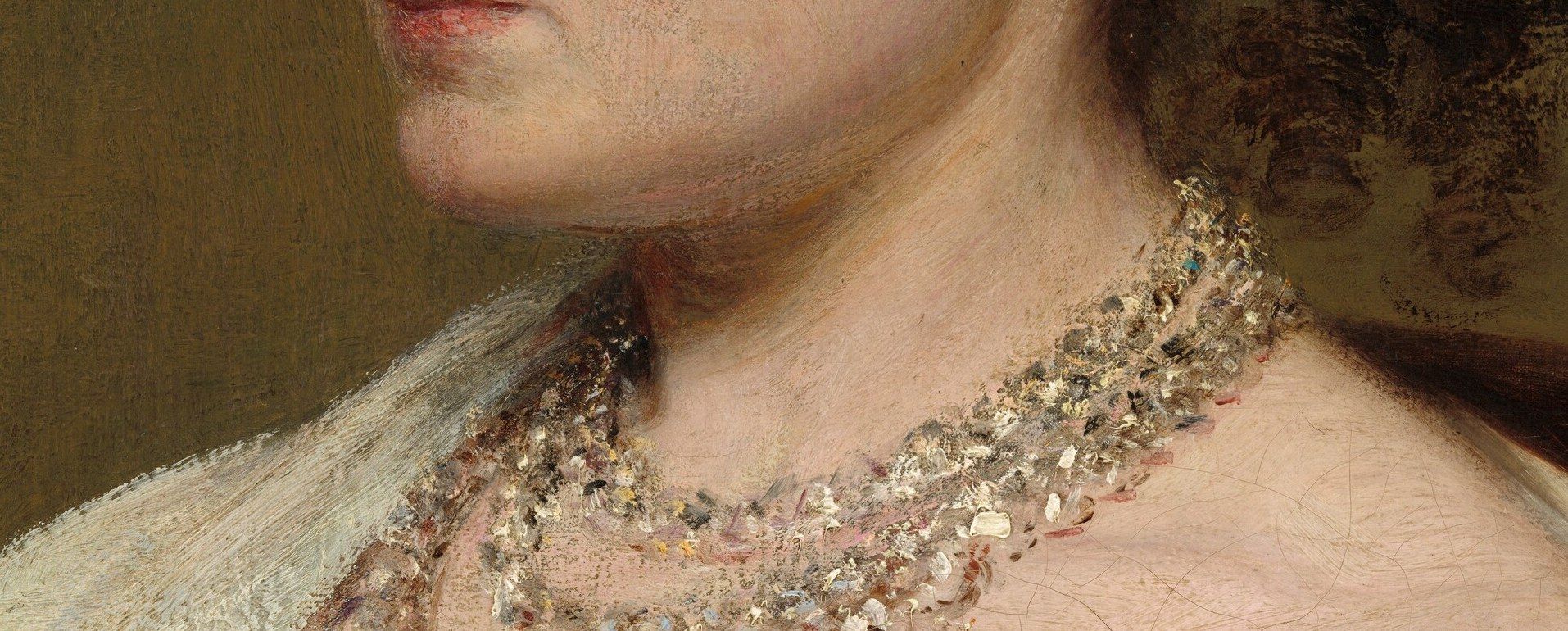
Painted in oil on canvas, the work relies on a warm, ochre-cream background that pushes the duchess forward without the distraction of a detailed interior. The precision of her pearl necklace and the soft gleam on her visible eye are hallmarks of Fantin-Latour's meticulous hand. A fragment of red chair back at the right margin provides the only warm accent beyond her skin, grounding her in a domestic space.
She is presented not as a romantic ideal, but as a person of her class: still, formal, and carefully observed. The painting rewards patience. Spend a moment with her eye.
Details
Transcript
She was a Swedish duchess in Paris. Her face is a study in aristocratic stillness. She wears a wreath of purple and white blossoms. The painter was famous for his flowers, not his portraits. So he crowned his sitter with his signature genre. A pearl necklace marks her status. But the soft highlight on her eye rewards the closest look.