Portrait of a Gentleman by Alfred Thomas Agate
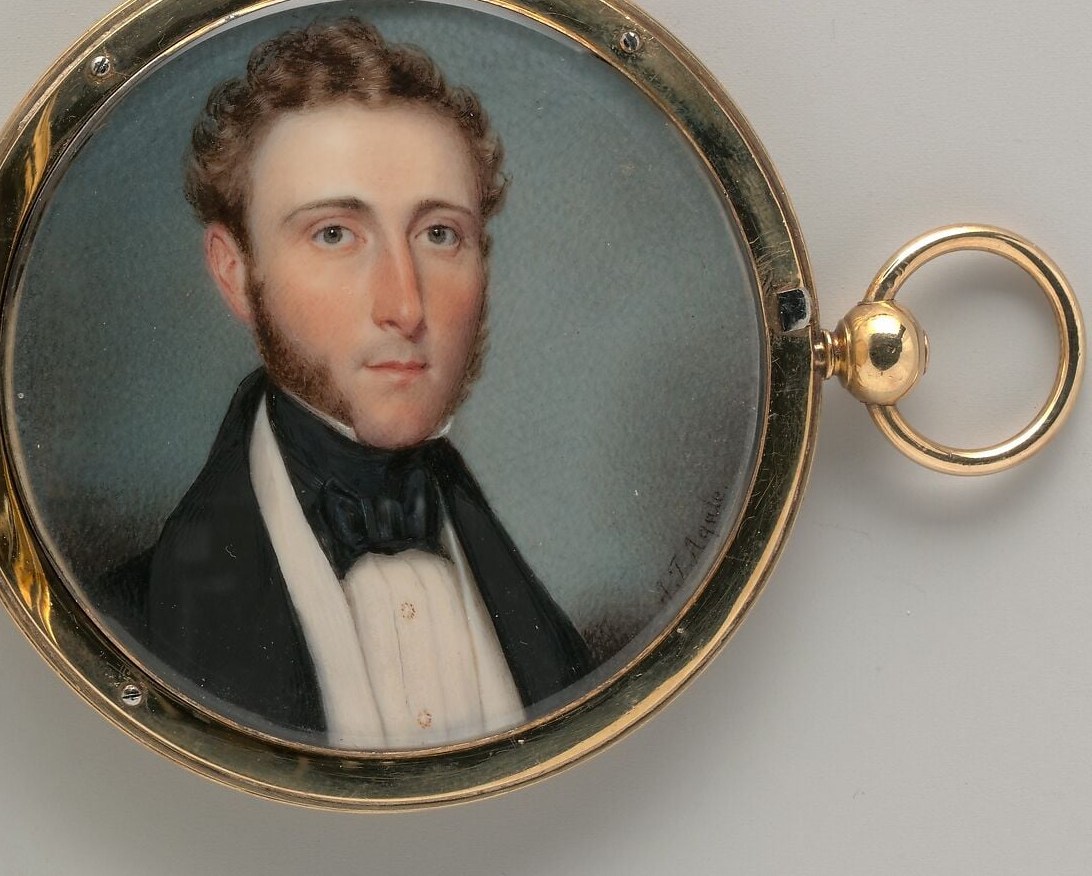
Alfred Thomas Agate, an American miniaturist, created this "Portrait of a Gentleman" around 1835 using watercolor on ivory. This small-scale work exemplifies the detailed portraiture common in the United States before the widespread adoption of photography.
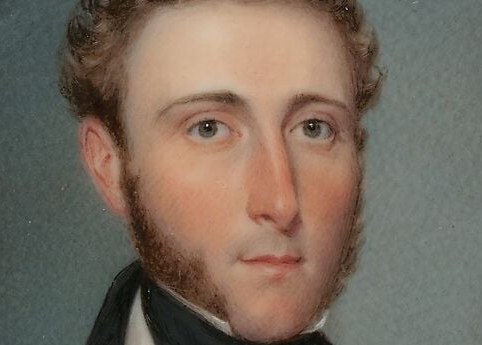
Notice the incredible detail in the gentleman's face and hair, made possible by painting on a thin, translucent piece of ivory. The luminous quality of the material allowed Agate to achieve a delicate and lasting form of personal commemoration.
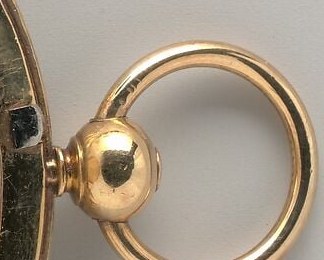
The ornate gold frame, with its small ring, suggests this miniature was likely intended to be worn as a locket or carried as a personal memento. Agate, who trained in New York, became known for these intimate portraits and was recognized for his skill with an honorary membership to the National Academy of Design.
These tiny, precious objects offered a tangible connection to loved ones, carried close in a way that modern photographs often are. What personal mementos do you keep close today?
Details
Transcript
This miniature portrait was painted on a thin slice of ivory. The luminous material allowed for incredibly fine detail. It was made around 1835, before photography was common. The artist, Alfred Thomas Agate, specialized in these small works. Look closely at the ornate gold frame around the portrait. The small ring meant it could be worn as a treasured locket.