The Truants by Johnson, Eastman
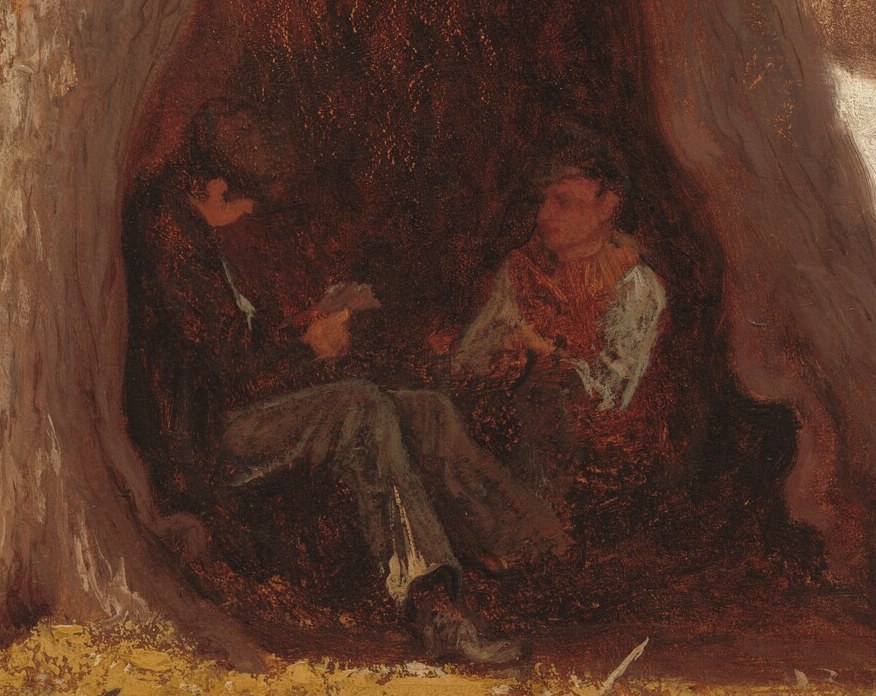
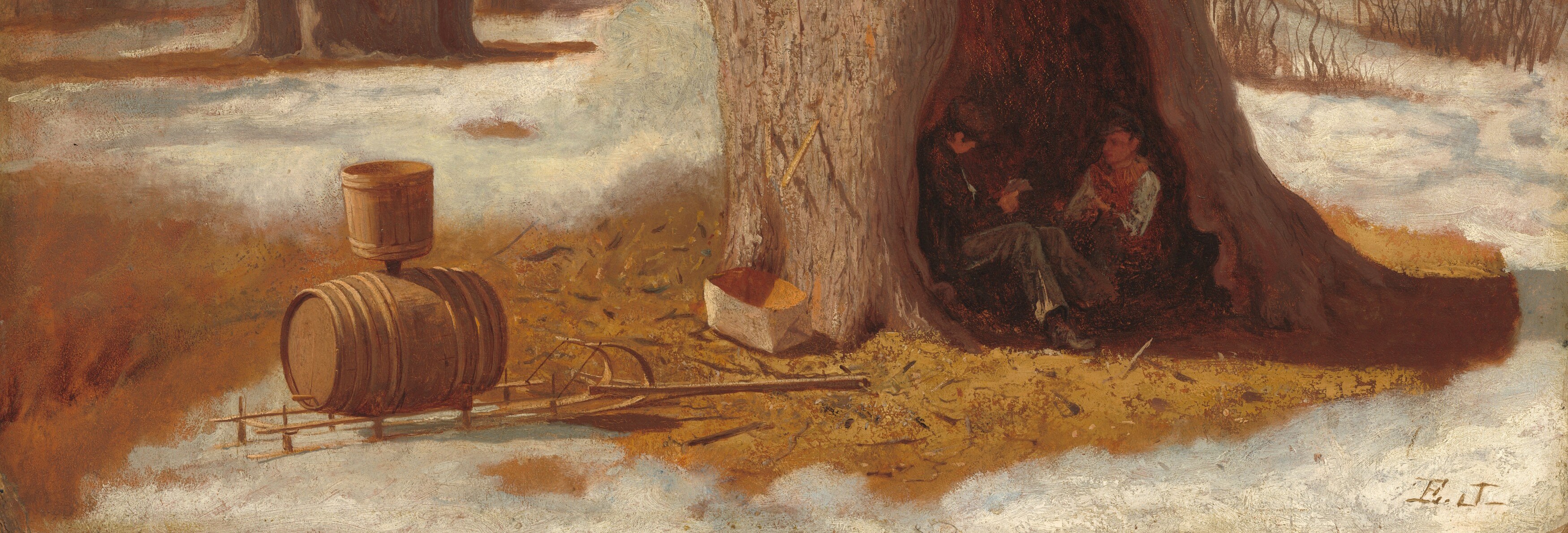
Eastman Johnson's "The Truants," painted around 1870, is a small, quiet scene of childhood in a New England winter. The single most striking thing about it is its title. These are not victims of the cold. They are runaways from duty, stealing a moment of rest inside a hollow tree.
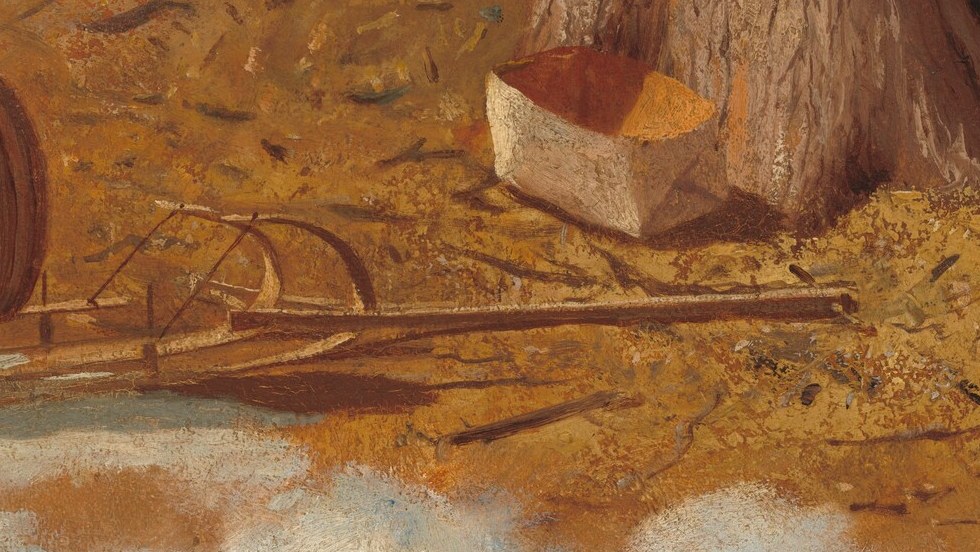
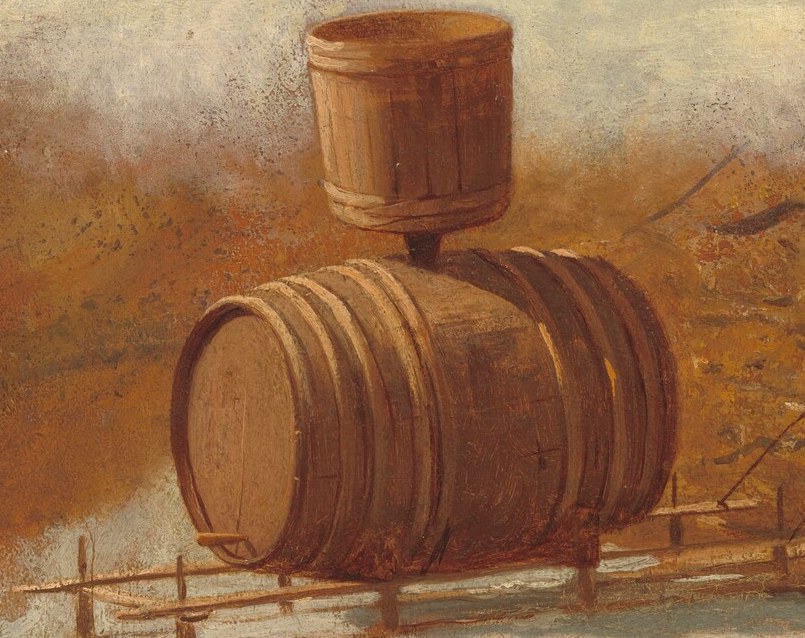
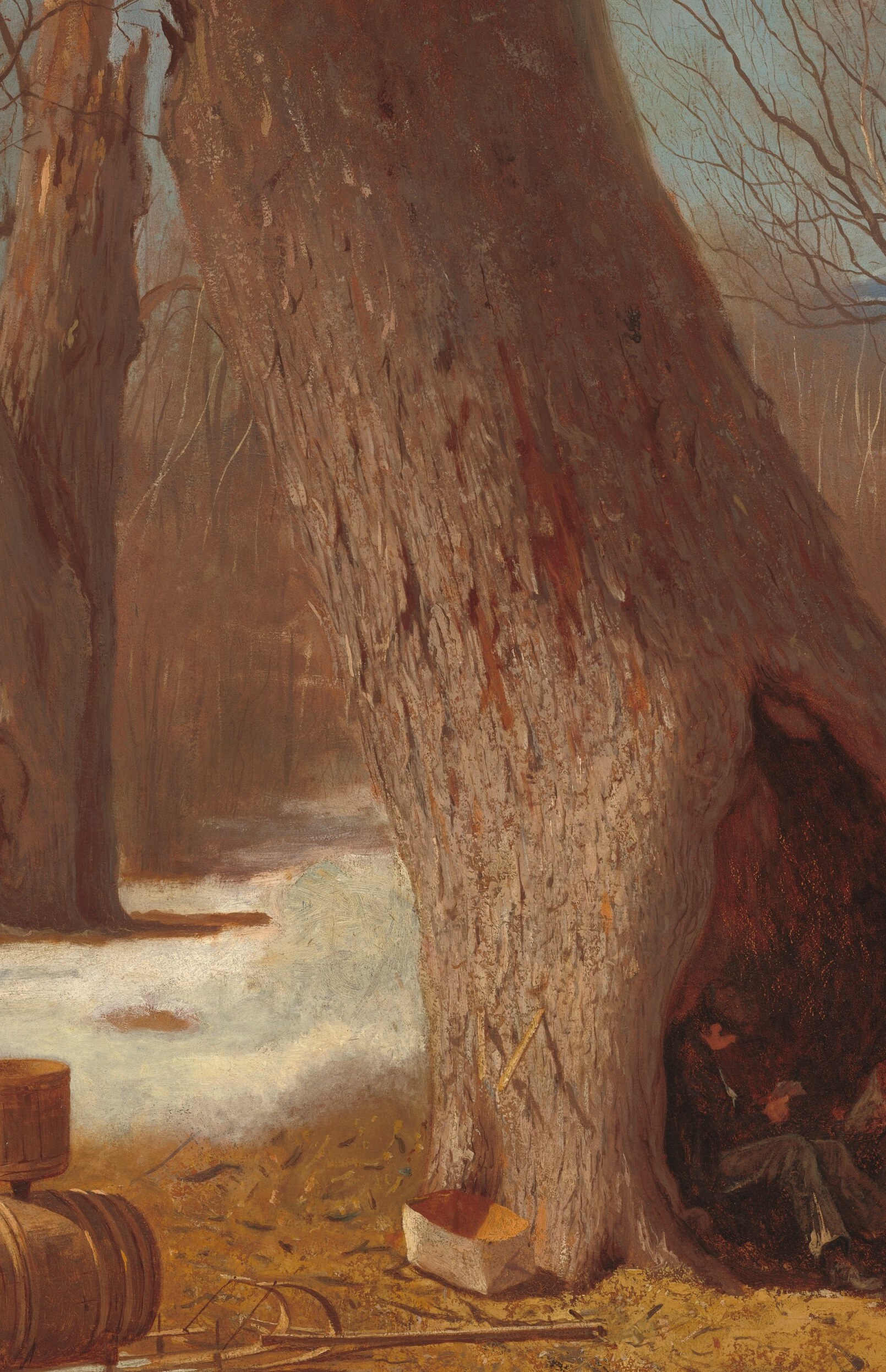
Look first at the massive tree trunk that fills most of the frame. The rough bark makes the shelter feel solid and strangely safe. Then look inside the dark hollow. Two small figures in heavy coats are tucked in close together, their faces almost hidden. Outside on the snow, the tools they abandoned tell the rest of the story. A pair of wooden barrels, a bucket, and what looks like gathered firewood sit waiting for hands that will not return to them just yet.
Johnson painted this around 1870, a period when he was turning often to rural American life. He depicted farmers, sugaring camps, and woodcutters, but here he chose a human pause inside a hard landscape. The work is small, painted on academy board, and handled with a gentle, almost tender touch. The muted browns and grays of the snow and bark keep the mood hushed.
Next time you see an old tree with a large hollow, think of this painting. What chores would you have left behind to climb inside and stay, just for a little while?
Details
Transcript
Winter, around 1870. A hollow tree. Inside, two small figures have tucked themselves away. Their tools are left lying on the snow outside. A hard pause in a long day of farm chores. Eastman Johnson called it 'The Truants.' Two children who decided the work could wait.