New York Bay by F. G. W. Hunten
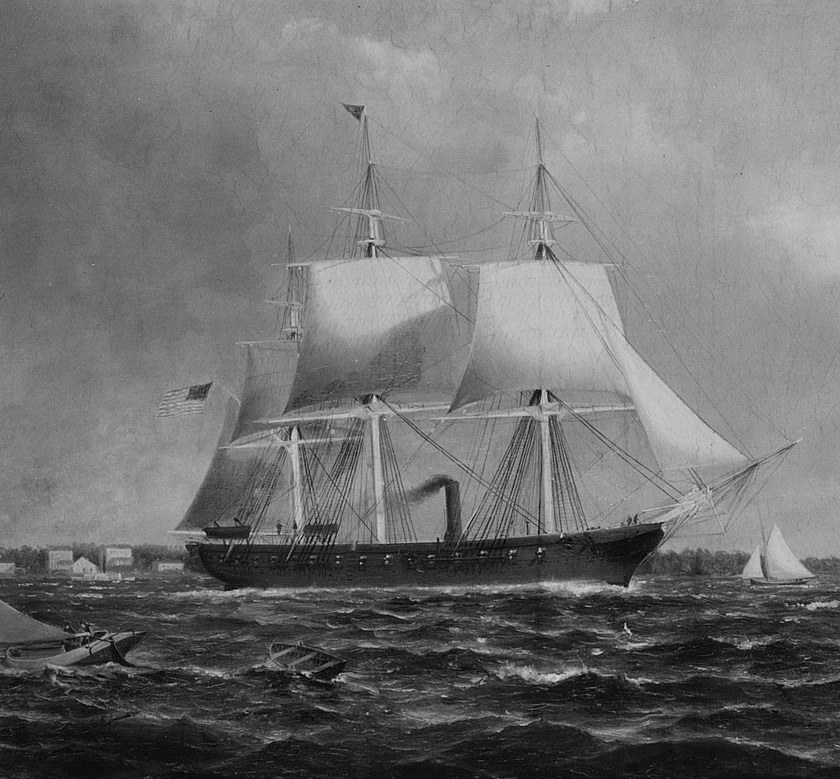
This is "New York Bay," painted around 1850 by F. G. W. Hunten. It hangs at The Metropolitan Museum of Art.
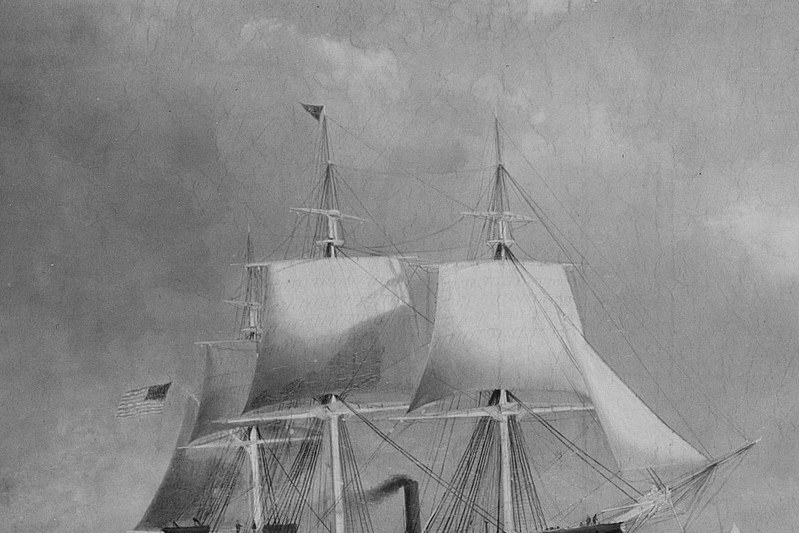
Hunten belonged to a generation of American marine painters who flourished when the country's commercial sail fleet dominated Atlantic trade. The painting records that peak moment: a large three-masted merchant ship flies an American flag in the bay, with the barely visible shoreline of a New York City just beginning its explosive growth behind it.
The technical thrill of this painting is in the details. Look closely at the complex web of rigging, each fine line was dragged across the canvas with a single, steady pull. The choppy water in the foreground is built from short, distinct strokes that capture the texture of a fresh breeze, never smoothed into a generic blur. A small steamship on the right quietly signals the coming transition; within decades, steam would displace the sail power celebrated here.
Next time you stand before a 19th-century marine painting, walk up close and study the rigging. The brushwork that looks so effortless from a distance was a physical act of nerve.
Details



Transcript
Look anywhere. Every thread pulls. A merchant ship in New York Bay, crossing before the city. This rigging is the real test. Rope after rope, each one painted wet into wet. He dragged a fine brush with a steadiness you can feel. And look at the water. Broken light, short strokes, never blended away. Hunten painted this around 1850. America's sail fleet was at its peak, and painters recorded every spar. The flag in the rigging says this is an American claim on the sea. All of it held together by a horizon as flat and true as a shipwright's level.