"He Turned Their Waters into Blood" by Field, Erastus Salisbury
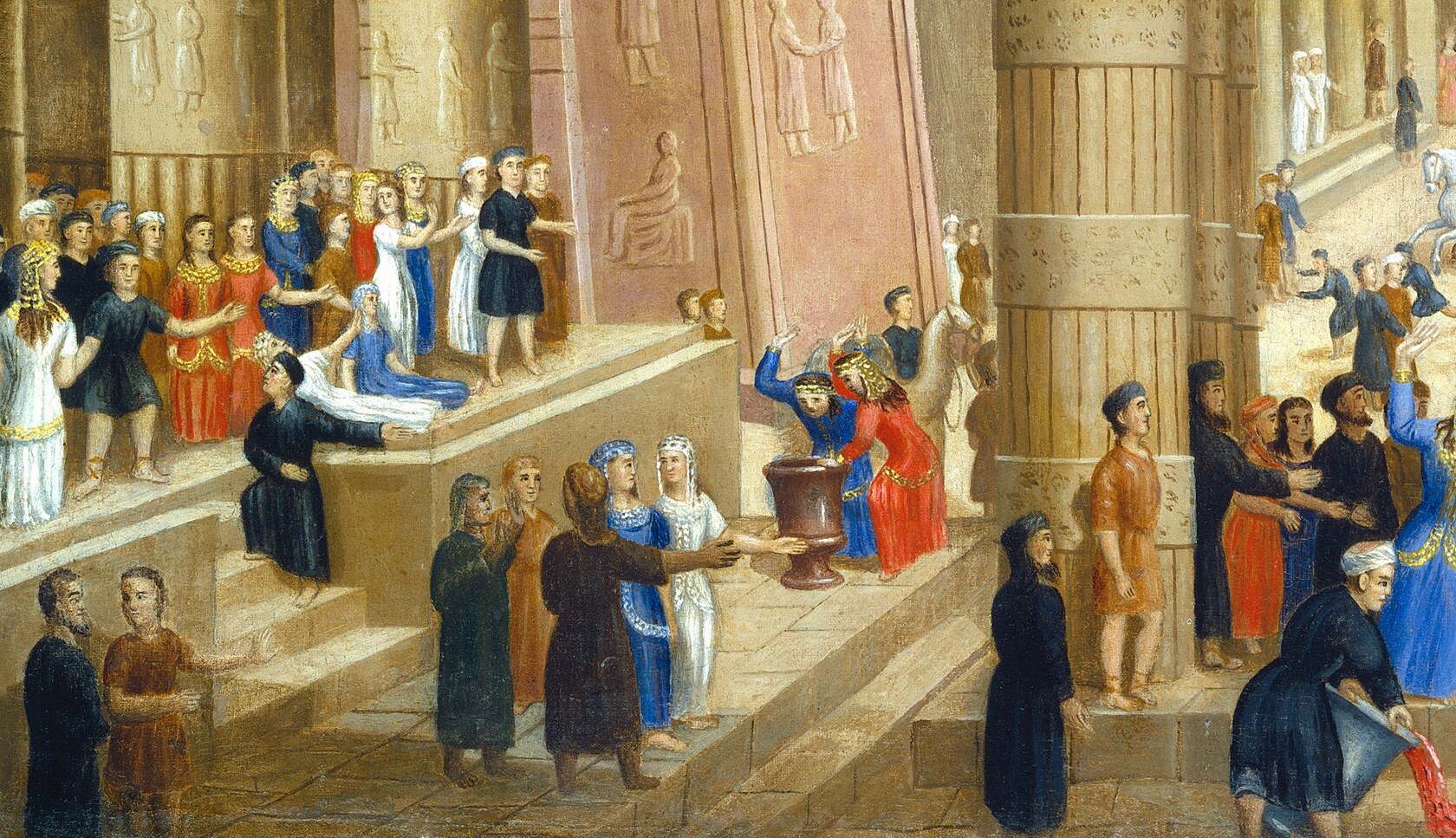
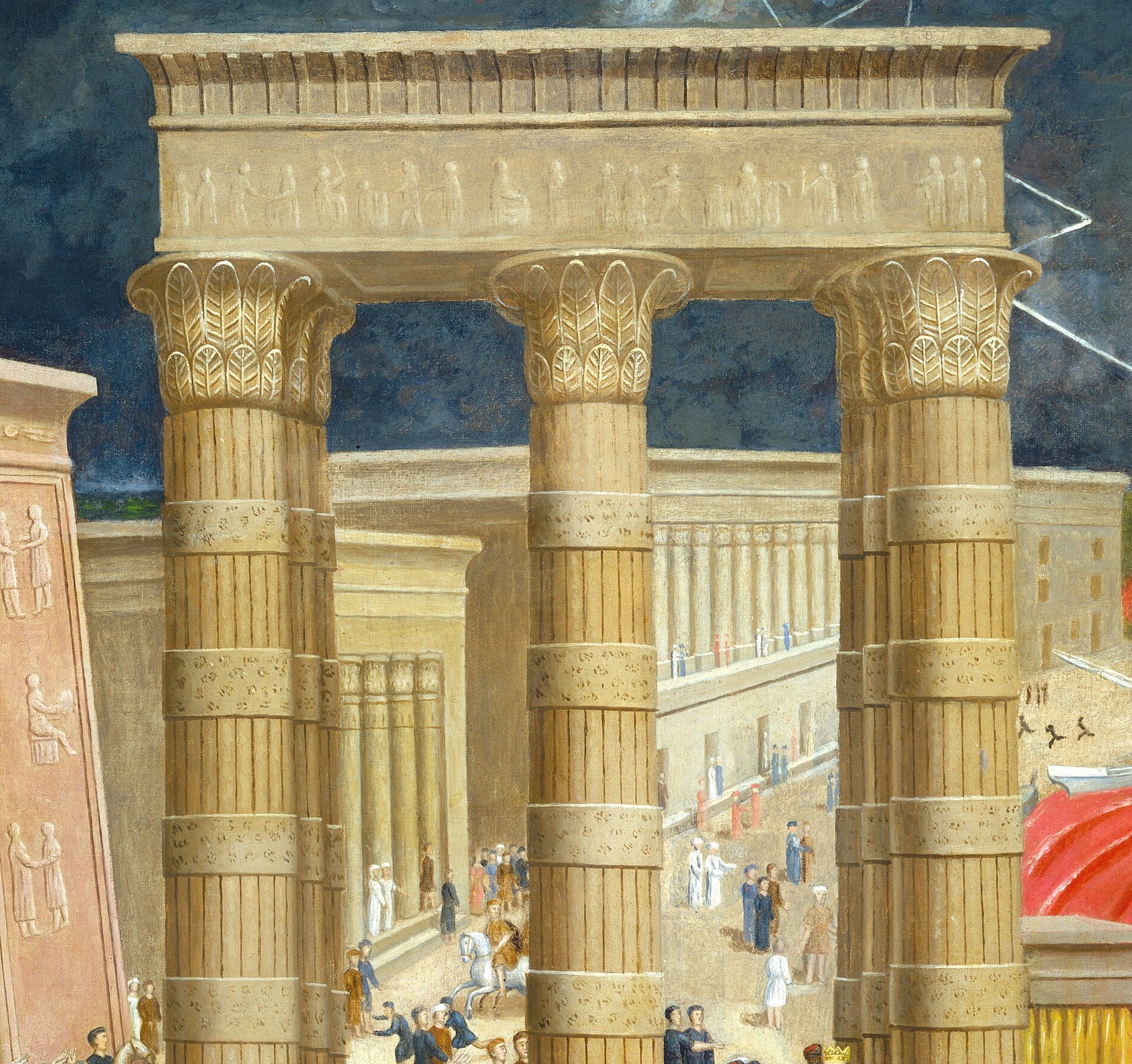
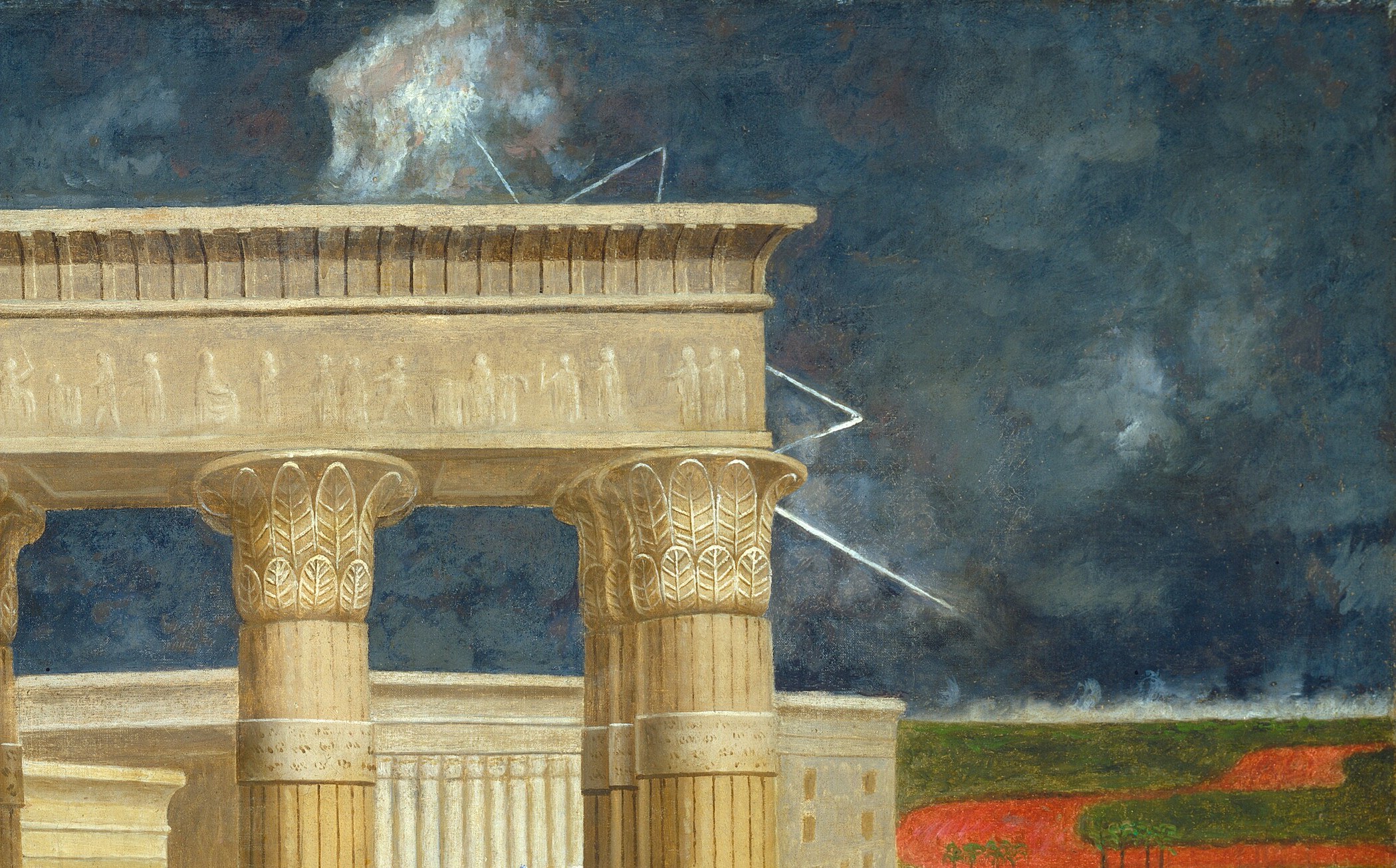
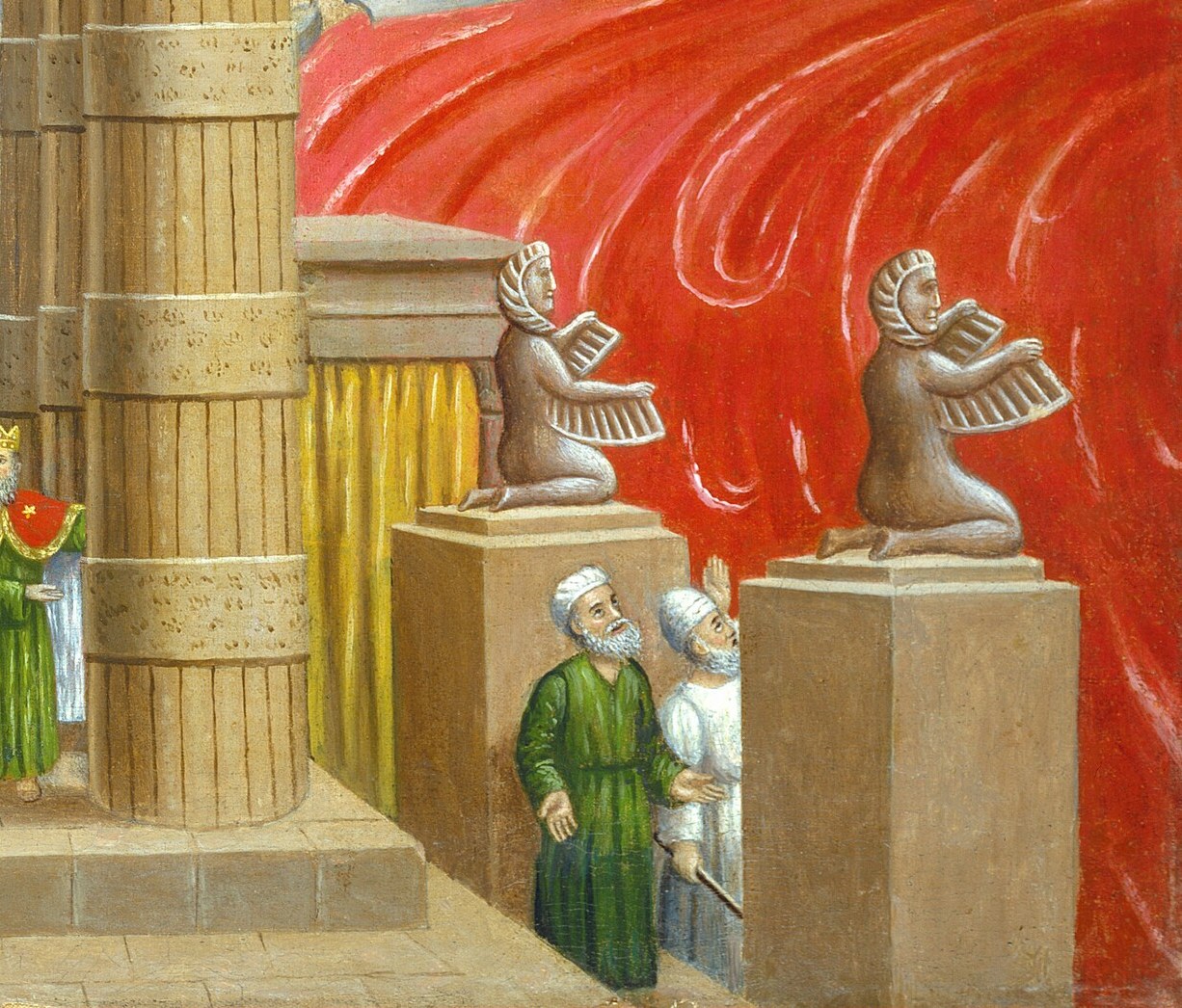
This is "He Turned Their Waters into Blood" by Erastus Salisbury Field, painted around 1872. The painting depicts the biblical plague of Exodus from inside a grand Egyptian temple complex, with a robed prophet raising his arms as the water runs red beneath a storm-cracked sky.
It looks like a trained academic history painting, but Field was a self-taught farmer from Leverett, Massachusetts. He learned faces from itinerant portrait manuals and never once traveled to Egypt or Europe. Every hieroglyph, every column, every exotic costume in this scene was conjured from prints and a plain New England imagination.
A generation after Field's death in 1900, a wheeler-dealer named Luman Preston acquired the canvas and began shopping it as an undiscovered Benjamin West. West was the first American painter to achieve international fame; a lost West meant serious money. Preston's con worked for a time, and the painting changed hands at an inflated price before the truth caught up.
The work now hangs in a regional museum as a standout of American folk art, a reminder that the line between academic polish and raw vision can be thinner than it looks.
Details
Transcript
In the 1920s, a con man named Luman Preston began selling this painting. He claimed it was a lost masterpiece by Benjamin West, father of American painting. Scholars were fooled. The price climbed. But the real painter was a farmer from rural Massachusetts. He painted biblical epics straight from his imagination. He had never seen Egypt. He simply made it up. Erastus Salisbury Field. A self-taught folk artist who died in obscurity.