Rest on the Flight into Egypt by Claude Lorrain
Claude Lorrain's 'Rest on the Flight into Egypt' (c. 1640) quietly rewired the art market. Before him, a landscape was backdrop. By the 1630s, as the leading landscapist in Italy, Lorrain commanded enormous fees, not for the biblical figures tucked into the foreground, but for the luminous atmosphere behind them.
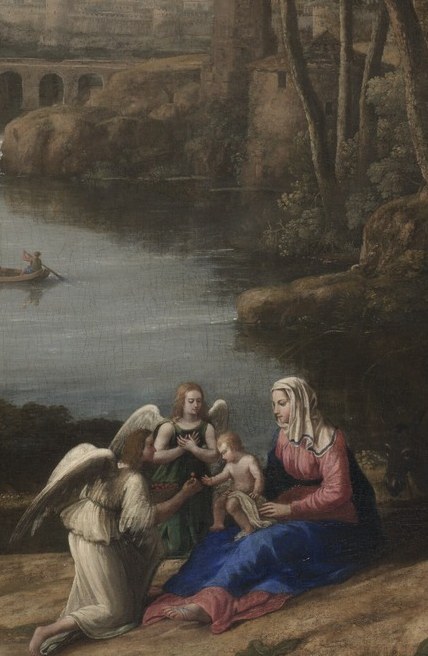
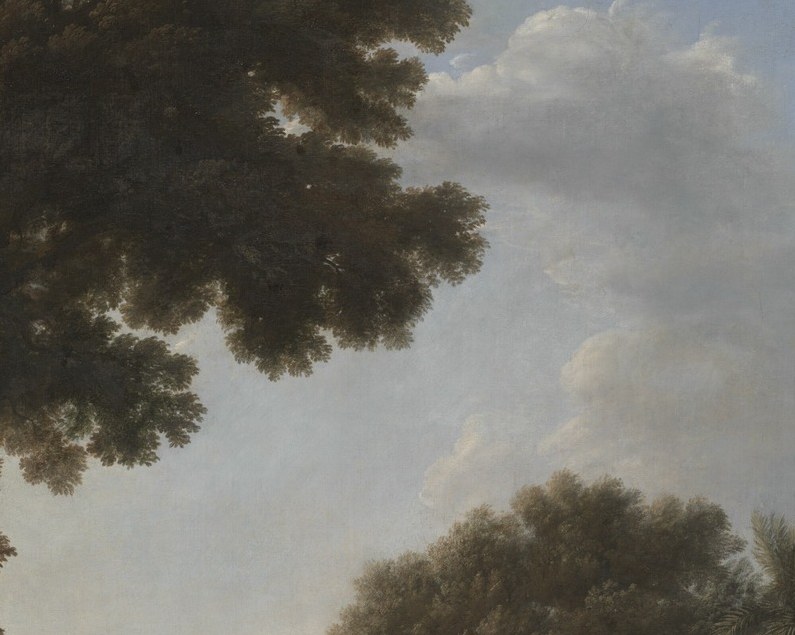
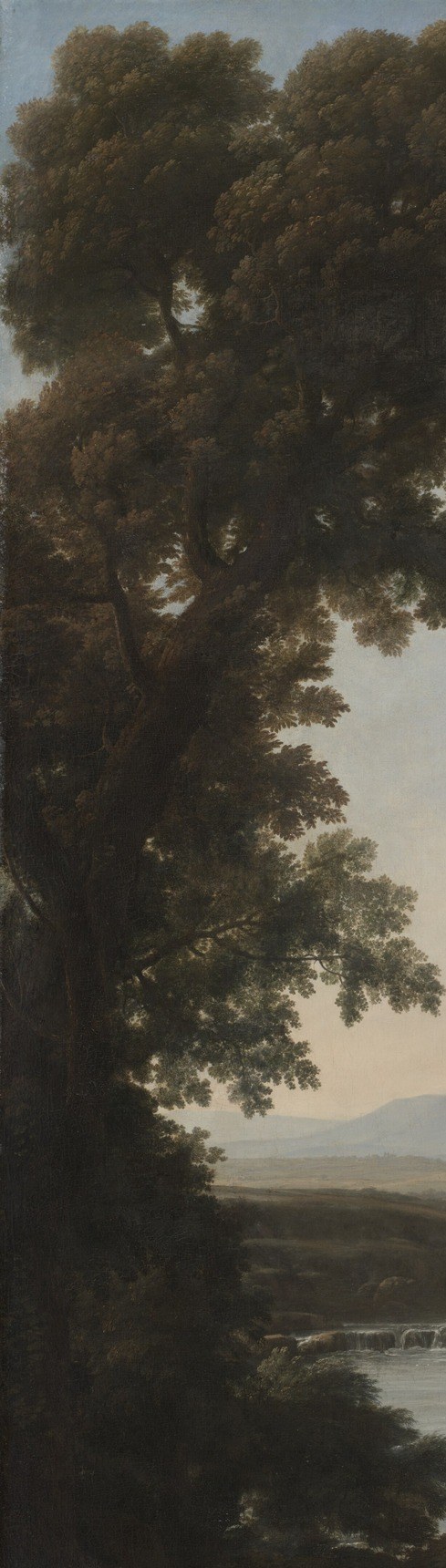
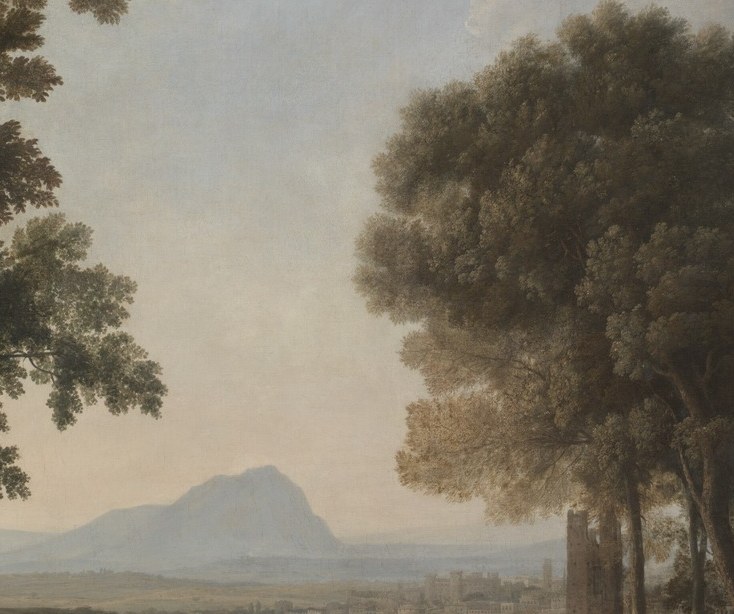
Look where your eye actually goes: past the tiny Holy Family, out across the river, toward the golden haze on the horizon. The figures are a pretext. The real subject is the light itself, that warm, layered glow Lorrain built with glazes so fine his contemporaries called it inimitable. Collectors paid for the sky.
He ran a famously strict studio. His 'Liber Veritatis', a book of drawings recording every finished painting, was partly a quality-control ledger in a market already flooded with forgeries. His prices were fixed by canvas size, not subject matter. A landscape with two small saints cost the same as one with three.
It worked. His work remained the benchmark for European landscape into the 19th century. Turner wept in front of one and bequeathed two of his own paintings to the National Gallery on the condition they hang beside Lorrain's. The light in this painting is expensive for a reason, nobody else could do it.
Details
Transcript
Before this, a landscape was just background. Here, the story hides in the margins. The Holy Family rests. Barely bigger than the boat. Lorrain charged more for the light than the figures. Collectors paid for this glow. They called it the one thing they couldn't fake. He kept a ledger of clients. Prices fixed by size, not subject.