Marie Rinteau, called Mademoiselle de Verrières by François-Hubert Drouais
View the artwork: Marie Rinteau, called Mademoiselle de Verrières →
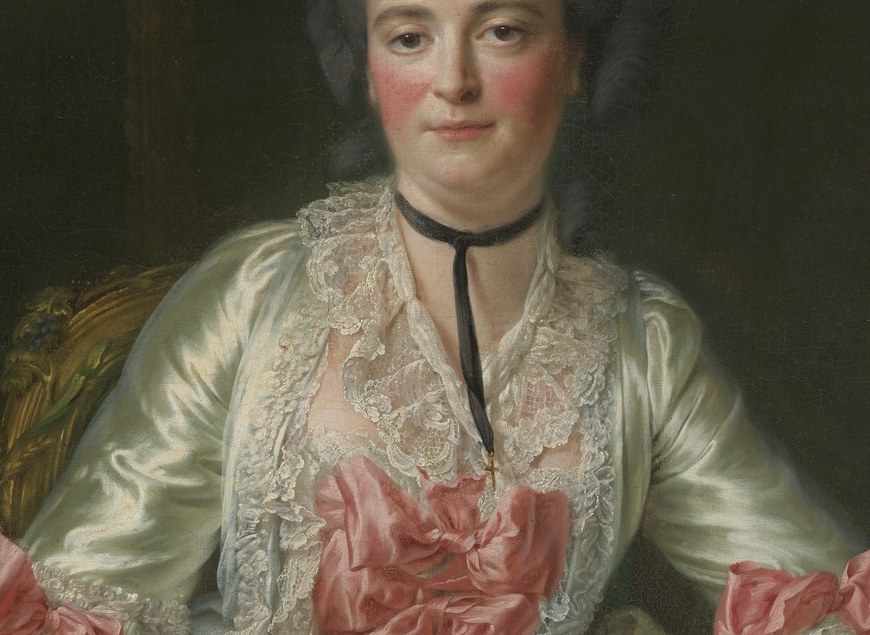
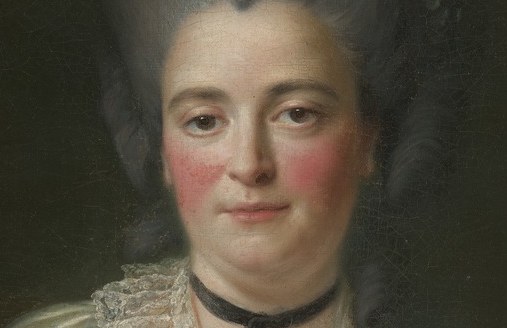
This is François-Hubert Drouais's 1761 portrait of Marie Rinteau, called Mademoiselle de Verrières, now at the Metropolitan Museum of Art. It is a portrait that was literally re-styled on the canvas more than a decade after it was painted.
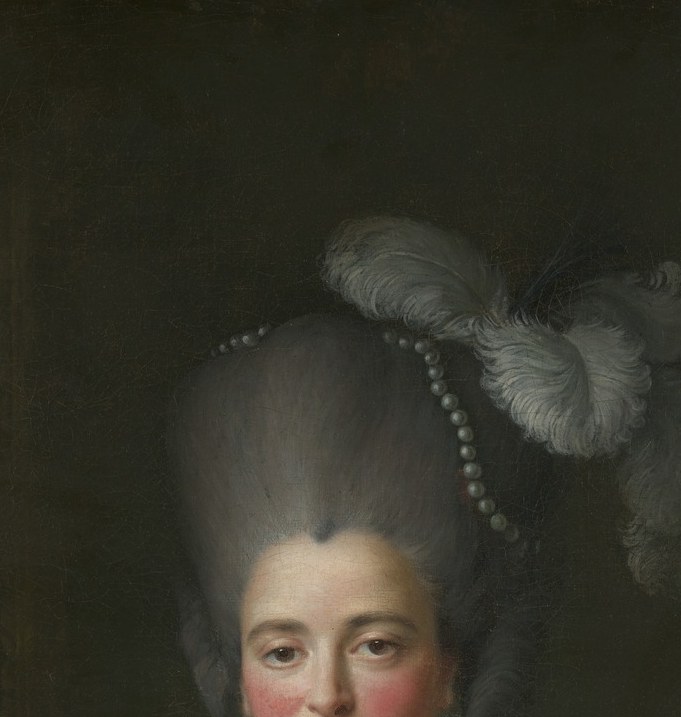
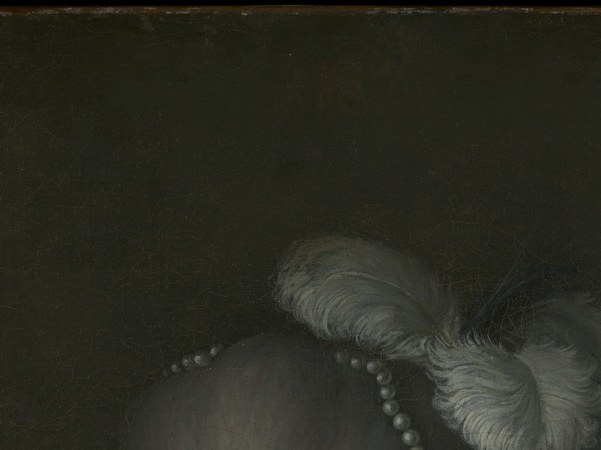
Look at her hair. The towering, powder-white coiffure with its feathered ornament was not there when Drouais first exhibited the painting at the Paris Salon in 1761. X-ray studies have revealed that the original hairstyle was much smaller and simpler. In the mid-1770s, either Drouais or another hand repainted the wig to match the elaborate, ribbon-laced styles that had since come into vogue. The feather at the crest is an anachronism grafted onto a portrait painted 15 years earlier.
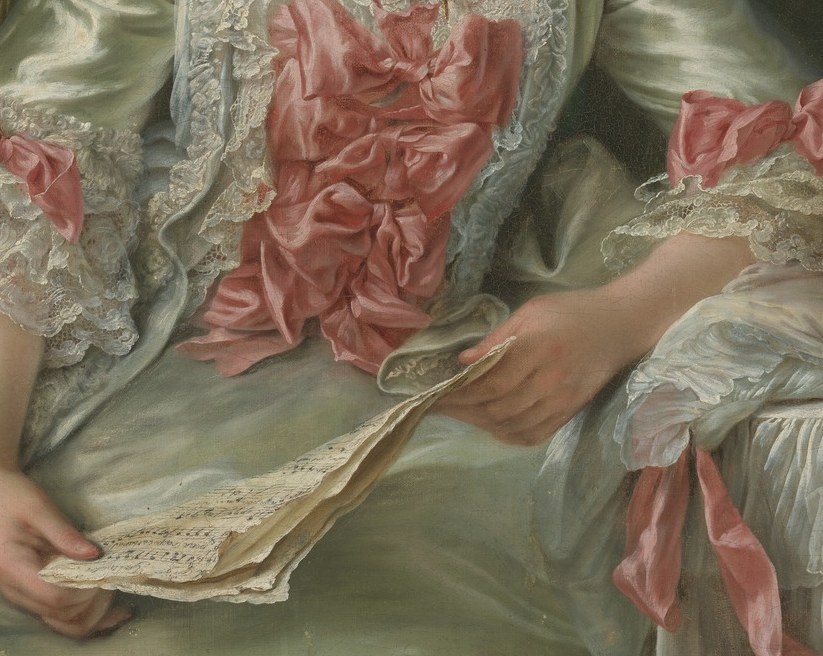
Marie Rinteau was one of two sisters known as les demoiselles de Verrières, briefly successful on the Paris stage and far more enduringly successful as cultured courtesans. The sheet music in her lap is the painting's single coded attribute, quietly signaling her theatrical beginnings. She would later become the great-grandmother of the writer George Sand, a lineage that connects this elegant revision to French literary history.
The portrait passed through several prominent Parisian collections in the 19th century before being acquired by the dealer Wildenstein in New York. Financier Jules S. Bache bought it in 1927, and the Met received it in 1949. A painting altered to stay current is a rare thing in any century.
#arthistory #portrait #metmuseum
Details
Transcript
In 1761, this portrait was finished and shown at the Paris Salon. She was a celebrated courtesan with a theatrical past. The sheet music in her lap signals exactly that. Look at her towering, powder-white wig. X-rays reveal it was painted over a much smaller original. In the mid-1770s, someone literally updated her hairstyle on the canvas. A portrait revised like a wardrobe, chasing fashion.