Artwork
Marie Rinteau, called Mademoiselle de Verrières
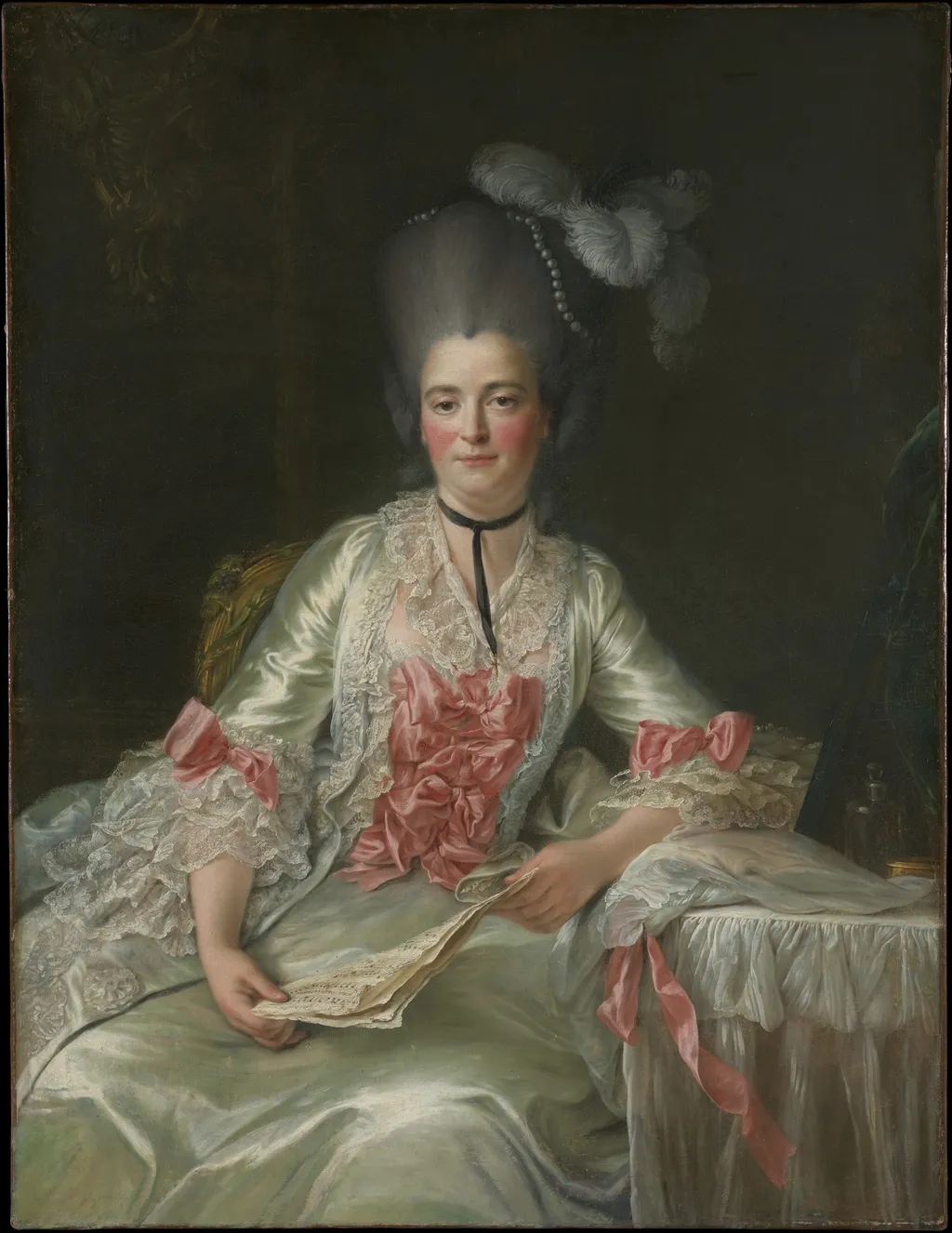
Marie Rinteau, called Mademoiselle de Verrières is an oil painting by the Rococo painting artist François-Hubert Drouais. It dates from 1761 and is held in the collection of the Metropolitan Museum of Art.
About this work
François-Hubert Drouais showed this portrait of the courtesan, called Mademoiselle de Verrières and later great-grandmother of George Sand, at the Paris Salon.
At her dressing table in 1761, Marie Rinteau holds a sheet of music that nods to her short career on the French stage. François-Hubert Drouais showed this portrait of the courtesan, called Mademoiselle de Verrières and later great-grandmother of George Sand, at the Paris Salon. Her wig was repainted decades later into towering, beribboned heights to suit 1770s fashion. The Met acquired it in 1949 with the Jules Bache Collection.
Subject & Meaning
The portrait depicts Marie Rinteau, known as Mademoiselle de Verrières, adorned with a ribbon, lace, bow, feather, pearl, and a crucifix, with musical notation and glassware also present. These accoutrements carry conventional 18th-century symbolism: the crucifix signals piety, pearls evoke purity, and the musical notation suggests refinement or artistic accomplishment. The ensemble thus presents her as a woman of both virtue and cultivation, aligning with the portrait genre’s purpose of conveying social standing and idealized character.
Through these carefully selected attributes, Drouais constructs a likeness that speaks to her identity within the polite society of the era.
Technique & Style
The portrait is executed in oil paint on canvas, a standard medium for 18th-century French portraiture. The support dimensions are 115.6 cm in height by 87.9 cm in width, consistent with a three-quarter-length composition. The handling of paint is not described in the sources, but the depicted elements, ribbon, lace, bow, feather, crucifix, pearl, musical notation, and glassware, indicate a Rococo concern for luxurious textures and decorative detail.
These formal attributes align with Drouais's known delicate brushwork and refined surface treatment, though specific condition notes are absent. The overall style emphasizes elegance and grace through the sitter's attire and the inclusion of musical notation, suggesting cultivated accomplishments.
History & Provenance
Executed in 1761 by François-Hubert Drouais, this portrait depicts Marie Geneviève Rinteau, known as Mademoiselle de Verrières. The work was formerly owned by Jules Bache and subsequently entered the collection of the Metropolitan Museum of Art, where it remains. The circumstances of its commission are not recorded in the available sources.
Overview
François-Hubert Drouais completed this oil portrait of Marie Rinteau, known as Mademoiselle de Verrières, in 1761, presenting it at the Paris Salon that year. The painting depicts her at a dressing table, holding sheet music, a subtle nod to her theatrical background. Notably, the sitter's coiffure was later updated in the mid-1770s to reflect the elaborate, towering styles then fashionable, replacing her original, simpler hairstyle. The work measures 45 1/2 by 34 5/8 inches.
Legacy
Beyond her own public life, Marie Rinteau holds a significant place in cultural history through her descendants. She was the mother of Marie Aurore de Saxe, whose father was the renowned military commander Maurice de Saxe. Rinteau is perhaps most widely recognized today as the great-grandmother of the celebrated nineteenth-century French writer George Sand, connecting her to a prominent literary lineage.
Own this work as a print
Artist & collection
Artist
François-Hubert Drouais (French pronunciation:; Paris, 14 December 1727 – Paris, 21 October 1775) was a leading French portrait painter during the latter years of Louis XV's reign.

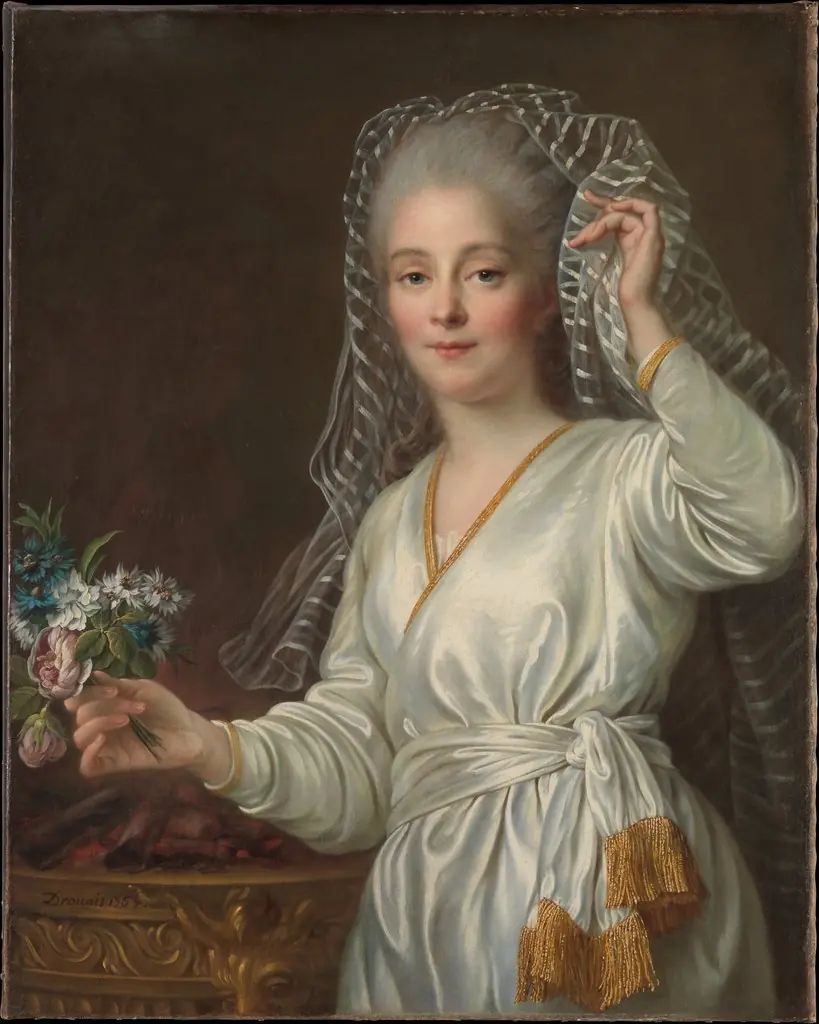 Portrait of a Young Woman as a Vestal Virgin
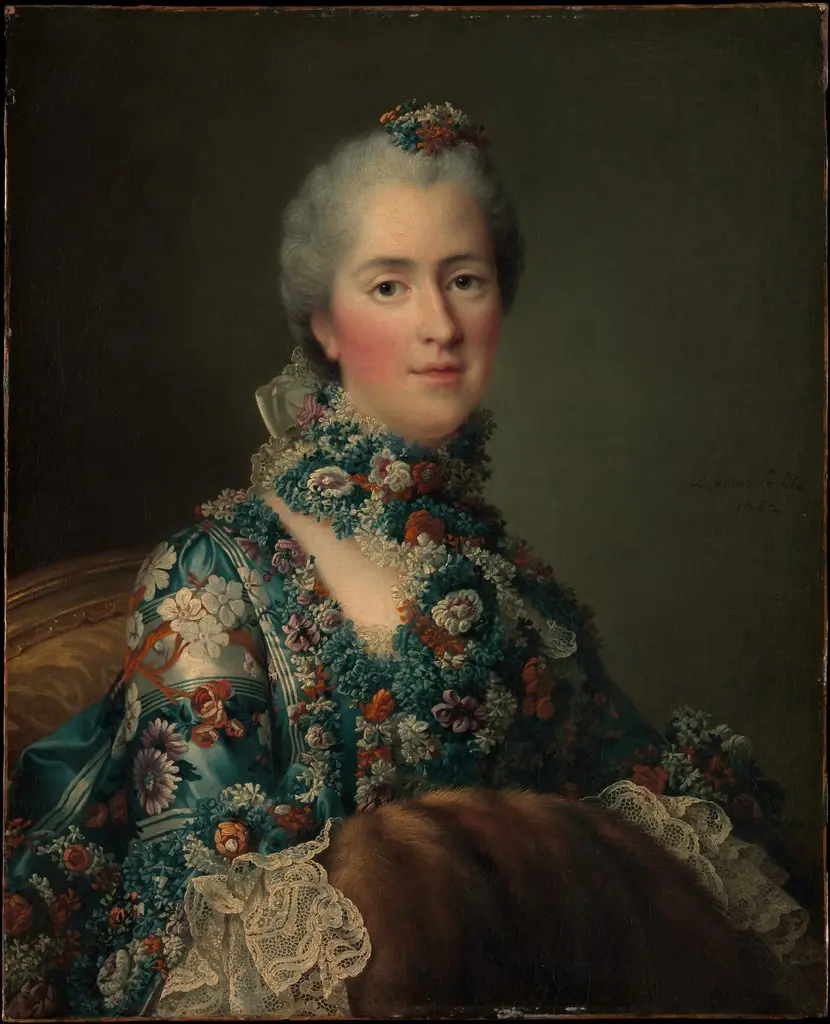 Madame Sophie de France (1734–1782)
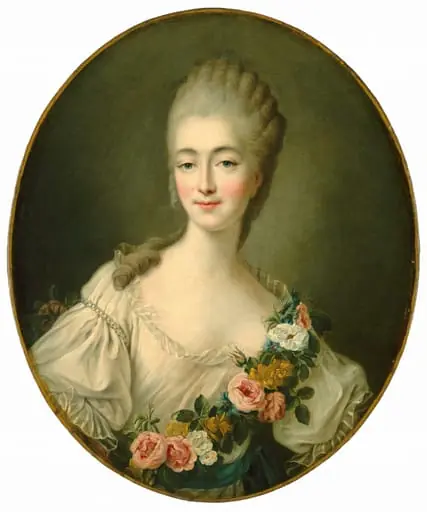 Jeanne Bécu, Comtesse du Barry
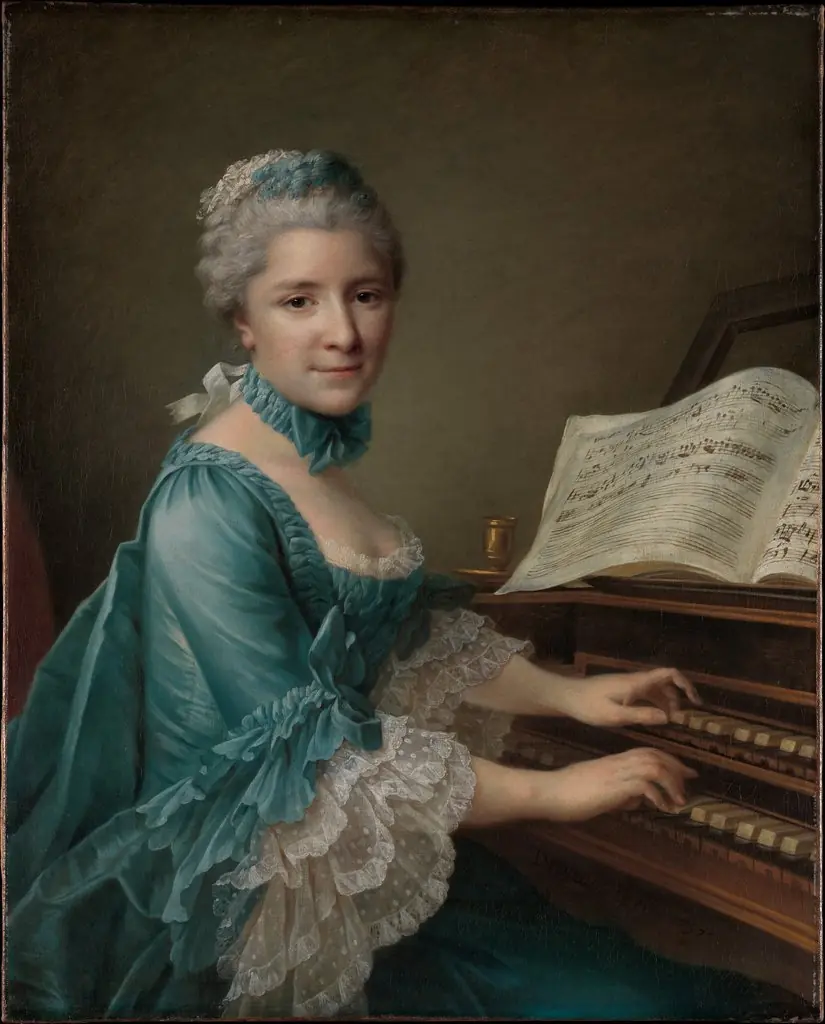 Portrait of a Woman, Said to be Madame Charles Simon Favart (Marie Justine Benoîte Duronceray, 1727–1772)
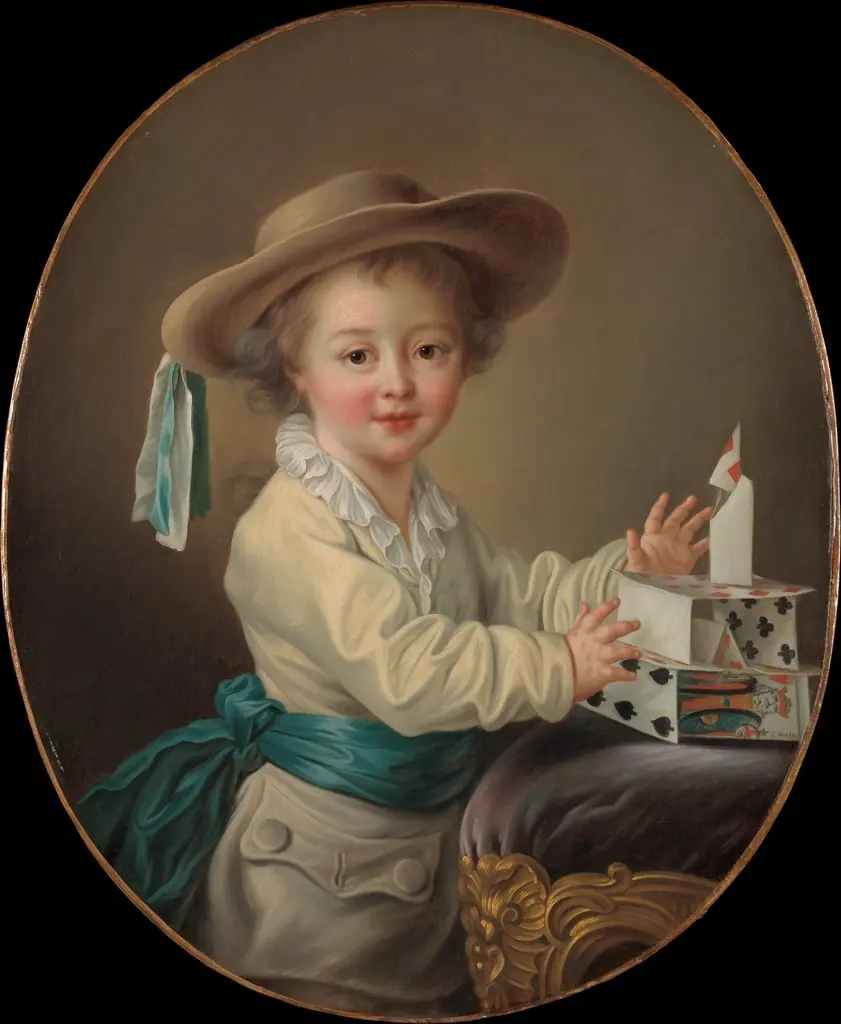 Boy with a House of Cards
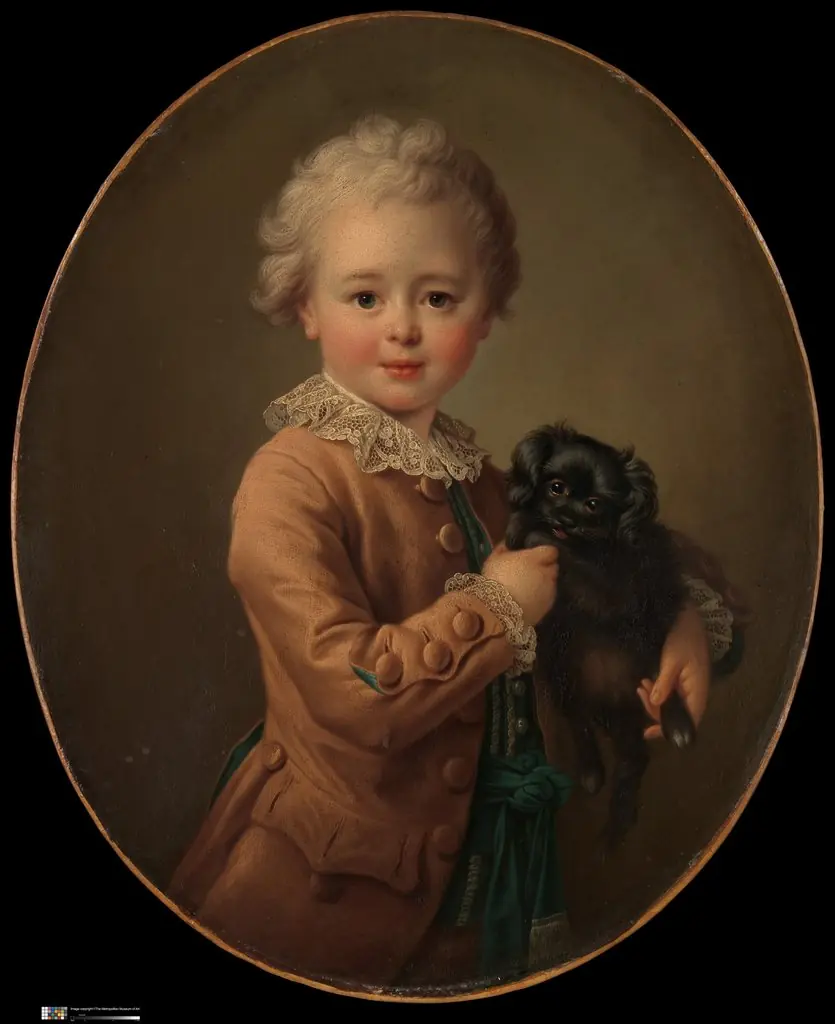 Boy with a Black Spaniel
 Family Portrait
 Portrait of the Marquise d'Aguirandes
 Portrait of a Woman
 Portrait of Anna Elisabeth Battier, née Storp
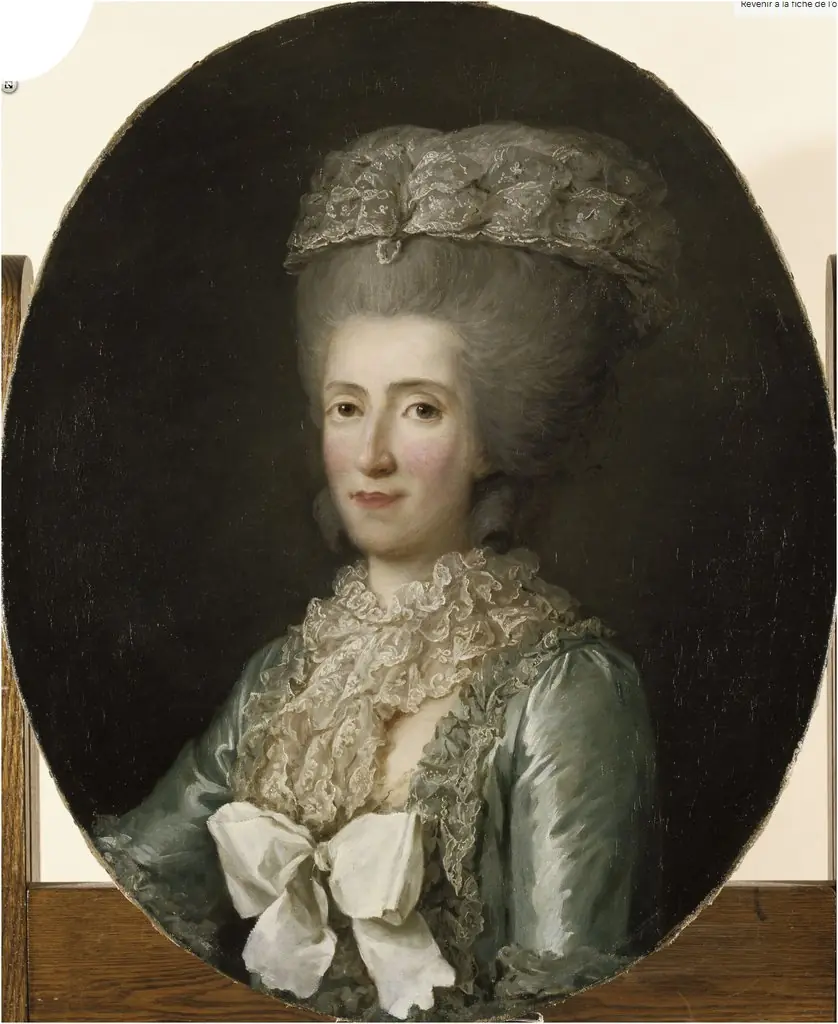 Marie-Adélaïde de France, dite Madame Adélaïde
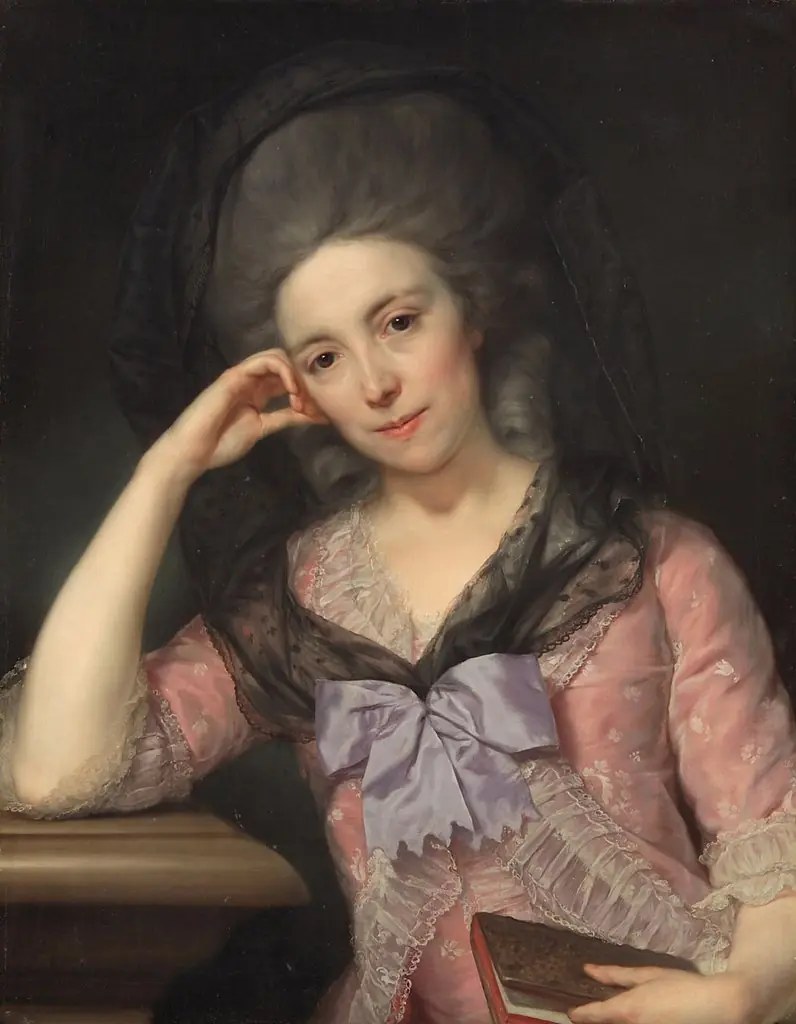 Portrait of Elisabeth Hervey, Countess of Bristol (1733-1800)
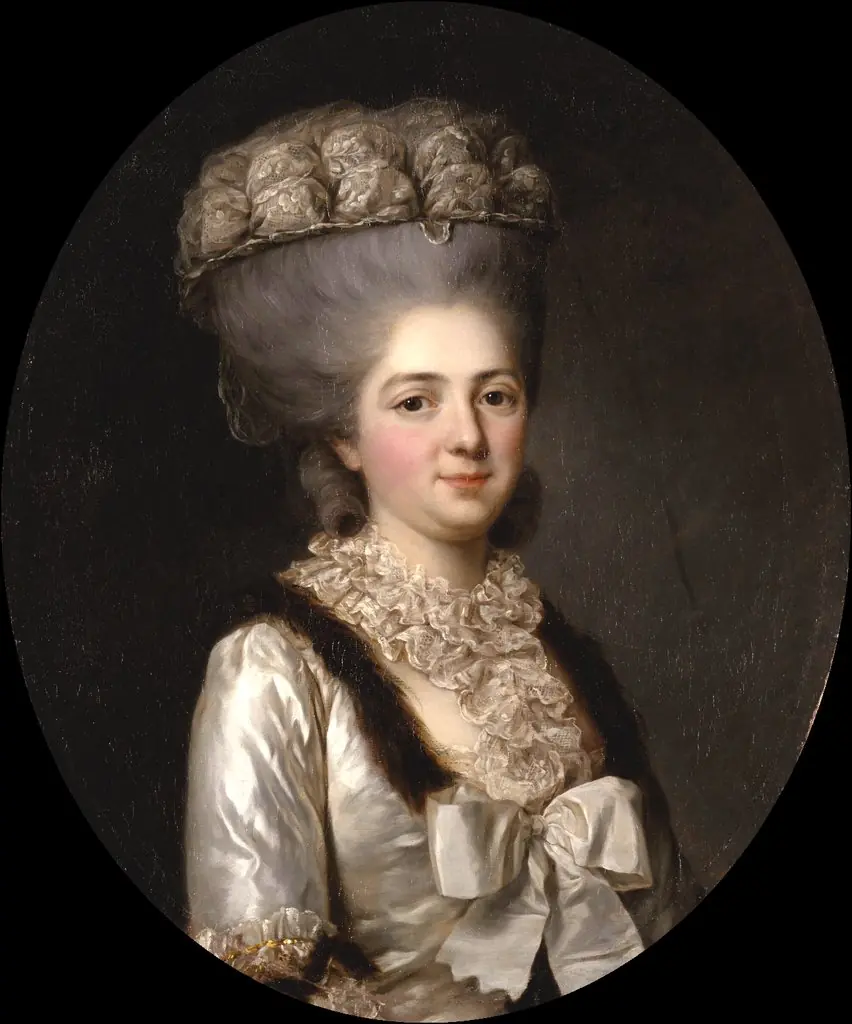 Marie-Louise-Thérèse-Victoire de France, dite Madame Victoire (1733-1799)
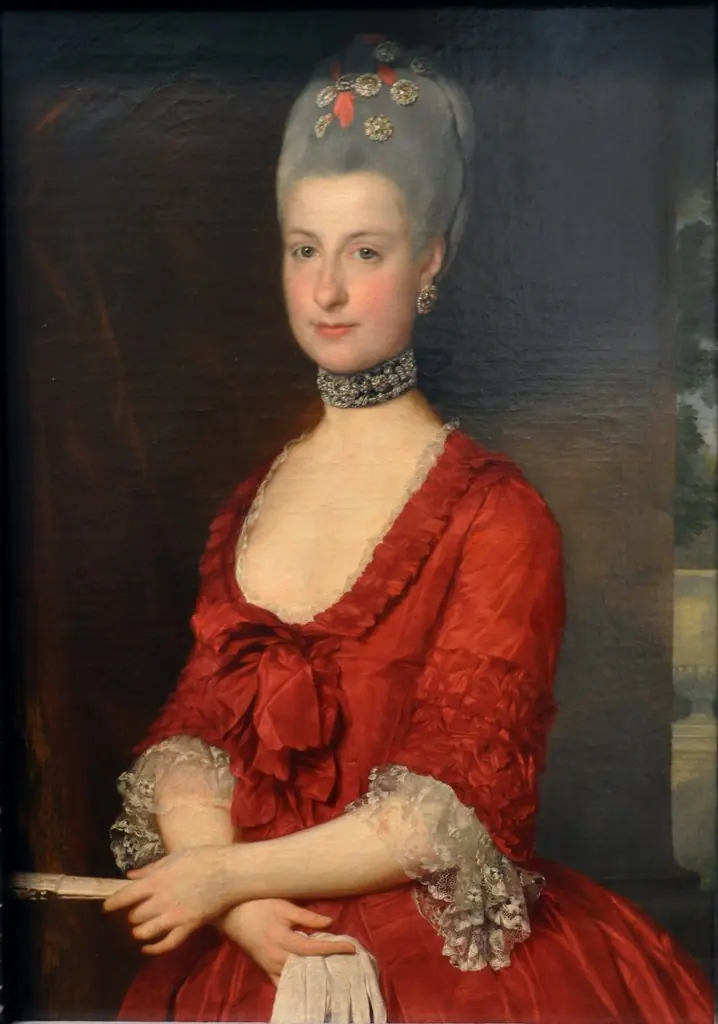 Portrait of Archduchess Maria Christina (1742-1798), Duchess of Teschen
 Madame de Saint-Maurice
 Elizabeth Stevens Carle
 Sarah Harding
 Portrait of Marie Leszczyńska
- Elisabeth-Philippe-Marie-Hélène of France, known as Madame Elisabeth