St. Andrew by Jusepe de Ribera
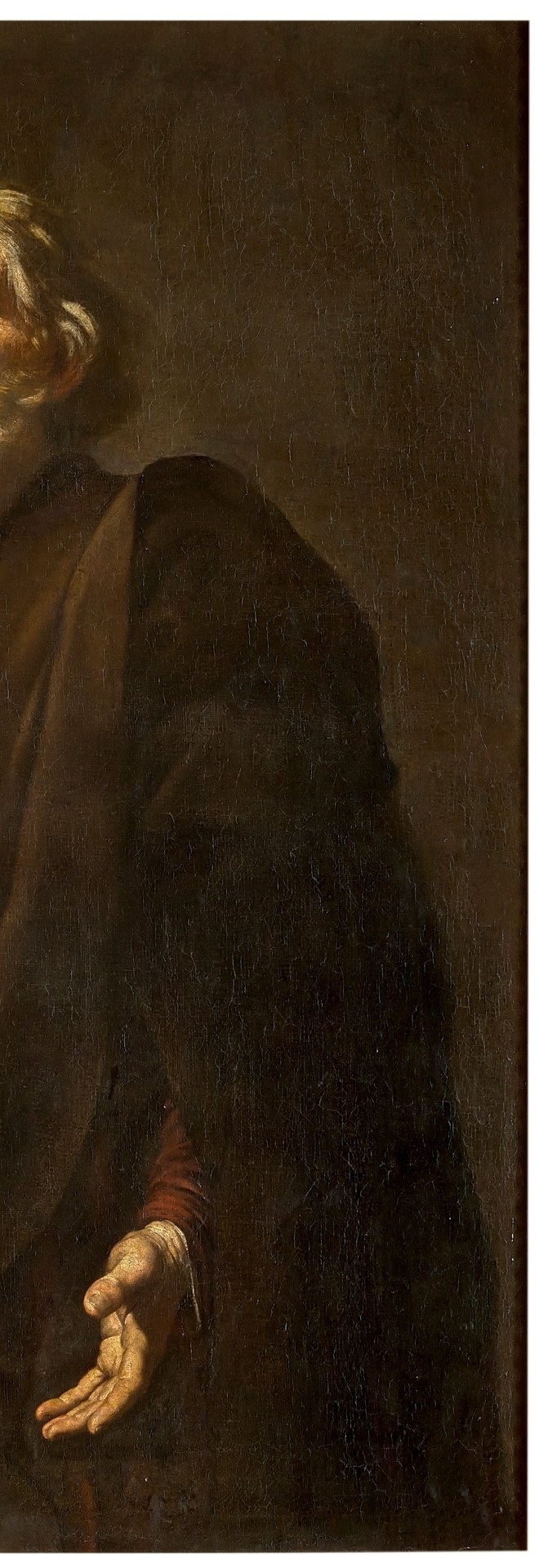
Jusepe de Ribera's *St. Andrew*, oil on canvas, 1601, at the Museo del Prado. This early Baroque work is remarkable because Ribera was only about 10 years old when he painted it.
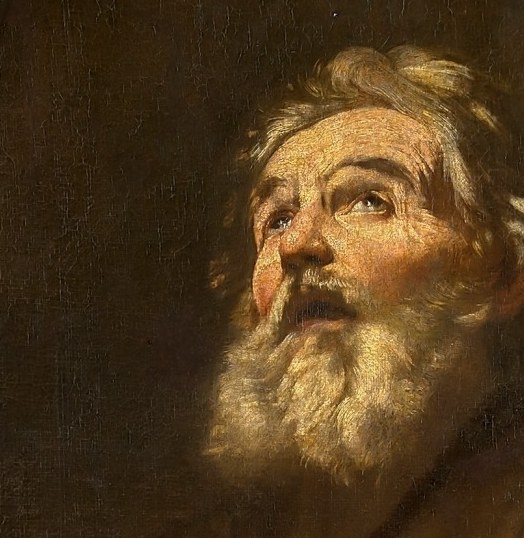
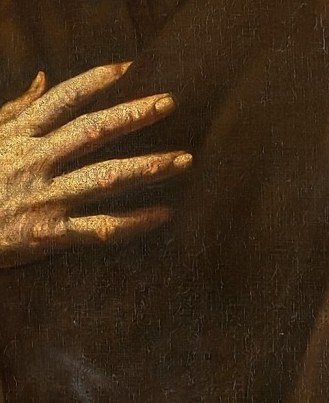
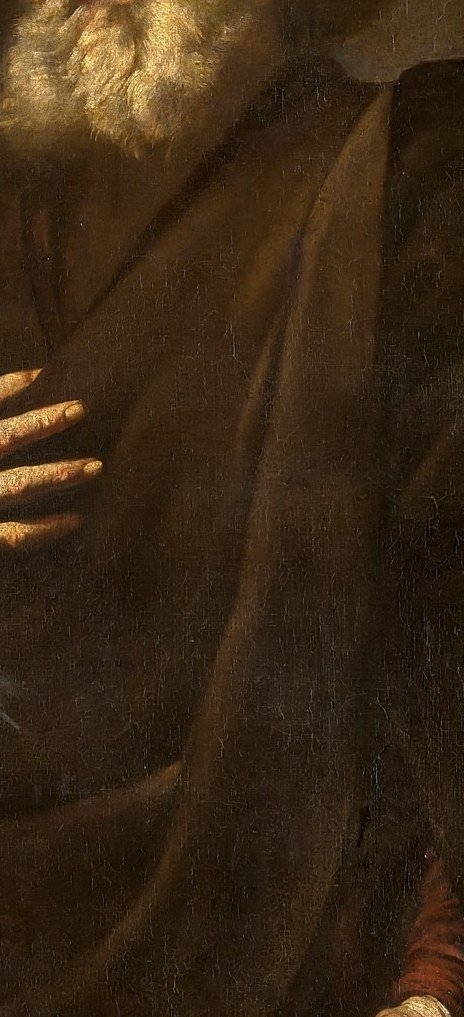
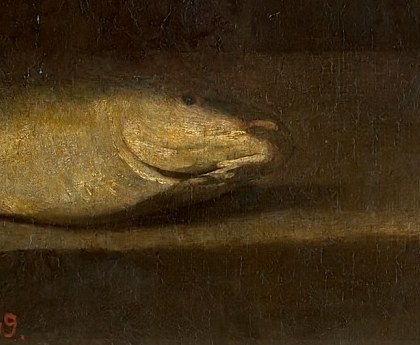
Notice the dramatic chiaroscuro, with light illuminating Saint Andrew's face and hands against a dark background. His left hand is on his chest, a gesture of sincerity, while his outstretched right hand, not pictured here, suggests offering. The fish on the table is a symbol of his former life as a fisherman.
This painting showcases Ribera's early mastery of dramatic realism and emotional intensity. Despite his young age, the technique and composition are already sophisticated, foreshadowing his later fame as a leading Spanish Baroque artist.
It is a testament to prodigious talent that such a powerful and emotionally charged work could be created so early in an artist's career.
Details
Transcript
This is Ribera's St. Andrew, painted in 1601. Look at the dramatic light on his face. His hand rests on his chest, a sign of sincerity. He holds his cross, the symbol of his martyrdom. A fish on the table references his former life. Ribera painted this at just 10 years old. He uses stark light and shadow for intensity. See the texture of his flowing white beard.