The Beach at Villerville by Boudin, Eugène
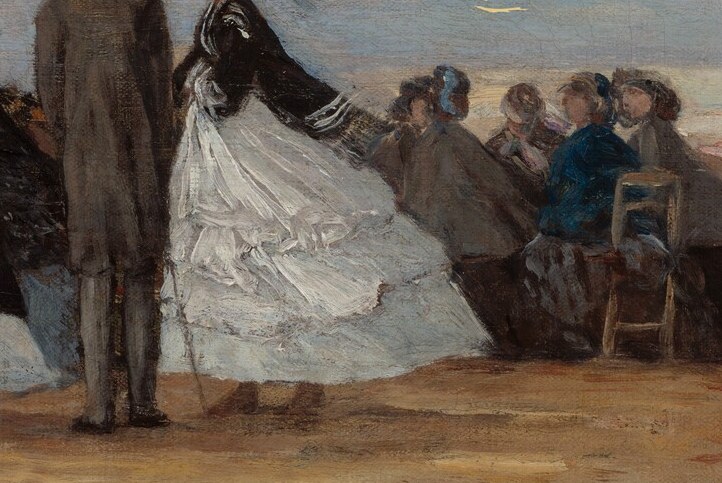
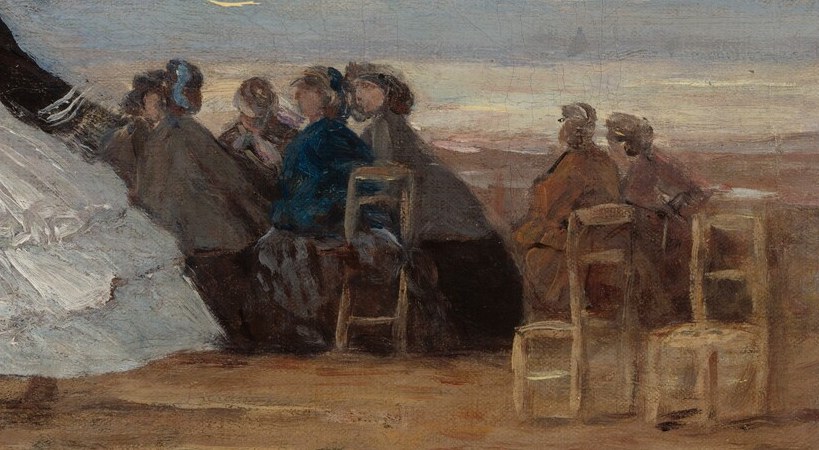
This is The Beach at Villerville, painted by Eugène Boudin in 1864. It is a masterclass in fleeting light, but it hides a permanent secret in plain sight.
Look first at the sky. Boudin earned the title 'King of the Skies' from the painter Corot for his unmatched ability to capture the transient, shifting colors of the atmosphere. He worked outdoors along the Normandy coast, using rapid, economic brushstrokes that would later inspire a young Claude Monet.
Now look down at the bottom right corner. You'll find a detail most people scroll past: Boudin didn't just sign this painting. He carved his name and the date directly into the wet paint with the back of his brush. It's a deliberate, physical mark of his presence, scratched into the texture of the sand he had just depicted.
This painting belongs to a revolutionary moment when artists fled the studio to paint the world as it actually looked: ordinary people in ordinary light. By etching his name into the surface, Boudin declared that he was not just an observer, but a participant in this seaside afternoon.
Next time you see a beach scene, ask yourself: is the artist still there?
Details


Transcript
A fashionable crowd gathers on a windswept beach. Boudin was called the 'King of the Skies' for a reason. He painted quickly, outdoors, chasing the light. But the real secret is not on the horizon. It is down here, in the sand. His signature is carved into the paint itself. A permanent mark on a fleeting moment.