Flowers in a Vase by Renoir, Auguste
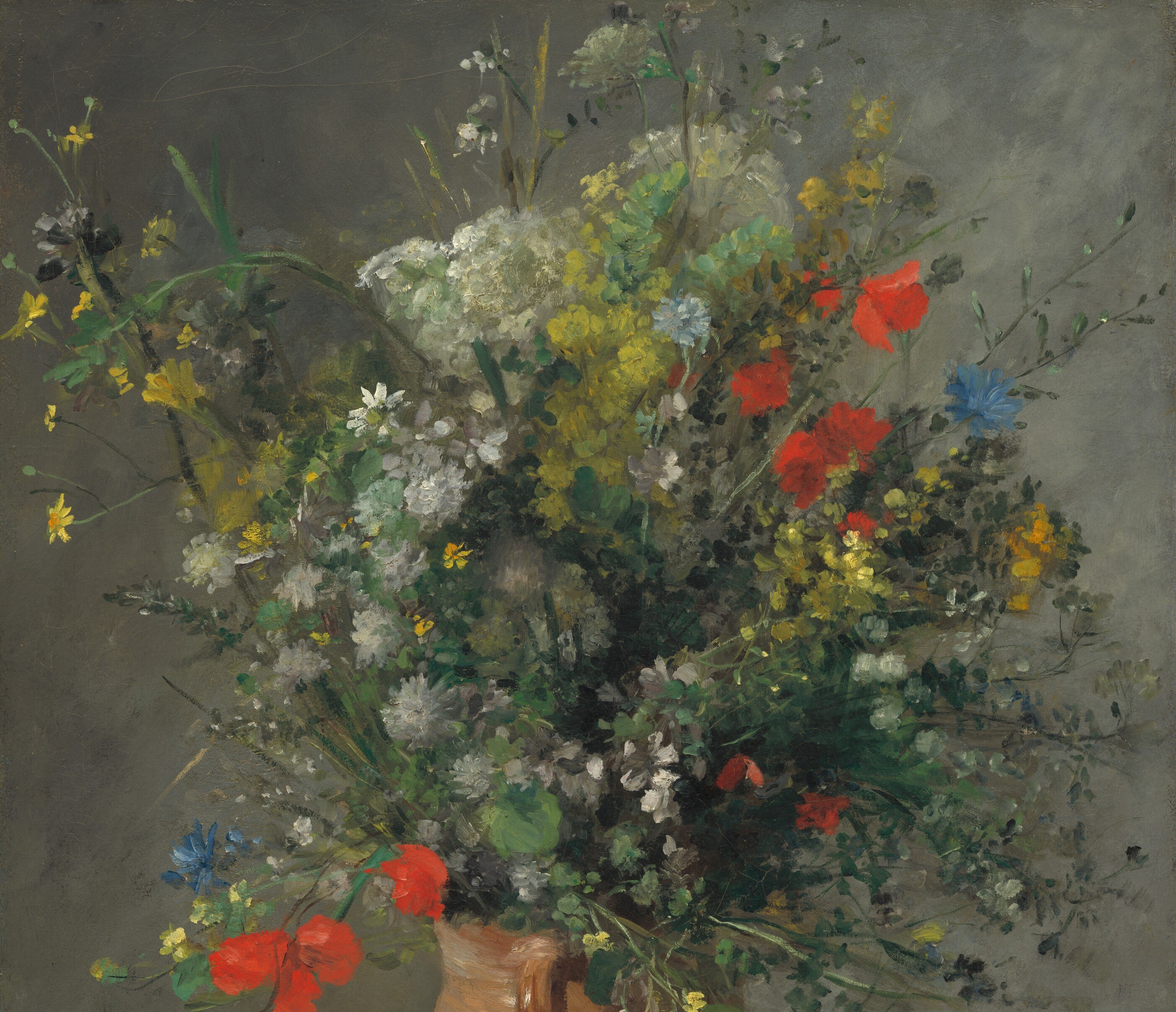
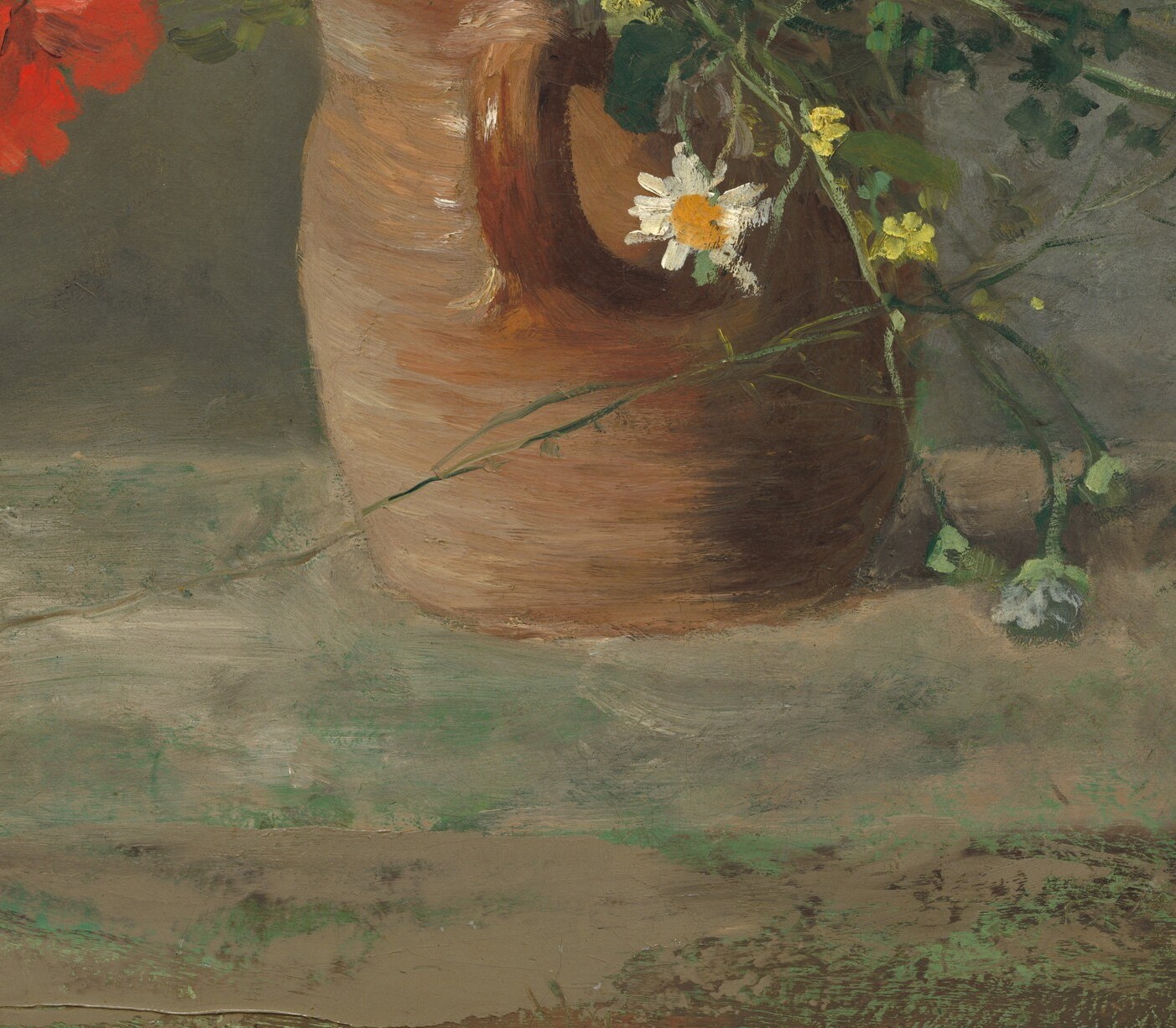
Pierre-Auguste Renoir's “Flowers in a Vase,” painted around 1866, captures a pivotal moment in the artist's development, just before the birth of Impressionism. It demonstrates his early exploration of still life, a crucial arena for honing his skills in brushwork, color, and light.
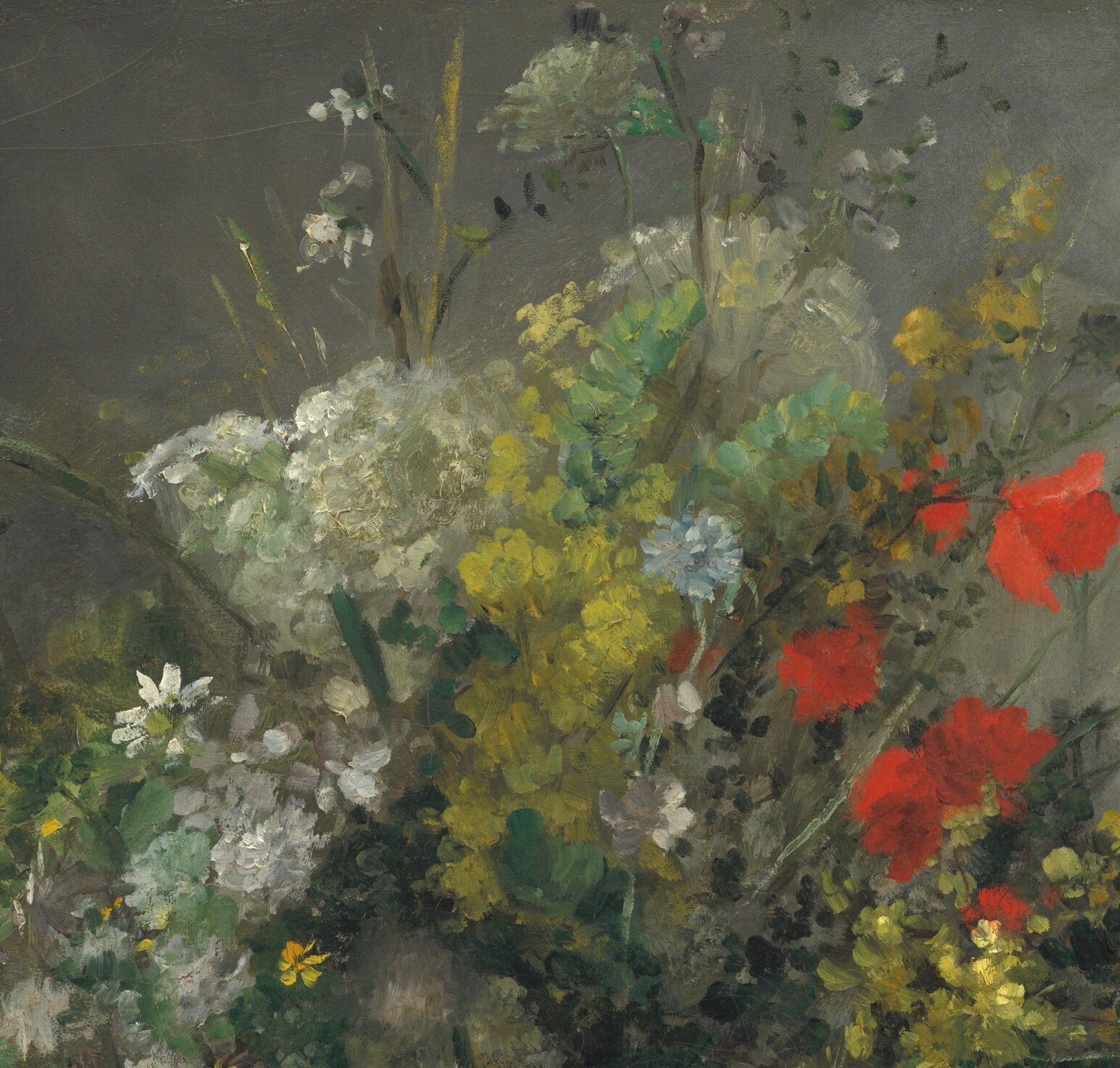
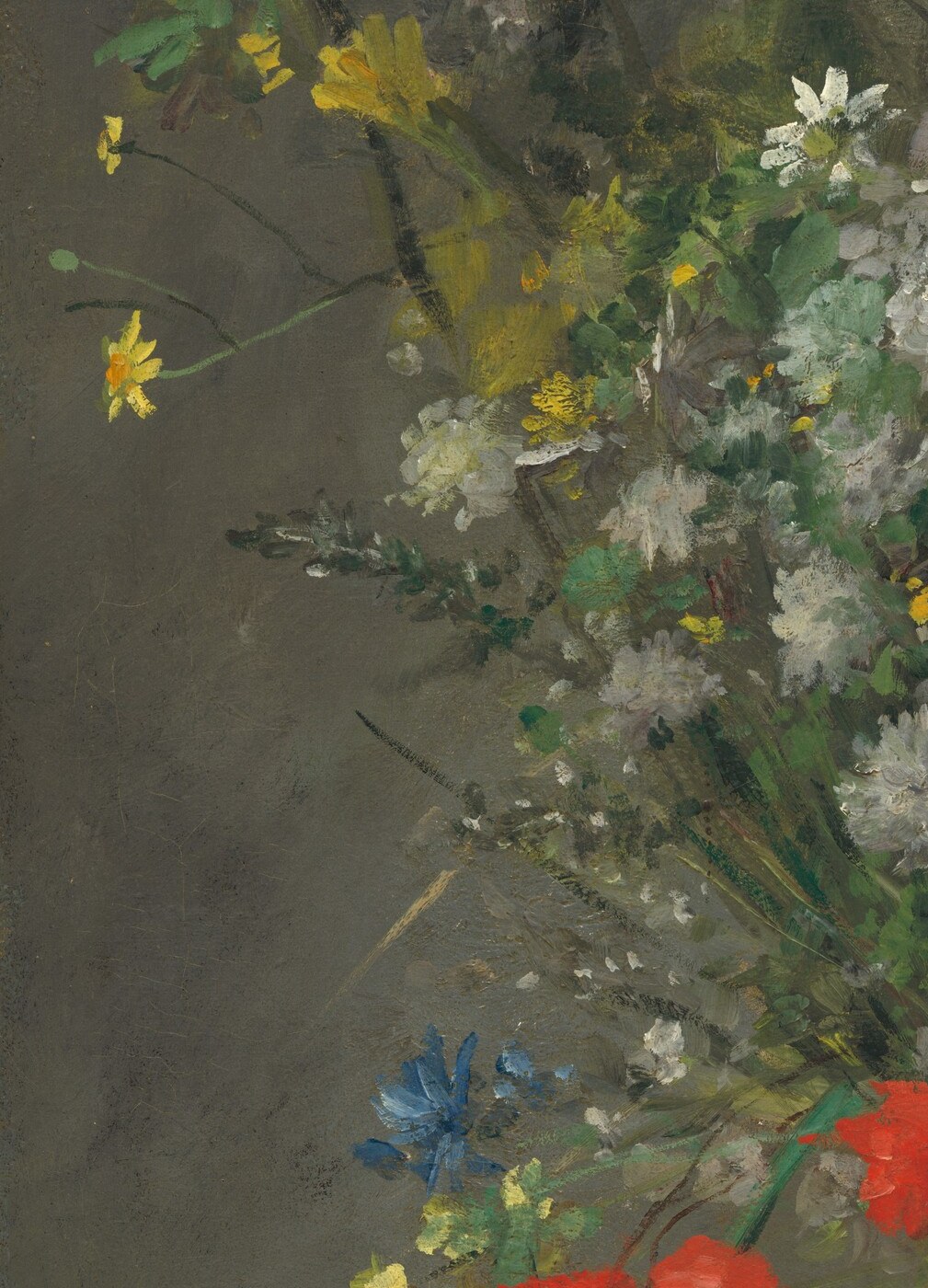
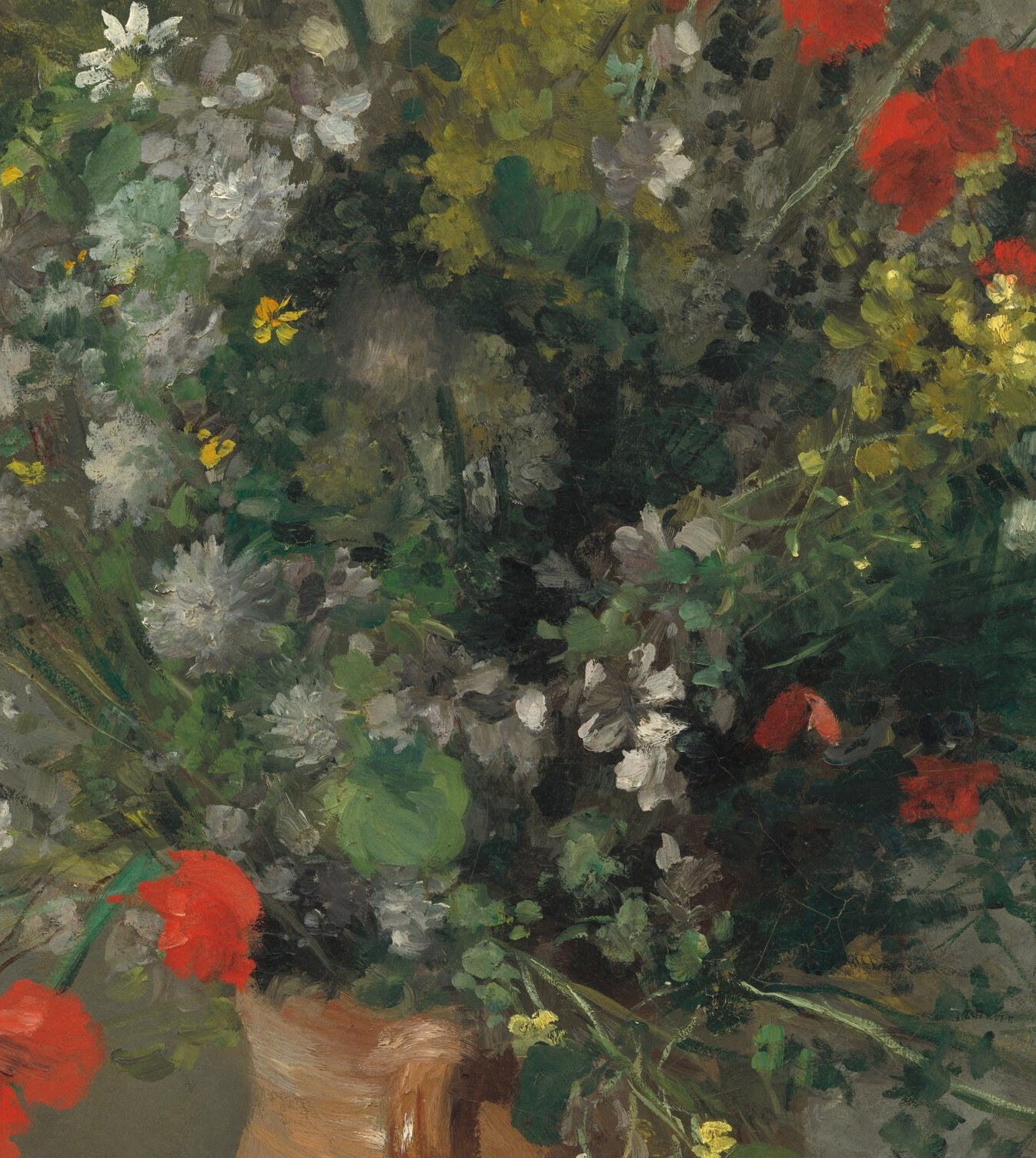
Observe the rich, dark background, a stylistic choice echoing 17th-century Dutch masters, quite different from the brighter palettes Renoir would later adopt. Yet, the bouquet itself bursts with vibrant, loosely rendered wildflowers, suggesting the spontaneity that would define his future work. Look closely at the impasto textures on the petals, revealing his experimentation.
Interestingly, X-rays have shown that Renoir painted “Flowers in a Vase” over a previous floral study. This practice of reusing canvases highlights his iterative process, as he continuously refined his approach to composition and color. He was finding his footing, moving away from academic conventions toward a more personal style.
This painting is a quiet witness to Renoir's transition, from the structured environment of the studio to the light-filled outdoor scenes that would make him famous. What do you notice first?
Details
Transcript
Renoir painted this around 1866, before Impressionism was born. Notice the deep, somber background, atypical for his later work. He still used the dark grounds of 17th-century Dutch still lifes. But the flowers themselves are vibrant, loosely painted wildflowers. X-rays confirm Renoir painted over another flower study here. This shows him experimenting, finding his distinctive style. Soon he would paint sun-drenched gardens, not studio still lifes.