Bust of a Man (Saint Matthias?) by Giovanni Battista Piazzetta
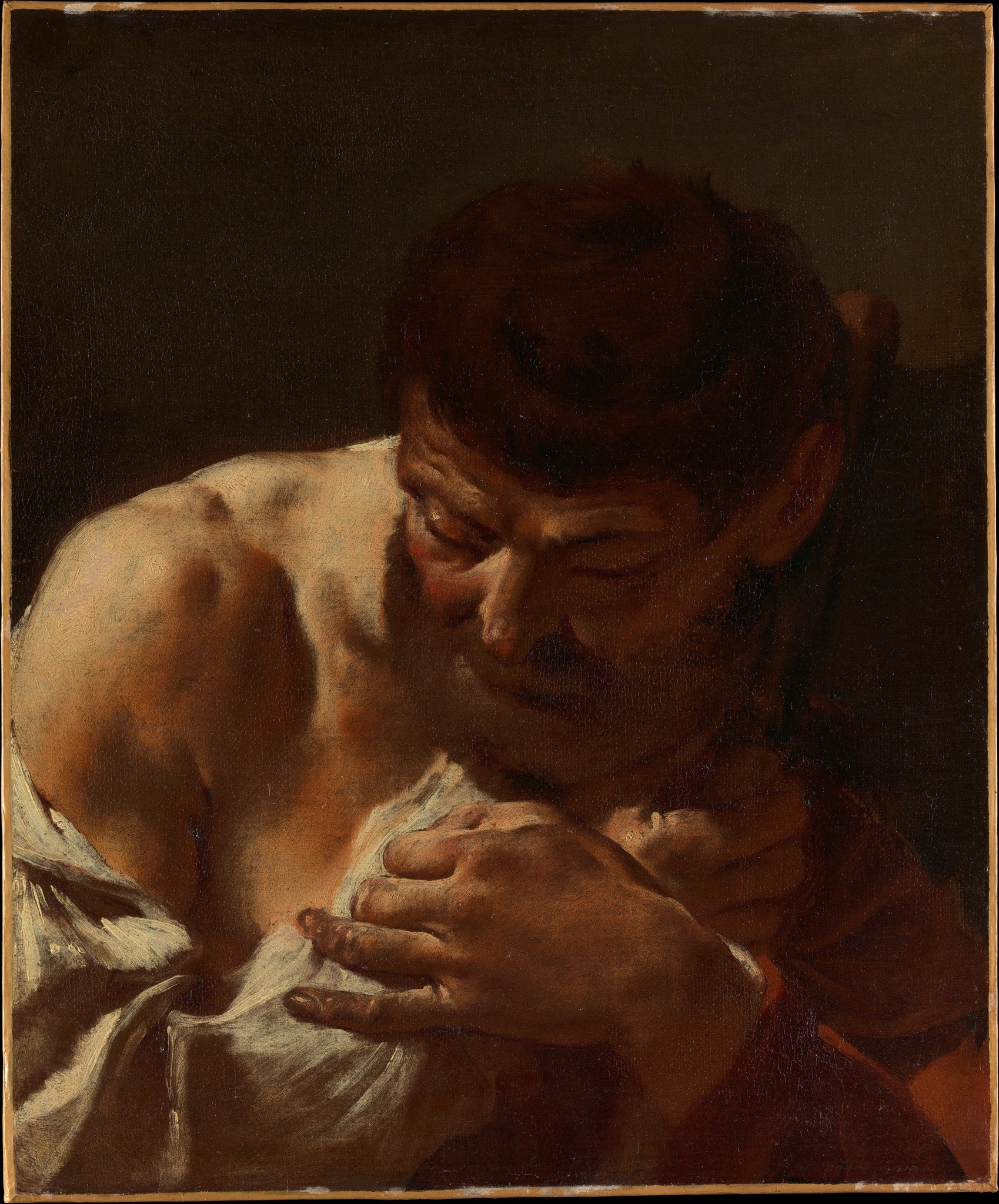
Giovanni Battista Piazzetta’s 'Bust of a Man (Saint Matthias?)', painted in 1717 and now at The Metropolitan Museum of Art, draws us into a profound emotional moment with its striking use of light and shadow.
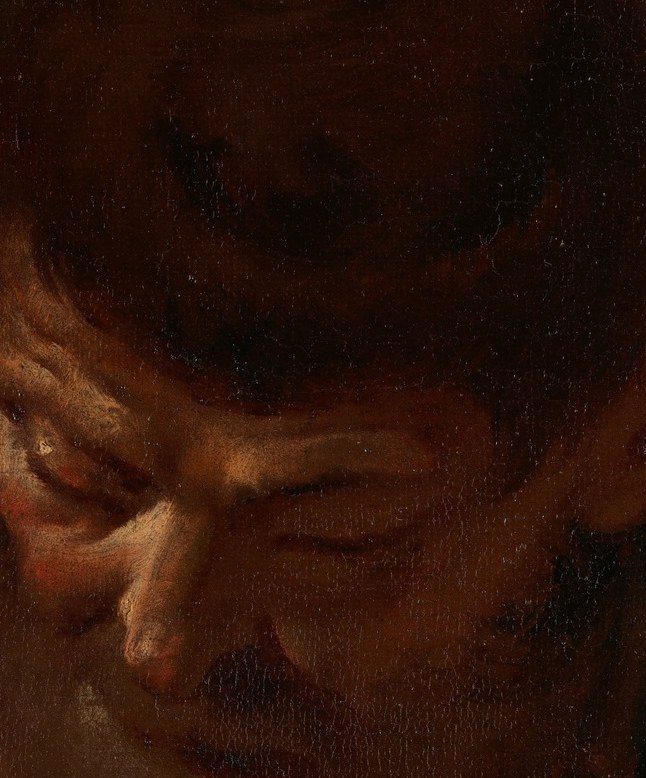
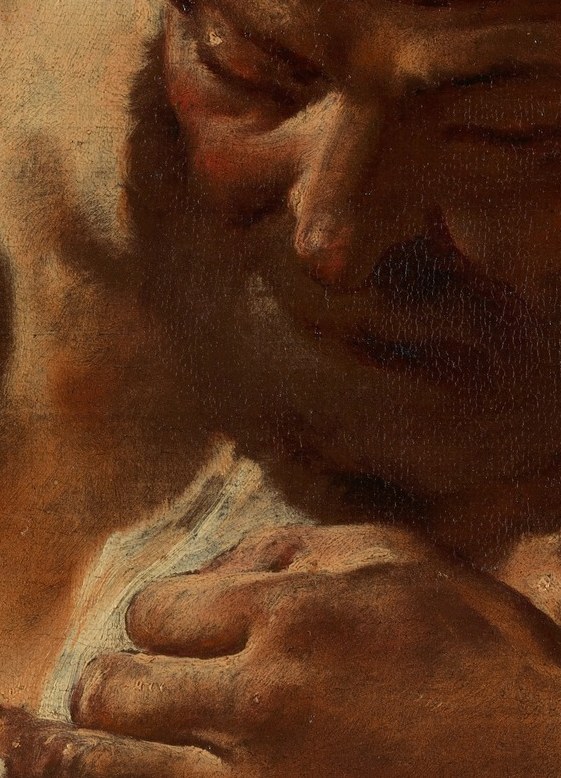
Look closely at the man’s downcast face and the tension in his tightly clenched hands. He holds a white cloth, a detail that hints at a deeper, possibly sorrowful, narrative.
Piazzetta, an Italian Rococo painter, masterfully used chiaroscuro, contrasting intense light with deep shadows to create depth and heighten emotional intensity, making the figure's presence incredibly immediate. The painting’s tentative title, 'Saint Matthias?', suggests a religious context for his pensive demeanor.
What do you imagine he is contemplating in this moment of quiet introspection?
Details
Transcript
A single figure emerges from the darkness. His face is cast downward, lost in thought. The painter used dramatic light and shadow to sculpt him. His hands are tightly clenched, holding a white cloth. This painting is called 'Bust of a Man, Saint Matthias?'. Perhaps the cloth is a sign of deep sorrow.