Isaac de Peyster (?) by Doornik, Frans van
This is Isaac de Peyster (?), a portrait by Frans van Doornik painted in 1731. What looks at first like a straightforward gentleman's portrait becomes, on closer inspection, a quiet masterclass in how oil paint can conjure texture out of nothing.
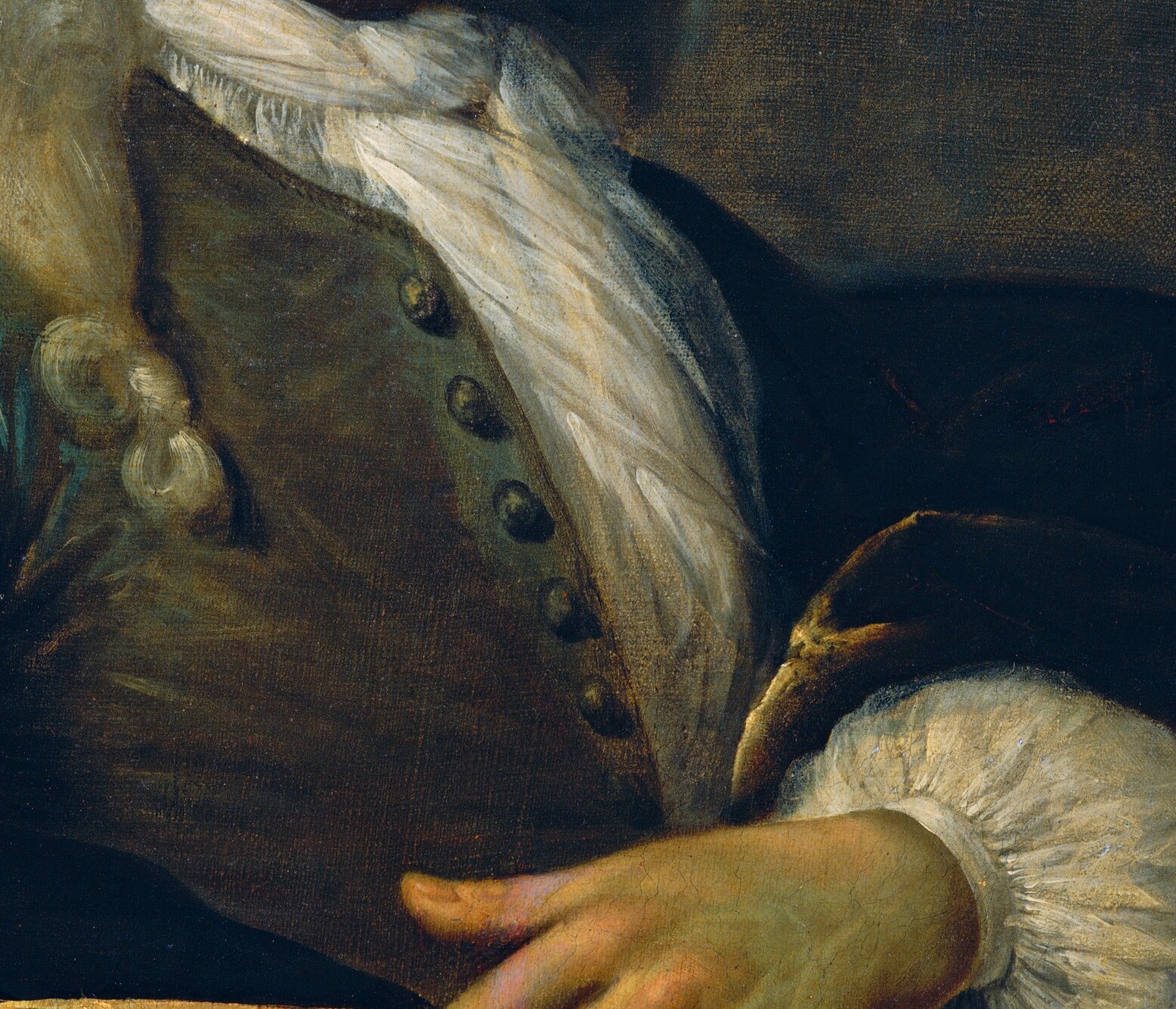
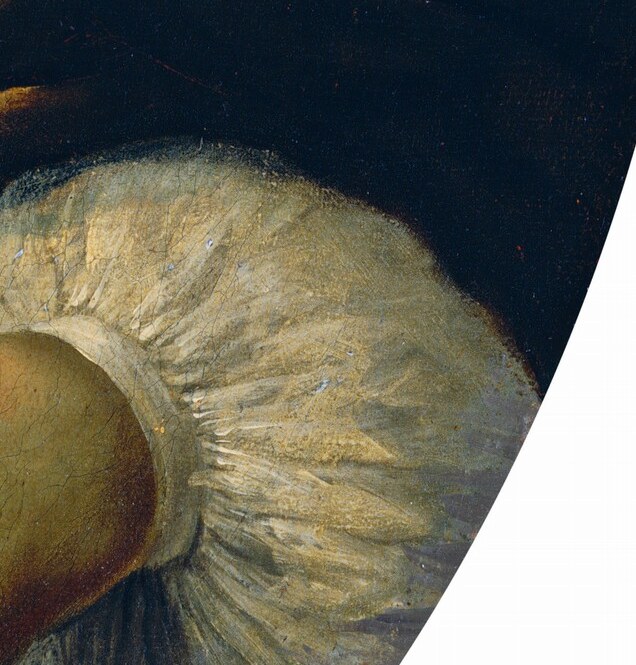
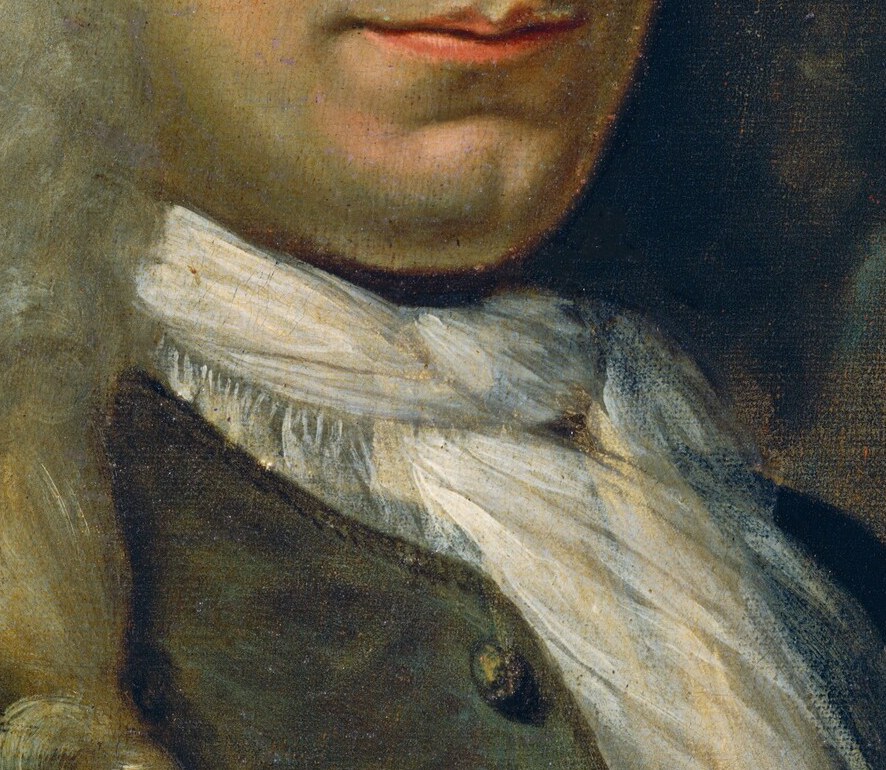
Look at the white silk scarf. There is almost no pure white paint in it. Van Doornik built the folds using layered grays, creams, and the warm brown of the jacket underneath showing through. The scarf appears luminous because he painted the light passing through it, not the object itself. Move up to the ruffled cuff: individual strokes of white and shadow create the crispness of fine linen without ever feeling stiff. The velvet jacket is a deep, soft brown, modeled with subtle sheen that gives the fabric weight and volume. These textures were built slowly, layer upon translucent layer, the Baroque technique of chiaroscuro pushing the figure forward from the dark background.
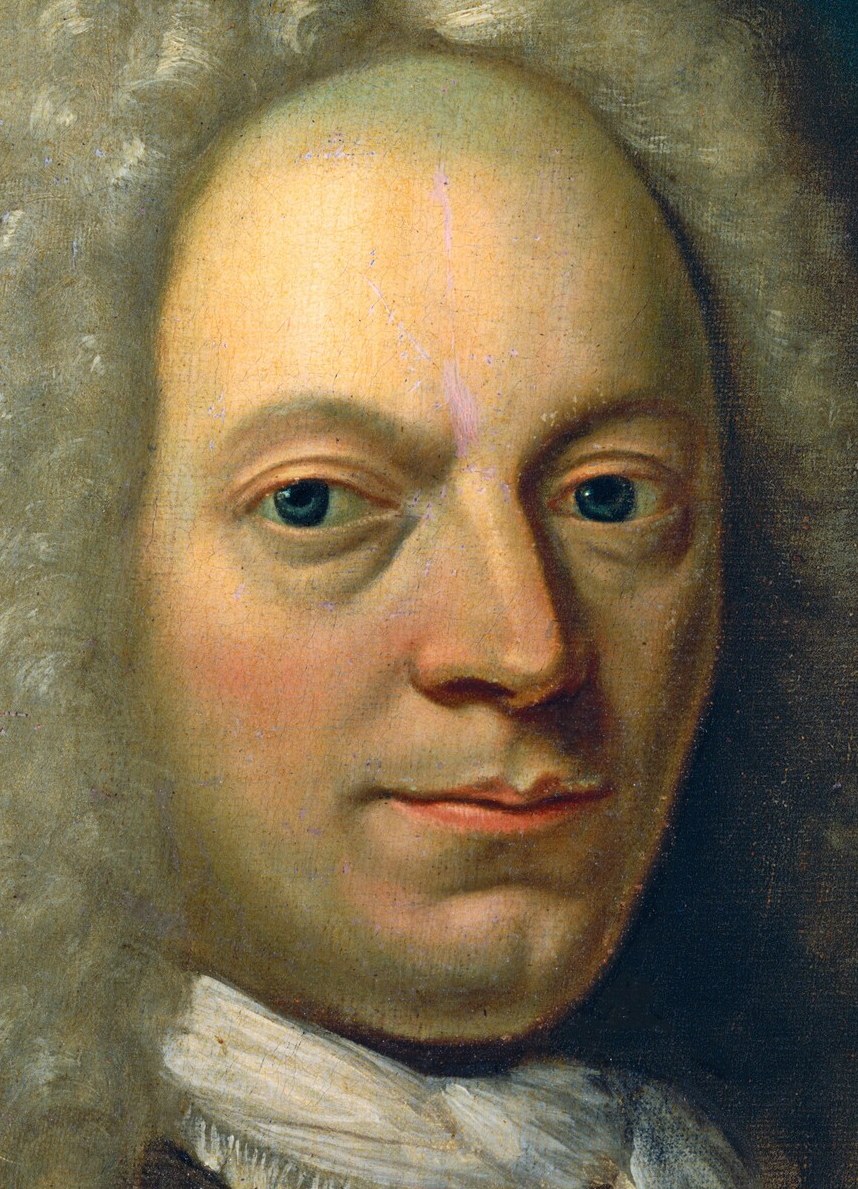
Frans van Doornik was active in the early eighteenth century, and very little is known about him, or even about the sitter. The name Isaac de Peyster is a tentative attribution, not a confirmed identity. The painting survives with almost no documented provenance, a single polished object from a life we cannot trace. And yet the sitter's blue eyes, direct and slightly amused, follow you across the room with an immediacy that feels completely present.
A painter we barely remember, a sitter we cannot name, and a technique so precise that velvet and silk still feel touchable nearly three hundred years later. What does it take for an image to outlast every story attached to it?
Details
Transcript
A brown jacket. A white scarf. Simple enough. Now look closer at the sleeve. That's not a photograph. It's oil paint, 1731. Layered brushwork builds the velvet, thread by thread. The scarf has no white in it. Only gray, cream, and the brown of the jacket glowing through. He painted the light itself, not the silk.