The Prison of Copenhagen by Martinus Rørbye
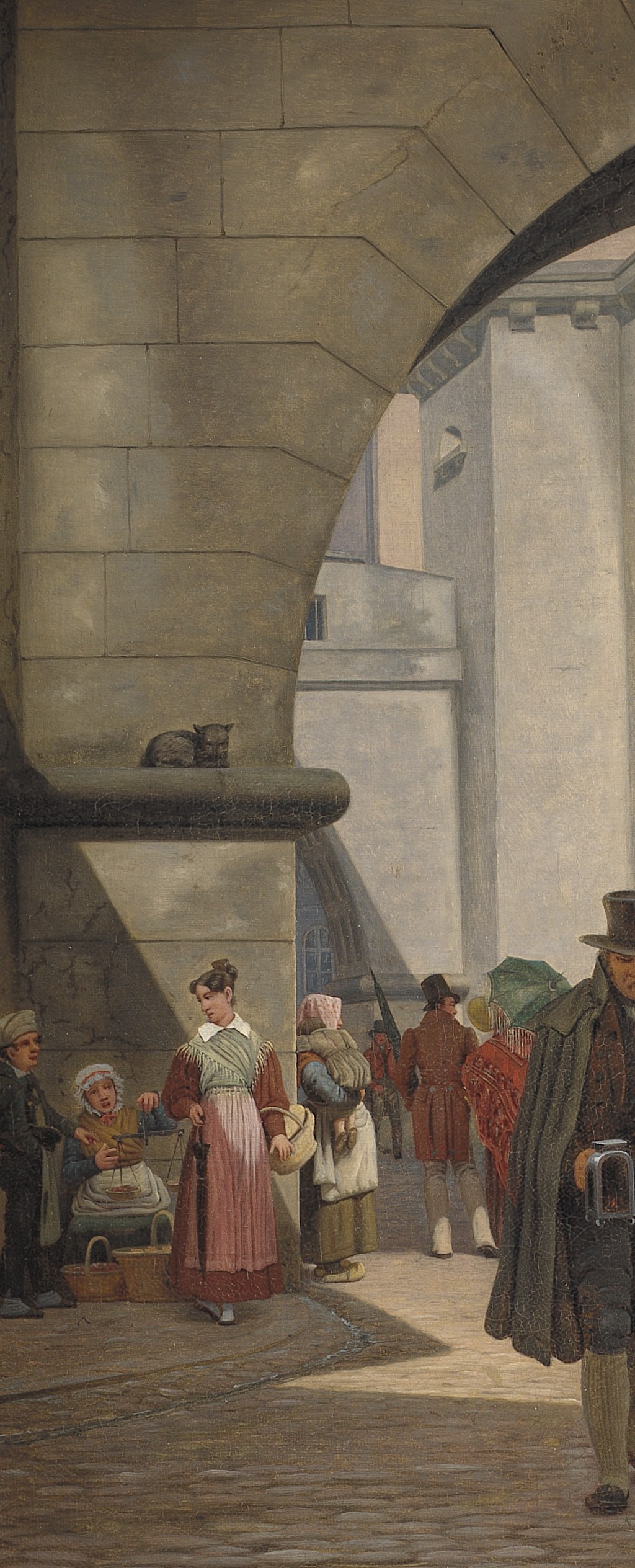
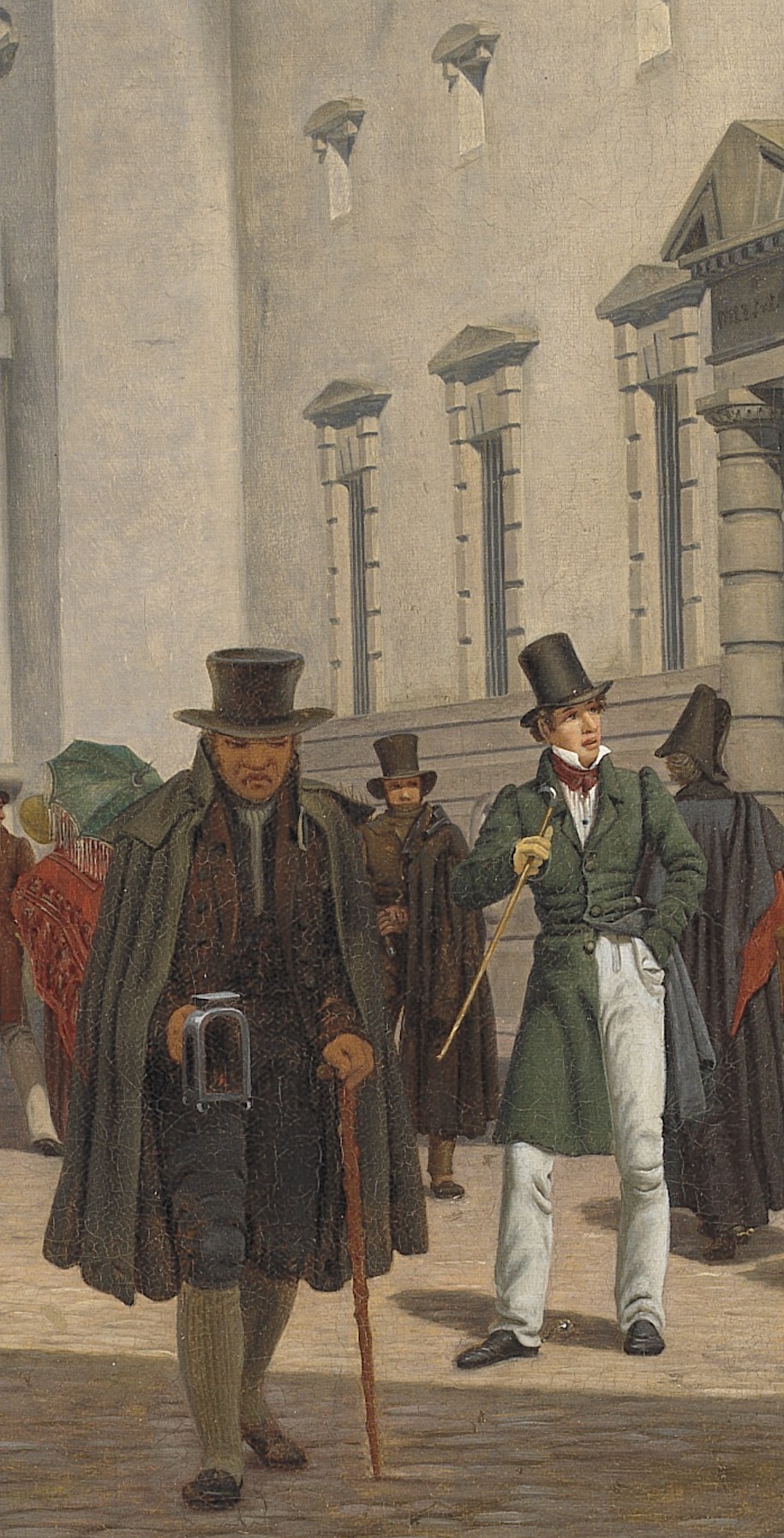
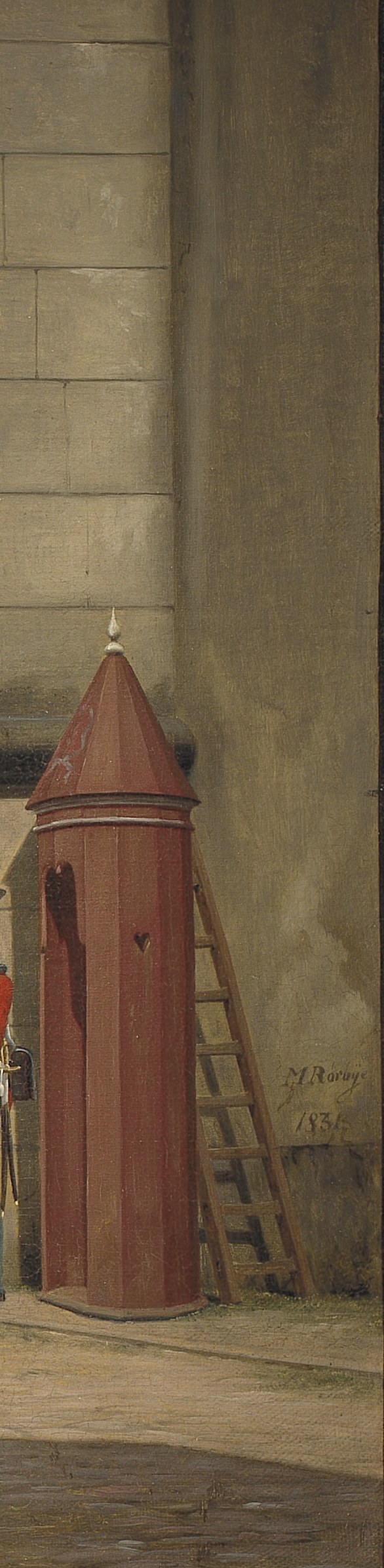
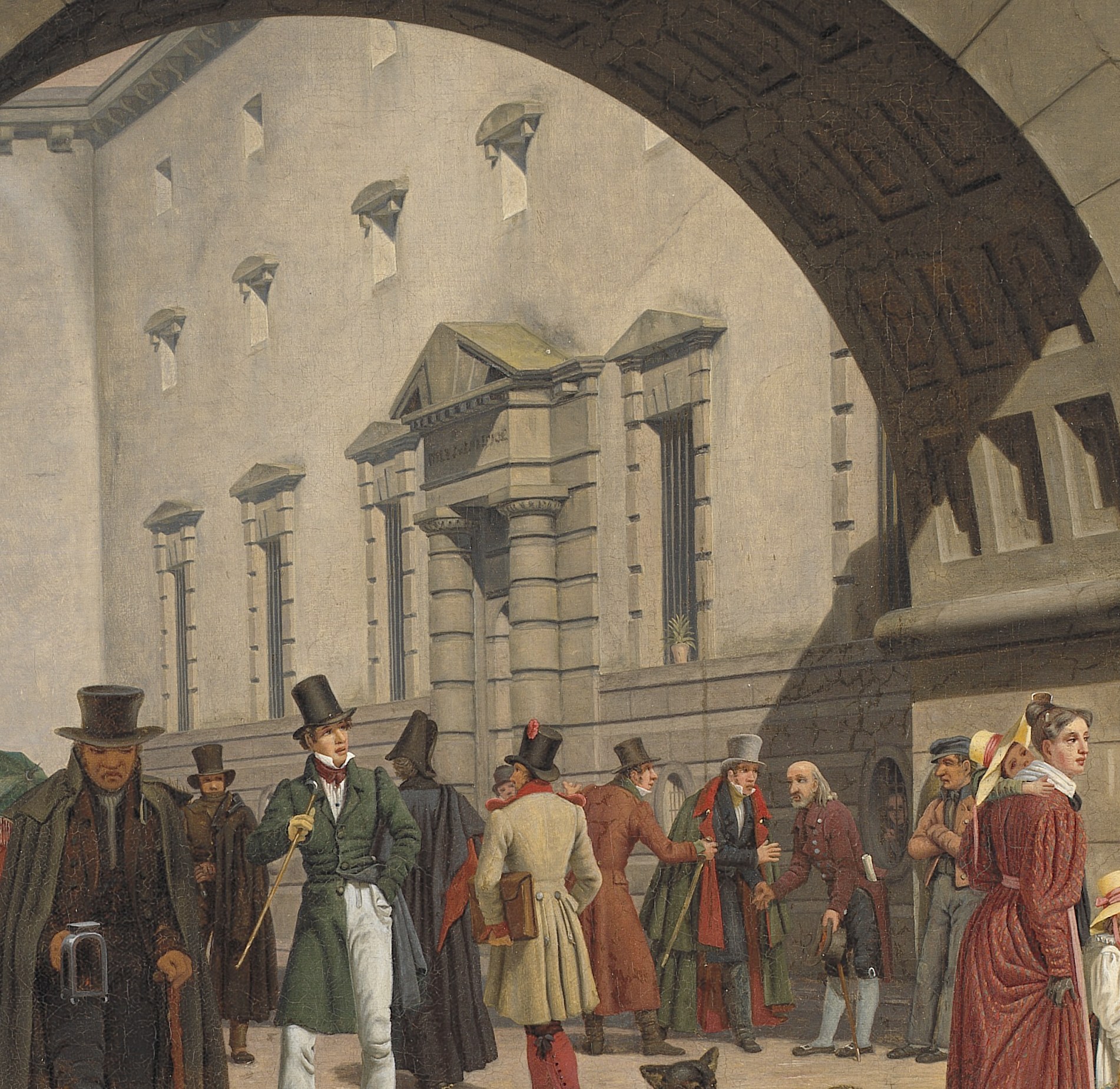
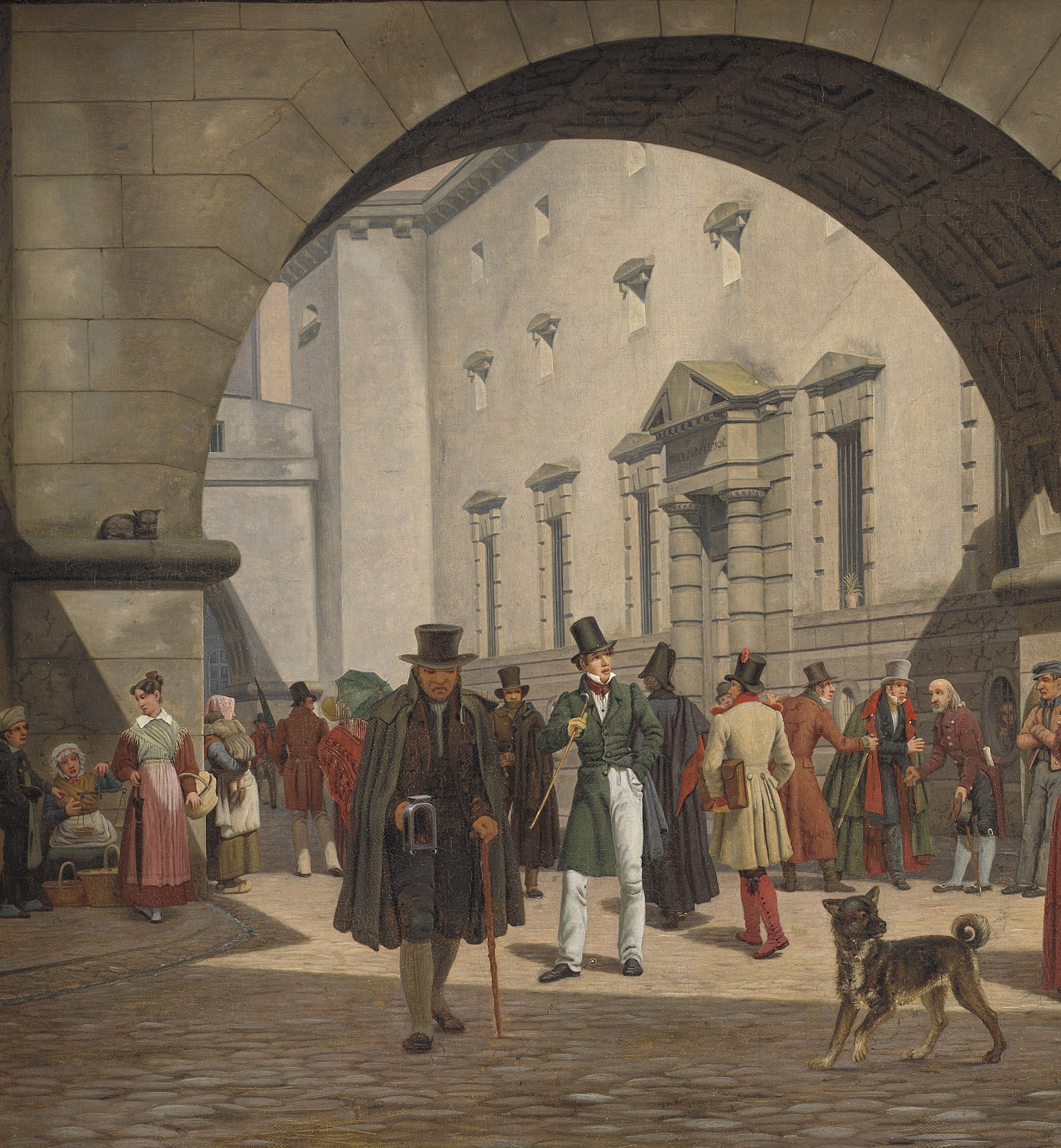
The Prison of Copenhagen, by Martinus Rørbye, was painted in 1831 and hangs today at the Statens Museum for Kunst. Rørbye was the most widely traveled Danish painter of his era, but this scene unfolds at home, under the great stone arch of the Copenhagen Court House. The painting is a quiet masterclass in light management, all the more striking because it was made decades before a camera could reliably handle a scene this dark in front and this bright beyond.
The large arch acts like a proscenium. Your eye enters through deep, textured shadow, pauses on the figures in mid-conversation, and then breaks into the sunlit courtyard. The man in the black top hat, his back fully turned, is a surrogate: he stands where the painter stood, and where you now stand, looking in.
Rørbye built this image with oil paint and immense patience. The rough stonework inside the arch is scrubbed and layered to feel heavy and ancient. The red pillar on the right is a subtle anchor: a vertical marker of the real world at the very edge of the illusion. Small details reward a second look: pigeons perch high on the arch, a dog waits on a leash, and a woman in a red dress provides the warmest note in an otherwise cool, formal palette.
He painted the weight of an institution, but also the everyday life moving through it. Next time you see an archway in a painting, watch where the painter places the light.
Details
Transcript
Copenhagen, 1831. A painter stands in the shadow of a courthouse. Look at the light that floods the courtyard behind. He leads you from dark masonry into bright sunshine. A man in black stands in for you, the viewer. His back is turned, his silhouette pulling you deeper in. The red pillar on the right marks the edge of the real and the painted. Rørbye painted this before photography could record a place. So he recorded the weight of old stone with nothing but oil and patience.