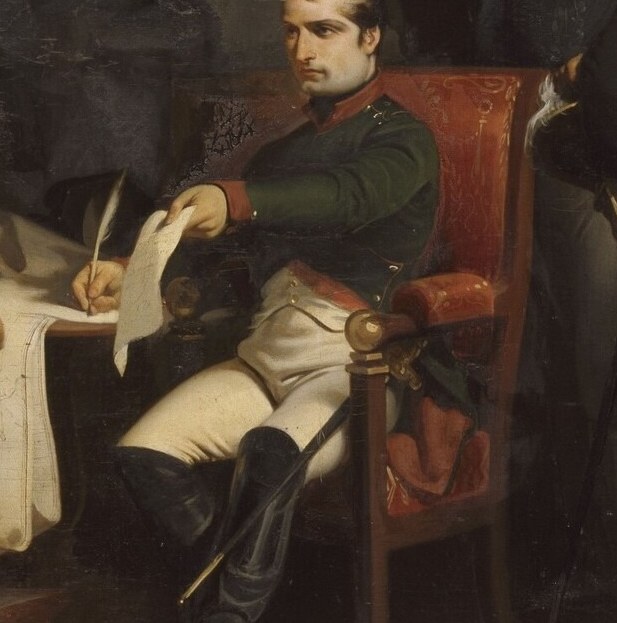
Napoléon signs his abdication at Fontainebleau 11 April 1814 by François Bouchot
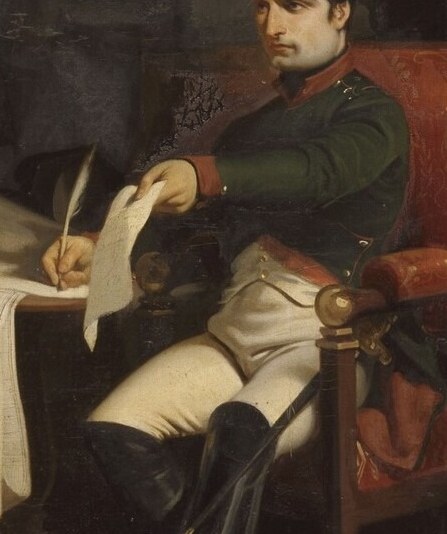
François Bouchot's 1843 painting, "Napoléon signs his abdication at Fontainebleau 11 April 1814," captures a pivotal moment in European history. This oil on canvas, housed at the Palace of Versailles, depicts Napoleon Bonaparte's relinquishment of imperial power.
The painting focuses on Napoleon, seated in a grand red armchair, as he prepares to sign the abdication document with a quill. Around him, high-ranking generals such as Henri Gatien Bertrand and François Joseph Lefebvre bear witness, their expressions reflecting the gravity of the event. The opulence of the room, with its ornate chandelier and rich red curtains, contrasts with the somber decision being made.
Created nearly three decades after the actual event, Bouchot's work was painted during the July Monarchy. This period saw French artists frequently re-examining the Napoleonic era, aiming to portray such moments with dignity and historical reflection, rather than sensationalism.
This painting not only records a significant historical act but also offers insight into how such events were memorialized and understood in subsequent generations.
Details

Transcript
April 11, 1814. Napoleon prepares to sign a life-changing document. He is in the Palace of Fontainebleau, giving up his empire. This painting was made in 1843, almost 30 years later. His generals, like Bertrand, watch in solemn silence. The document before him is his formal abdication. This moment marked the end of his reign as Emperor. It now hangs in the Palace of Versailles.