Saint Eleuthere or Saint Rustique by http://www.wikidata.org/.well-known/genid/432e066b9ffa27b60f37ed5edf23713d
This deeply aged painting, 'Saint Eleuthere or Saint Rustique' from around 1350, is a remarkable survivor from a period where much art has been lost. Now at The Metropolitan Museum of Art, it provides a rare glimpse into devotional practices of the 14th century.
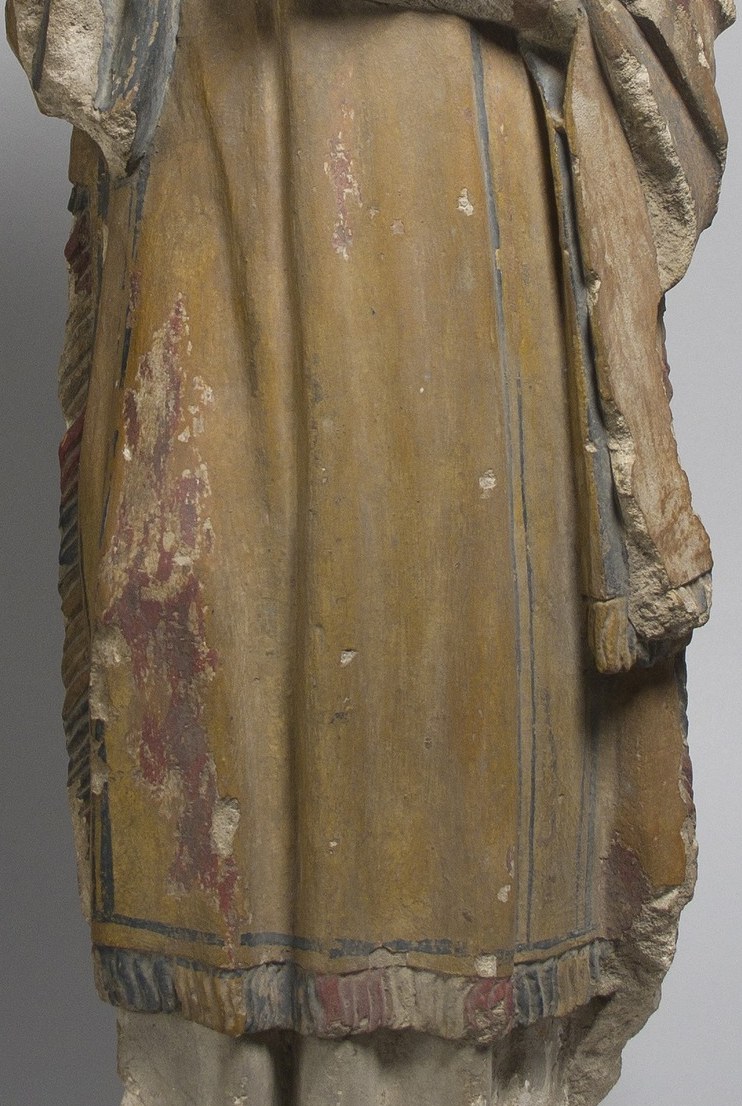
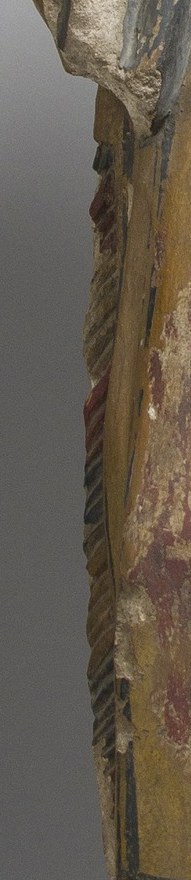
Notice the simplicity of the saint’s robe and the subtle details like the decorative band at the hem. The visible worn patches on the paint surface are not flaws, but rather a testament to the artwork's long and challenging journey through history.
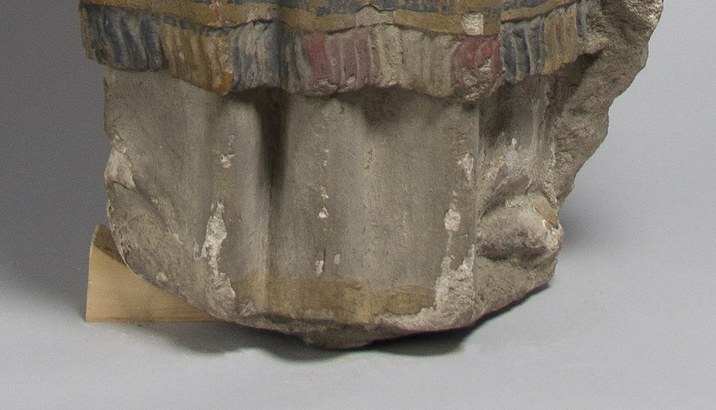
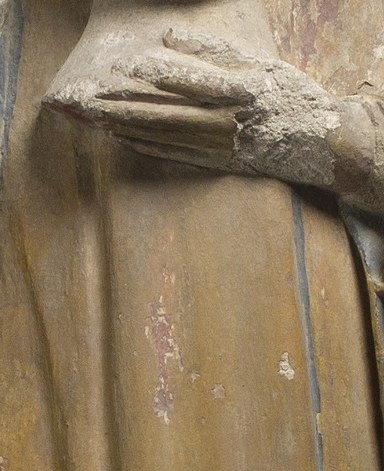
Originally, this figure was likely part of a larger altarpiece or architectural carving, as suggested by its rough base and textured edges. The artist, whose name is unknown, focused on the saint's piety through their clasped hands and serene expression.
This fragment reminds us of the fragility of art and the stories hidden in its wear and tear. What details do you notice that speak of its age?
Details
Transcript
This devotional image is almost 700 years old. The saint’s robe, simple as it is, shows its age. These worn patches tell a story of damage and repair. The figure was likely part of a larger, lost altarpiece. The textured edges suggest it was once carved stone. Only fragments like this survive from its time.