明/清 佚名 仿方從義 巢雲圖 卷|Landscape by After Fang Congyi
This is Landscape (巢雲圖), a handscroll from 1639 by an anonymous painter working in the style of Fang Congyi. It belongs to the Metropolitan Museum of Art. The intrigue here is not a Salon scandal but an argument hidden in plain sight: the figures are so tiny you could miss them entirely, and that is the point.
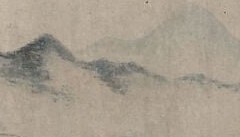
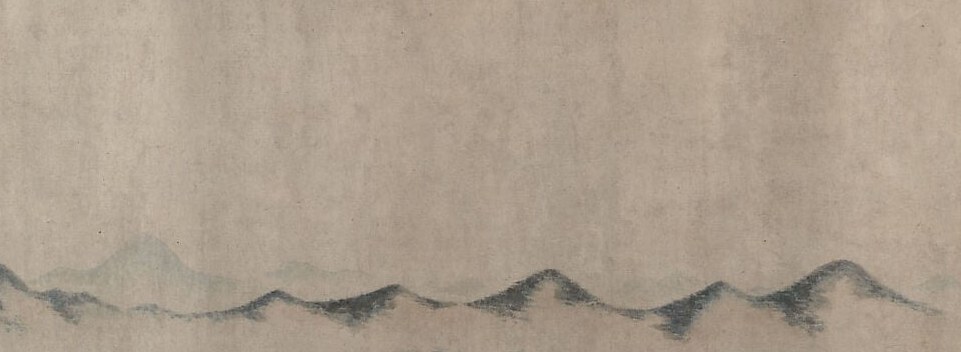
Watch how the ink dissolves into the silk. The artist laid it down wet so it feathers at the edges, turning solid mountain peaks into mist. The untouched silk above does not read as blank space, in Chinese literati painting, emptiness is an active element. The ground is cloud, the void is atmosphere. The whole scroll breathes.
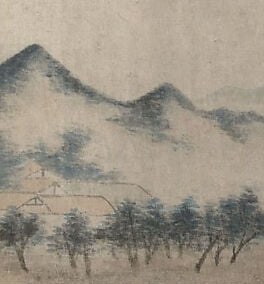
Fang Congyi was a Daoist painter who left the Yuan court for the mountains. He painted landscapes not as scenery but as philosophical propositions: nature is vast, the human presence is incidental. The copyist understood this completely. The pavilion and the two scholars are rendered with just enough strokes to be legible, then left to be swallowed by the scale of the peaks around them.
This is not a painting you look at all at once. A handscroll is meant to be unrolled slowly, read left to right like a sentence. The rhythm of peaks and passes guides you, and somewhere in the middle you find these two men, and realize the painting is about exactly how small they are. Is there a figure you return to in a landscape, once you know it is there?
Details

Transcript
A long mountain scroll, dated 1639. The peaks dissolve into the silk. Ink applied wet, so it feathers into cloud. Now look for the people. There. A pavilion, and two scholars. The artist painted them almost too small to see. This is a copy of Fang Congyi, a Daoist painter who left the court. His argument: a life is properly the size of these figures.