The Grand Canal by Bonington, Richard Parkes
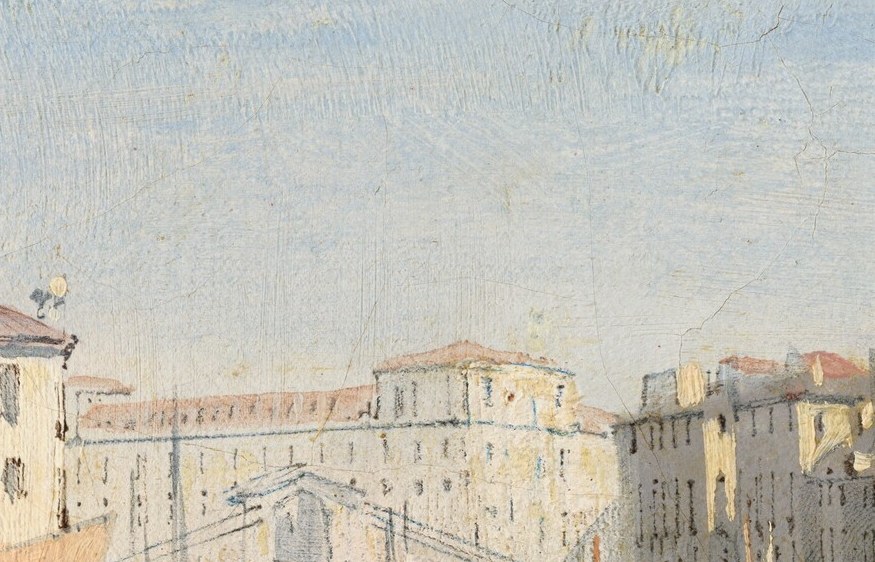
Richard Parkes Bonington’s “The Grand Canal” (1826) hangs in the National Gallery of Art in Washington, and it is a painting about a moment that has already passed. Most of his contemporaries pictured Venice as a stationary, crumbling relic of past glory. Bonington chose to paint it alive, busy, and ordinary.
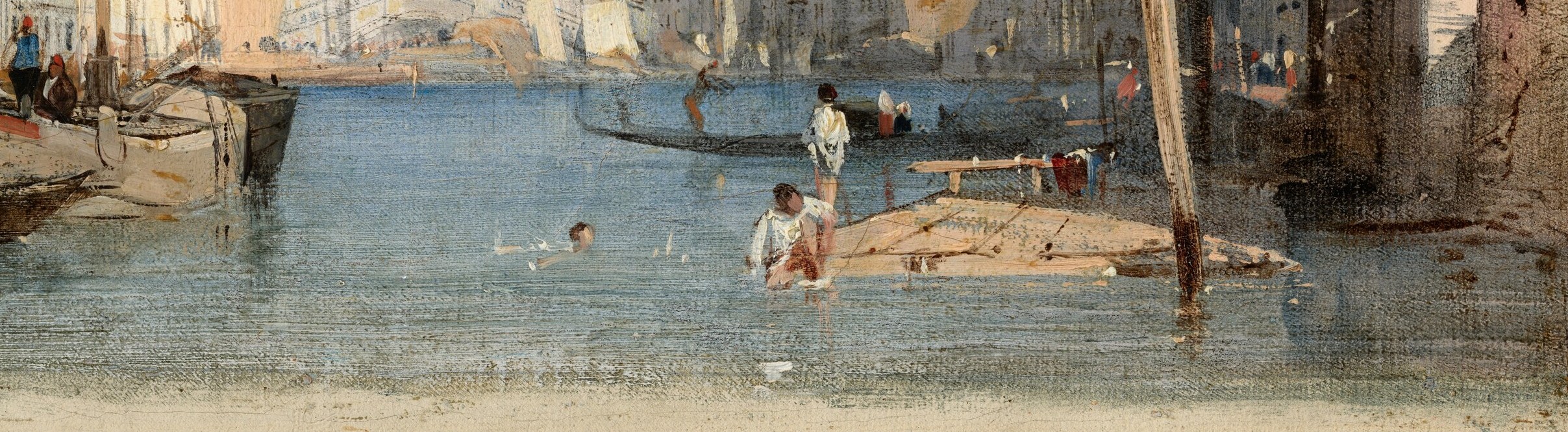
Look first at the water. The brushwork is fast and broken, small horizontal strokes of white and blue that flicker rather than describe. Directly below the gondola, the reflections fracture into pure abstraction. He is not painting a canal; he is painting light hitting a canal at a specific second.
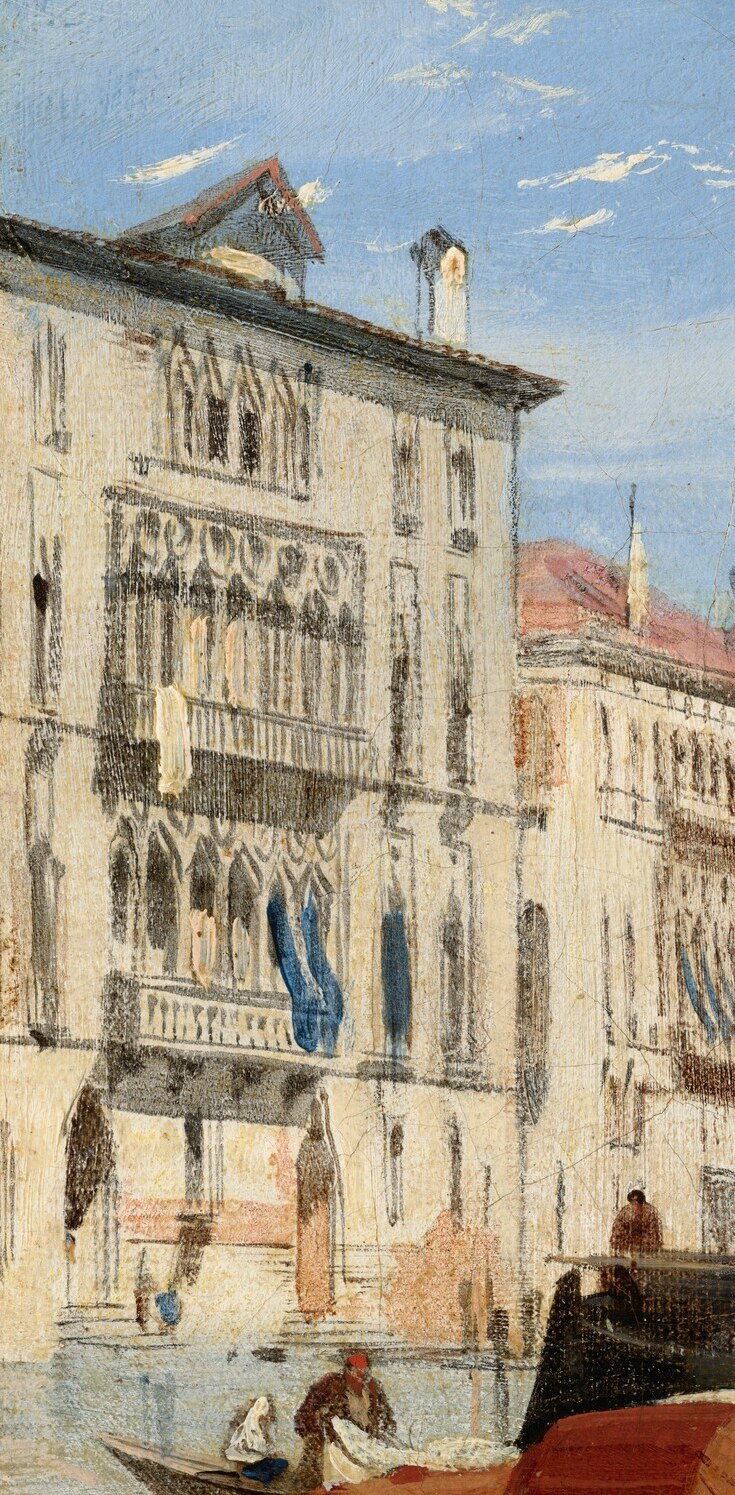
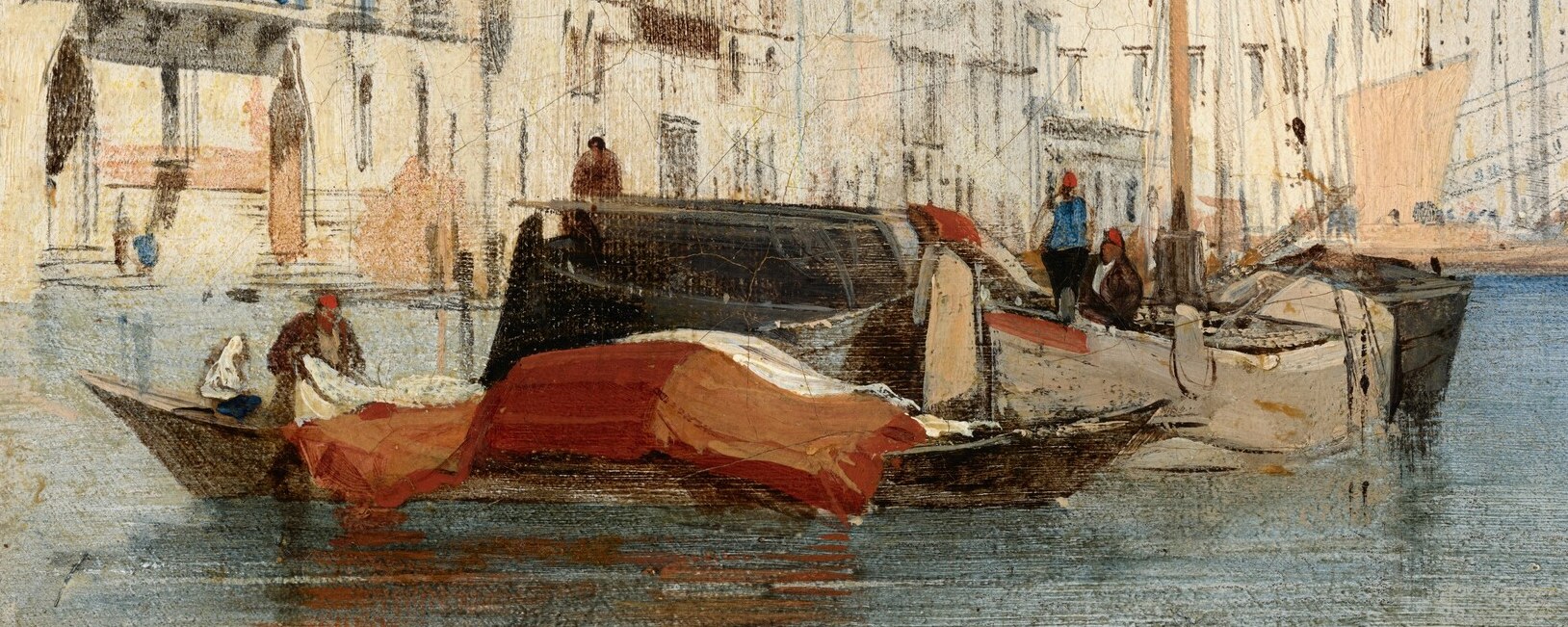
The gondola itself moves through the center of the frame, carrying figures engaged in everyday business. The tall palazzo on the left anchors the composition with its warm, detailed facade, but Bonington refuses to treat it like a monument. It is merely the backdrop against which light and water happen.
Bonington painted this in 1826 during a visit to Venice from his base in France. He was an English artist who had lived in France since the age of fourteen, acting as a bridge between two national painting traditions. Two years after completing this canvas, he was dead from tuberculosis at twenty-five. The facility of his handling was widely admired, and his influence on both Constable and Delacroix is documented. This painting remained in private hands before the National Gallery acquired it.
A painting about the transient, made by a painter who was himself transient. What holds your eye longer, the enduring stone or the shifting light?
Details
Transcript
You are on the Grand Canal in 1826. Venice was often painted as a frozen ruin. But this painter needed the city alive and moving. His real subject is the light skimming the water. Quick, choppy brushstrokes. The moment itself. He died at twenty-five. The light outlasted him.