Adoration of the Magi by Conrad Laib
Conrad Laib's 'Adoration of the Magi', painted in 1440, is a remarkable German panel painting held at The Cleveland Museum of Art. It is one of only a few surviving works by this artist, offering unique insights into the late Gothic style.
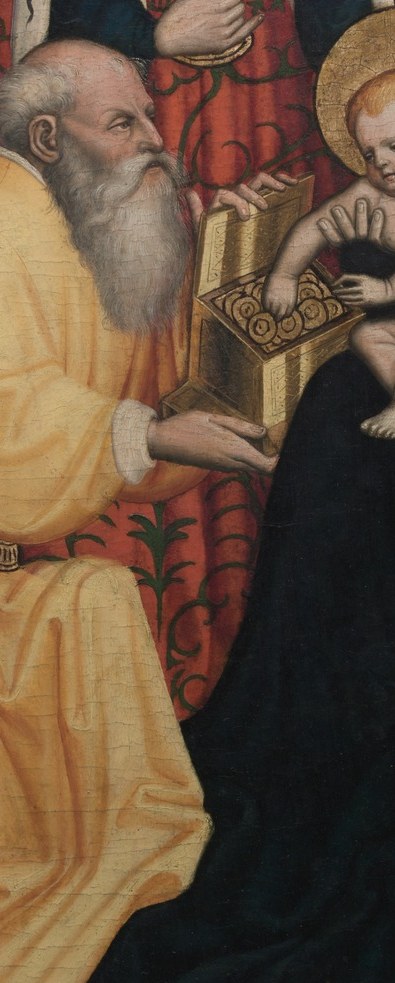
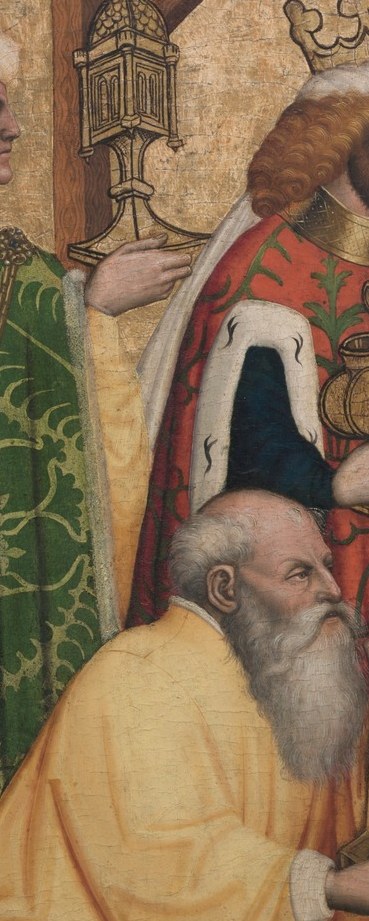
The painting depicts the traditional biblical scene with compelling details. Observe the humility of the kneeling king, his ornate crown cast aside. Notice the unexpected sight of coins spilling from another king's gift box, a departure from typical depictions and a fascinating artistic choice.
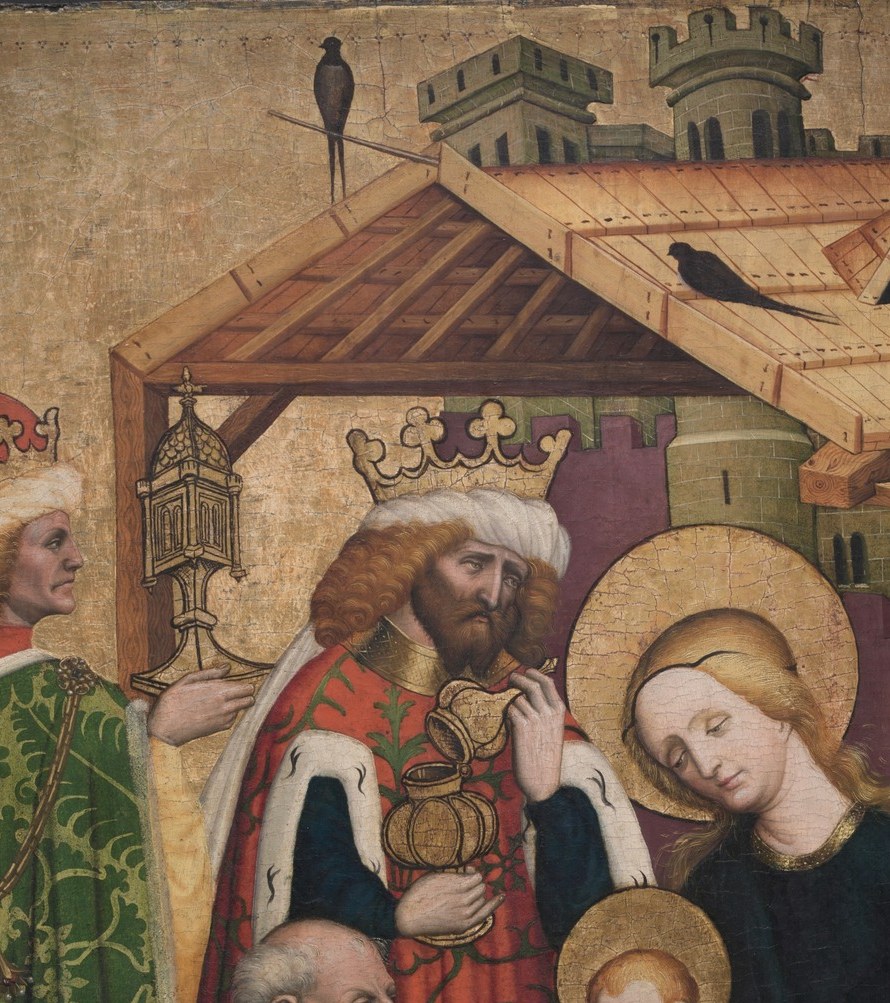
Laib masterfully used oil paint to create the vibrant, saturated hues seen in the garments, a technique that allowed for depth and luminosity through thin, translucent layers. The rustic stable provides a humble yet poignant backdrop, drawing focus to the figures and their expressions of reverence.
What other subtle details do you notice in this 15th-century masterpiece?
Details
Transcript
This painting, from 1440, is one of few by Conrad Laib. The kneeling king offers a golden vessel to the Christ Child. His discarded crown on the floor symbolizes humility. Look closely at the contents of this king's gift box. Coins spill out, a rare detail in Adoration scenes. This simple setting emphasizes the sacred nature of the encounter. Laib used oil paint to achieve these rich, saturated colors. The light from the lantern illuminates the entire scene.