Study of Apples from Nature by Miller, William Rickarby
William Rickarby Miller painted Study of Apples from Nature in 1863, the very last moment an artist could make a living from a painting as faithful as a receipt.
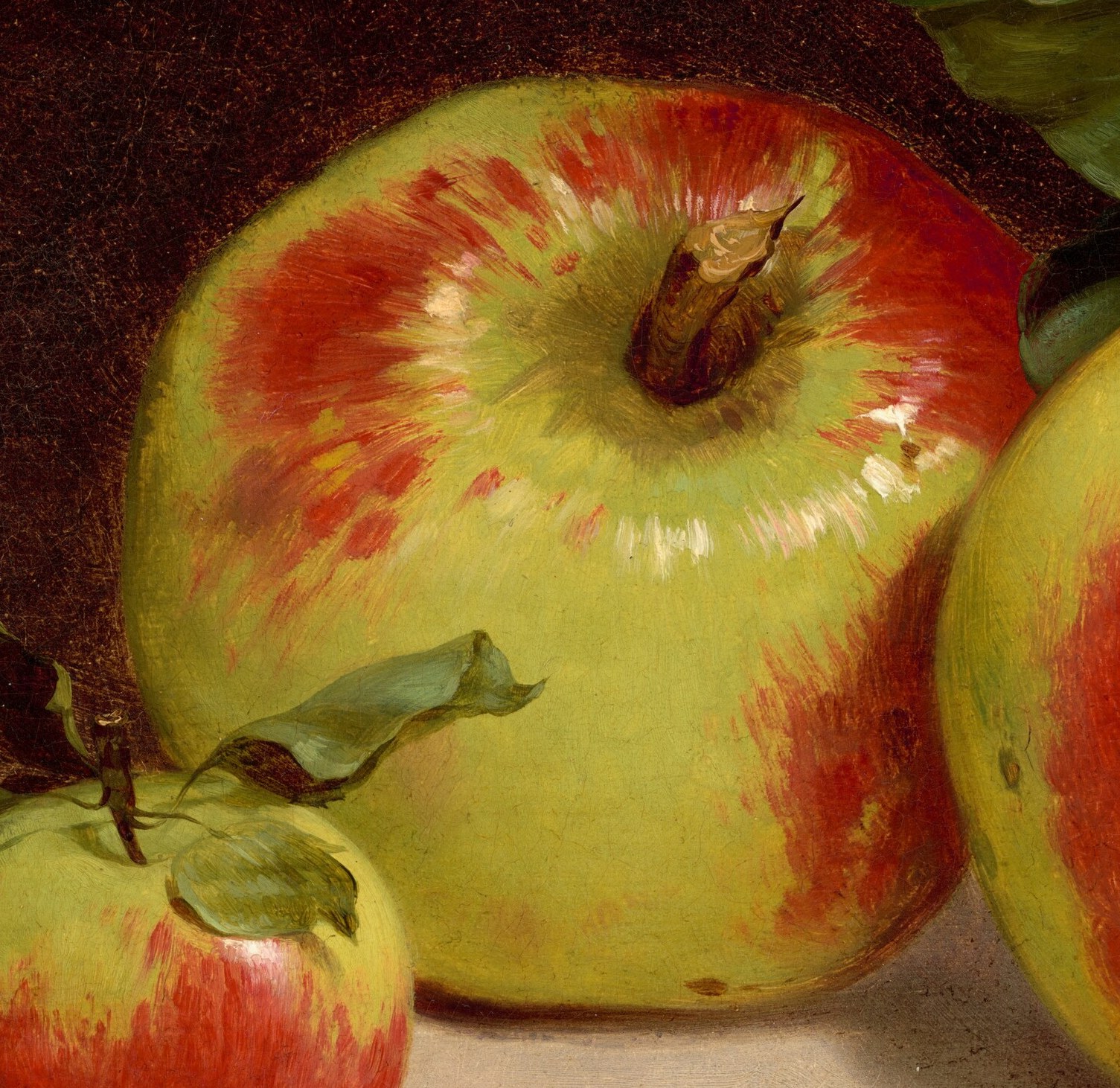
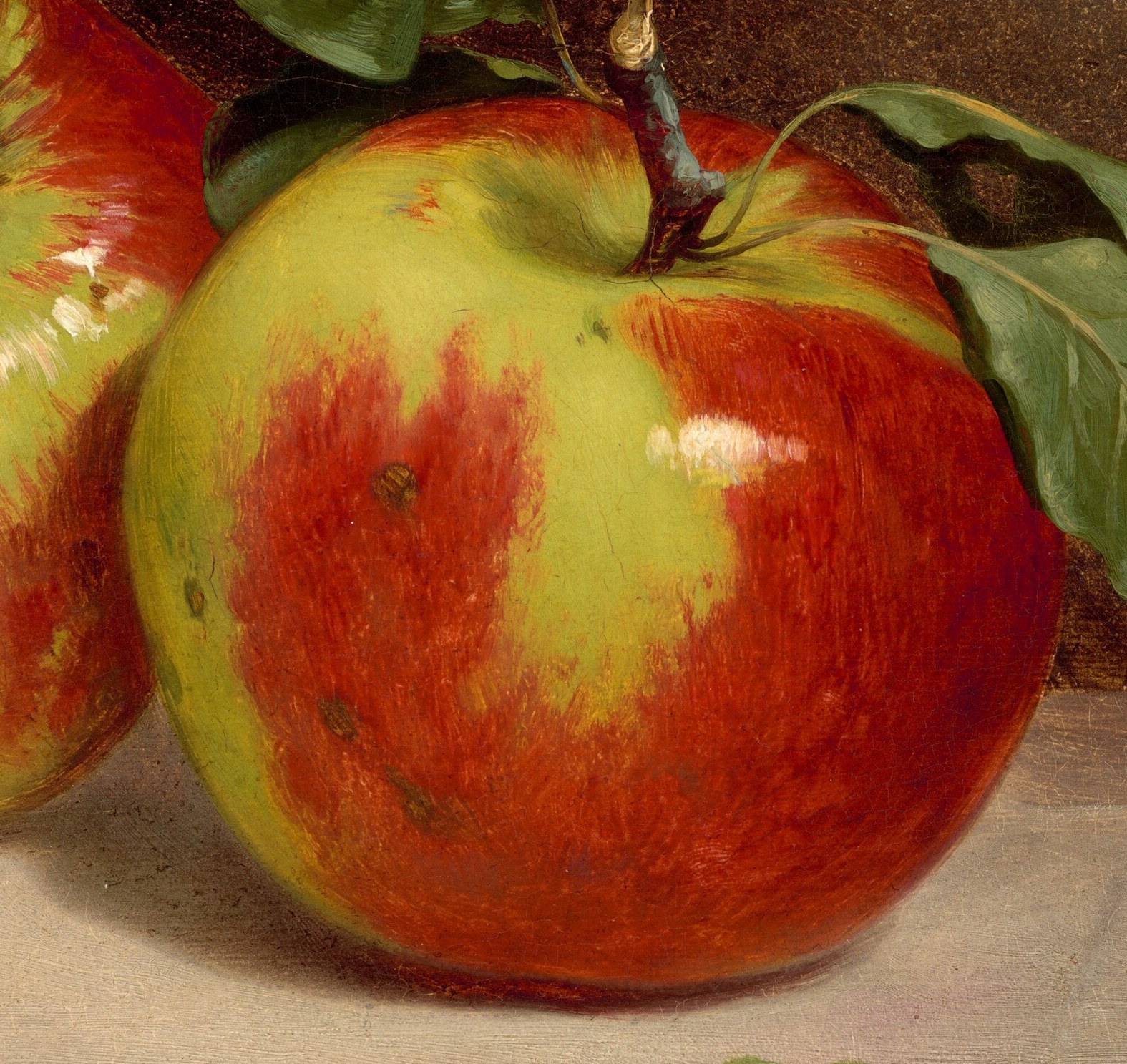
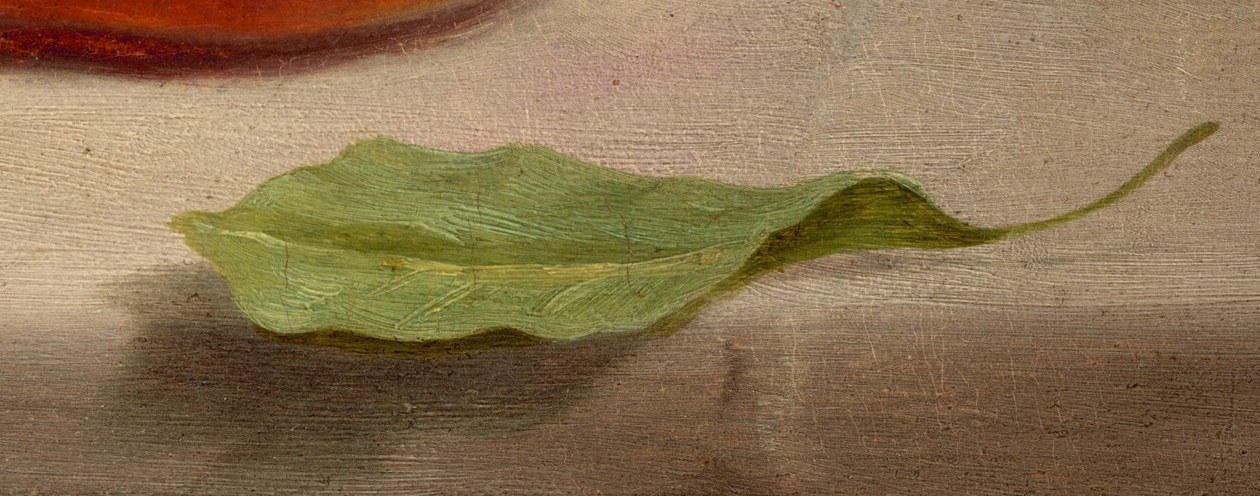
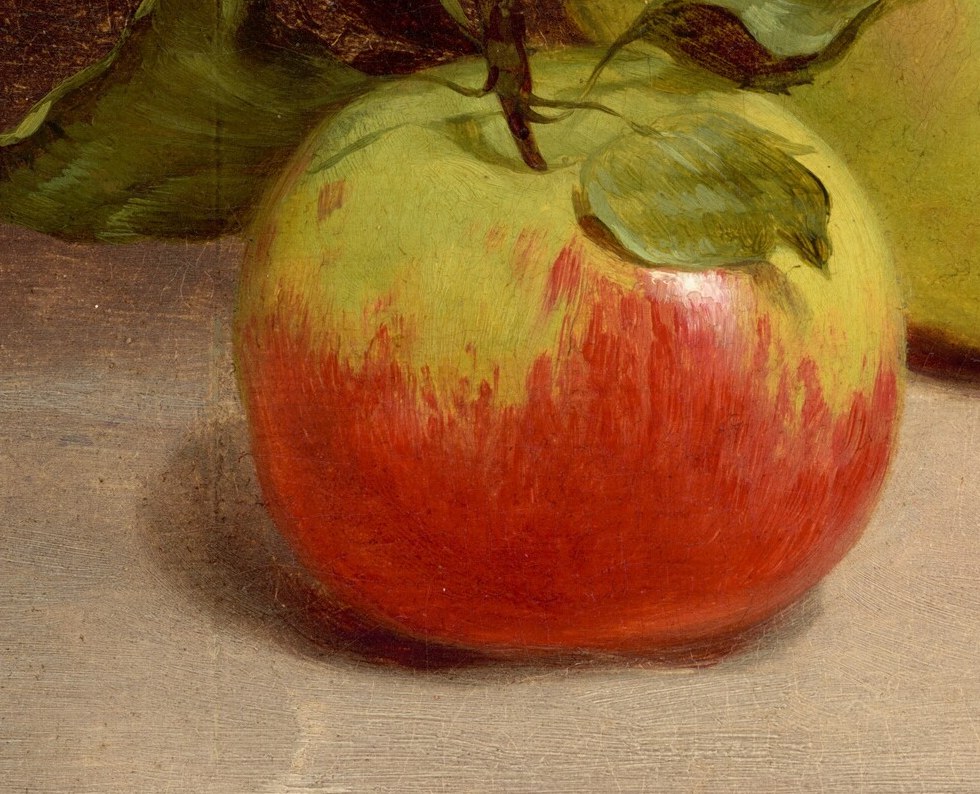
The composition is unassuming: three apples on a dark wooden table. But look closely at the center fruit. Miller spent his attention on the yellow skin, building up a blush of red speckles that feels more like a portrait than a study. The fallen leaf in the foreground is the final quiet signature: a thing already decaying, held still by oil paint.
Miller was an English transplant working in New York. 1863 was the height of the Civil War. While the nation tore itself apart, he was selling modest, carefully observed still lifes to middle-class families who wanted something beautiful and true in their parlors. This wasn't a sketch for a grander work. This was the work.
The following year, photographic studios were booming. The market for painted apples was drying up. But Miller kept painting them into the 1880s, stubbornly insisting that a human hand and a human eye could find something in an apple a lens could not.
Details
Transcript
New York, 1863. The Civil War is at its peak. A painter sets three apples on a table and gets to work. He wasn't just practicing. This was for sale. Look at the speckled skin on this yellow apple. A customer would hold it close, checking every brushstroke. The date is right here: 1863. Just above his name. The year after, cameras would start taking this job. But a photograph could not love a leaf like this.