Untitled by Chôbunsai Eishi
This serene hanging scroll, "Untitled" by Chôbunsai Eishi, painted in 1798, is rendered in ink and color on silk and housed in a private collection. It's a testament to an artist who traded a life of samurai privilege for artistic pursuit.
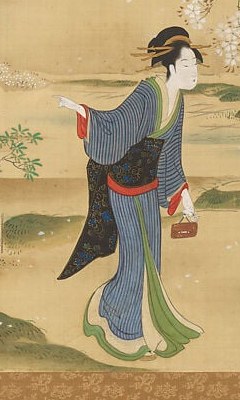
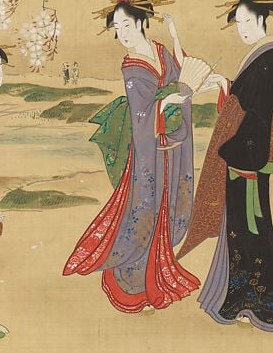
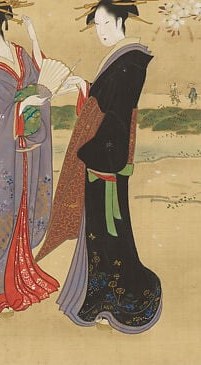
The painting shows two women in elegant kimonos, observing ducks in a pond beneath a pine tree. Eishi, born Hosoda Tokitomi, came from an affluent samurai family and initially served the Shogunate with a substantial stipend. However, he left this official post to dedicate himself entirely to art.
Eishi's initial works were ukiyo-e prints, particularly bijin-ga portraits of beautiful women, which quickly gained recognition and rivaled those of the famous Utamaro. He established his own school and by 1801, had given up printmaking to focus exclusively on painting, creating detailed and tranquil works like this one.
What do you find most captivating about the details in the women's kimonos?
Details
Transcript
This painter was a high-ranking samurai, born to privilege. He served the Shogun with a generous stipend, then left it all. He chose to pursue art, establishing his own school. His graceful figures, like these, rivaled Utamaro's in popularity. Look at the delicate patterns on her kimono, a hallmark of ukiyo-e. The artist eventually gave up prints to focus solely on painting.