The Third Avenue Railroad Depot by William H. Schenck
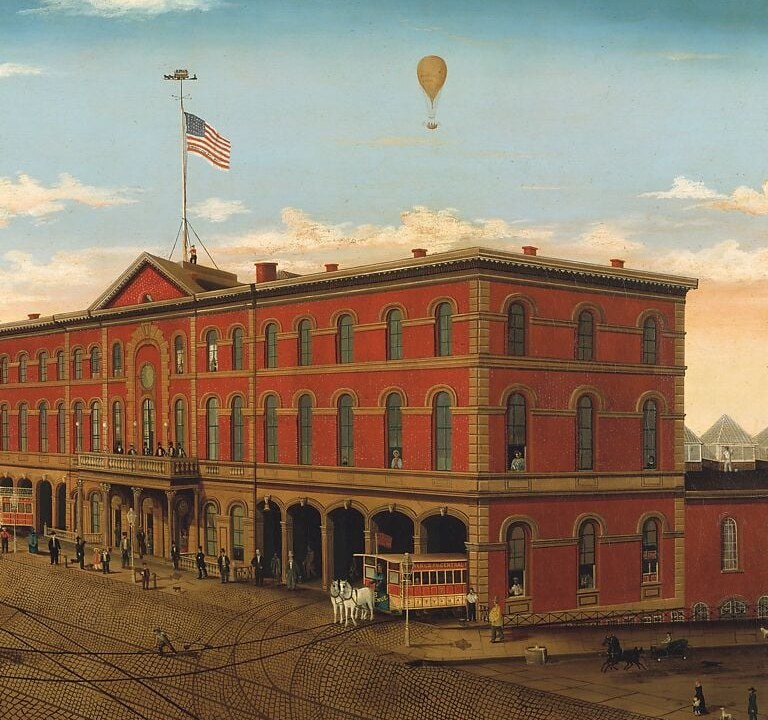
This is The Third Avenue Railroad Depot, painted by William H. Schenck around 1859-60. For decades, it was simply gone. After Schenck's death, the canvas was detached from its stretcher, rolled up, and stowed in a private attic, missing from the public record and known only through hearsay until a collector rediscovered it in the mid-20th century. The painting now lives at the New-York Historical Society.
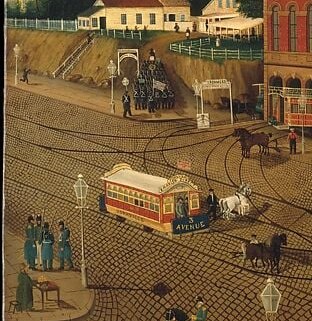
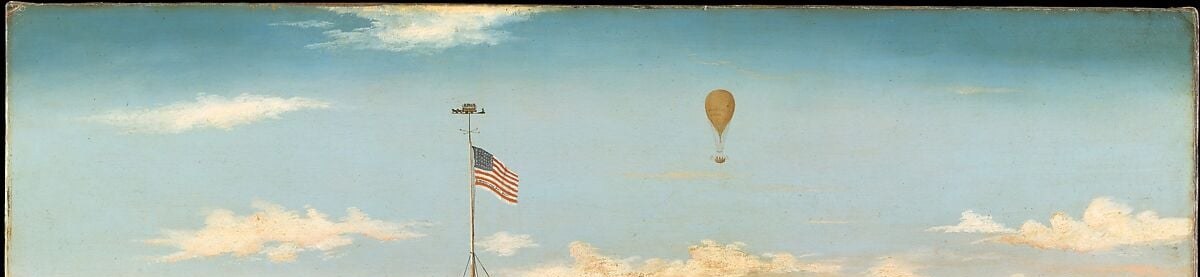
The scene captures a specific corner of New York at a moment of accelerating change. On the left, horse-drawn omnibuses and carriages compete for space with the iron tracks running through the foreground. The red brick railroad depot itself looms over the street with Victorian confidence, its arched windows and flagpole asserting a new kind of civic monument. The most surprising detail floats in the upper right: a hot air balloon, a whimsical symbol of the era's obsession with flight and speed.
Schenck painted this on the eve of the Civil War, when railroads were reshaping American cities. The depot stood on Third Avenue, a corridor of noise and motion that would define uptown Manhattan's growth. By including stables and steam engines, horse carts and experimental balloons in the same frame, Schenck made an argument without words: the future had arrived, but the past was still crowded around it.
This is a painting that was nearly lost, and a record of a city that was already planning to replace the very building it celebrates. What else might be rolled up in an attic somewhere?
Details

Transcript
For most of the 20th century, this painting vanished. It shows the old Third Avenue Railroad Depot, around 1860. Horses and a railroad share the street. Two technologies, one moment. And up here, a hot air balloon drifts through a summer sky. After the artist died, the canvas was rolled and stored in an attic. Seventy years later, a collector unrolled it and brought it back to light.