Young Woman with a Red Necklace by Rembrandt
This is Rembrandt's Young Woman with a Red Necklace, painted in 1645 and housed at The Metropolitan Museum of Art. She is one of his most psychologically present portraits, and yet we have no record of who she was. The museum still lists her by the jewelry she wears.
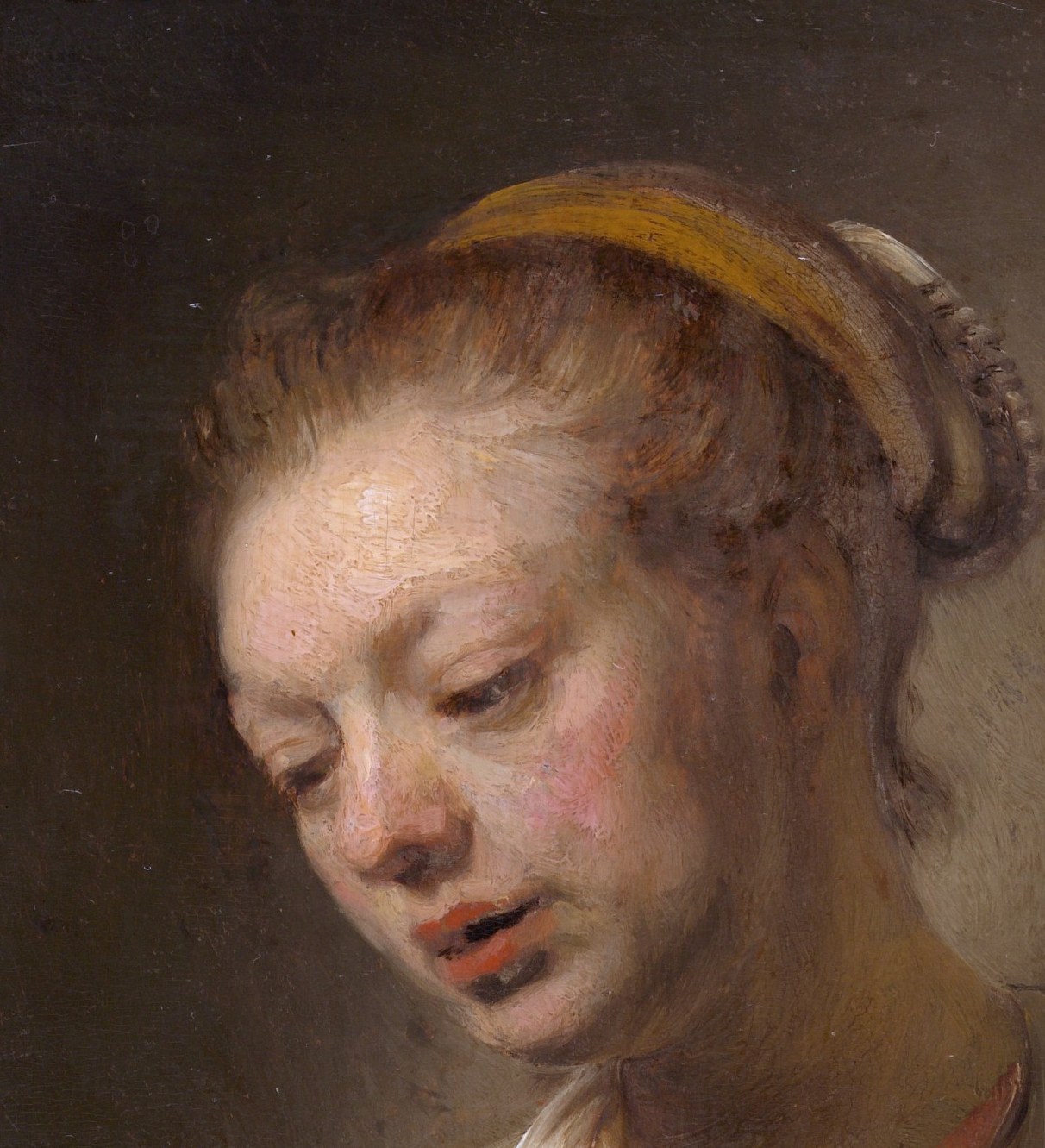
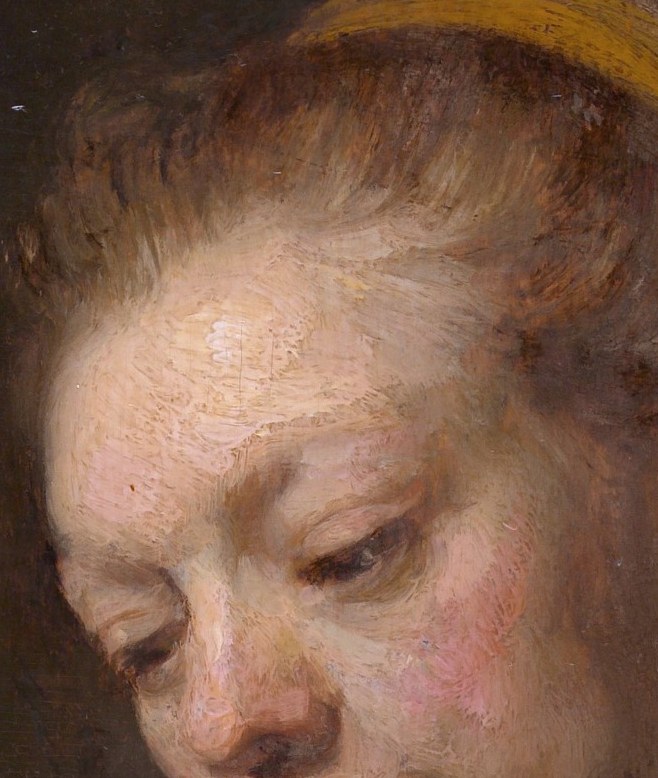
What to look at: her eyes. They are lowered, not meeting the viewer's gaze. This is unusual for a commissioned portrait from the Dutch Golden Age, where direct engagement signaled status. Rembrandt catches her in what looks like a private, suspended moment. The red coral necklace is the painting's loudest accent, and in 17th-century Dutch symbolism it carried protective meaning, a charm against illness and misfortune.
The year was 1645. Rembrandt was 39 and at the absolute height of his powers and his fame. But behind the scenes his finances were beginning to fracture. By the end of that year he had stopped paying the mortgage on his grand Amsterdam house, the one he had purchased at the peak of his success. He would spend the rest of his life fighting creditors.
This painting is a study in what disappears. The sitter's identity is lost. The brushwork dissolves the edges of her body into warm, layered darkness. Even the artist's stability was vanishing as the paint dried. What survives is the quiet intensity of a person thinking, held in suspension by a single source of light.
Details



Transcript
She looks like she was caught mid-thought. Rembrandt painted her in 1645. He was 39. That same year, he stopped paying the mortgage on his Amsterdam house. Her face is built from a single warm spotlight against an abyss. Then the light hits the coral. Red was protection. The background is not black. It is layered glaze dissolving into nothing. She has no name. The museum still calls her Young Woman with a Red Necklace.