Kabuki Theater by Nonoyama Kōzan
Nonoyama Kōzan's "Kabuki Theater," painted in 1822 and now at The Metropolitan Museum of Art, offers a vivid snapshot of Japan's most popular entertainment.
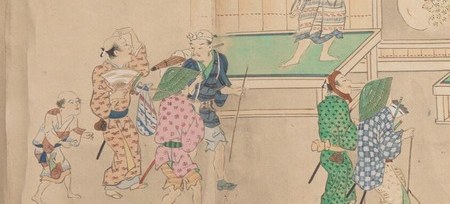
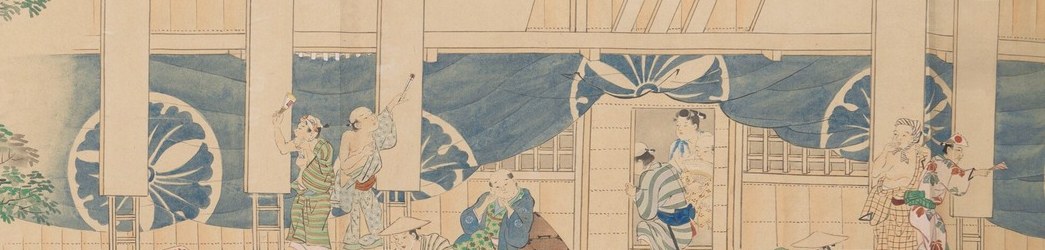
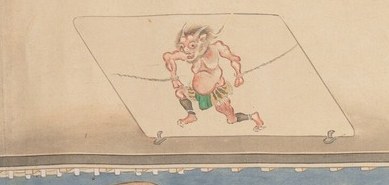
The painting is alive with activity, showing spectators in colorful attire gathered to watch a performance. Notice the intricate blue curtain that frames the stage and the striking demon figure on the banner, hinting at the dramatic stories unfolded in Kabuki.
Nonoyama Kōzan (1780-1848) was an artist known for his skill in portraying the bustling urban culture of early 19th-century Japan. His work captures the energy and communal experience of traditional Japanese dramatic art.
What details do you find most captivating in this lively scene?
Details
Transcript
This painting shows a Kabuki theater, bustling with life. Kabuki was Japan's most popular form of entertainment in 1822. Look at the elaborate blue curtain framing the stage. This demon figure on the banner hints at a dramatic tale. The vibrant colors reflect the grand spectacle of a live performance. This painter was known for capturing such lively urban scenes.