Saint Reparata before the Emperor Decius by Bernardo Daddi
Bernardo Daddi's 1338 masterpiece, *Saint Reparata before the Emperor Decius*, held at The Metropolitan Museum of Art, captures a profound moment of human resilience. This tempera painting, a leading example of early Italian Renaissance art, tells a dramatic story through its central figures.
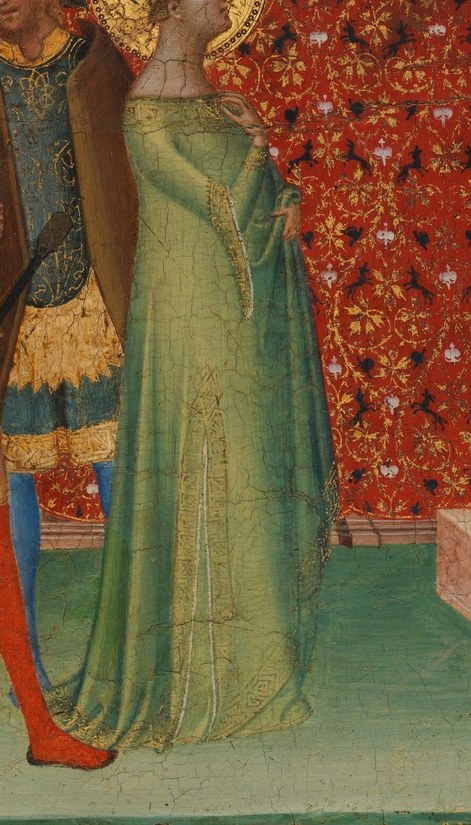
Look closely at Saint Reparata's serene face, framed by her golden halo, and the Emperor Decius's stern expression. The painter masterfully conveys the tension of the confrontation between power and unwavering faith.
Daddi, a pivotal figure in 14th-century Florentine art, was known for advancing more realistic compositions and popularizing small, portable altarpieces. This painting exemplifies his ability to blend traditional forms with innovative narrative.
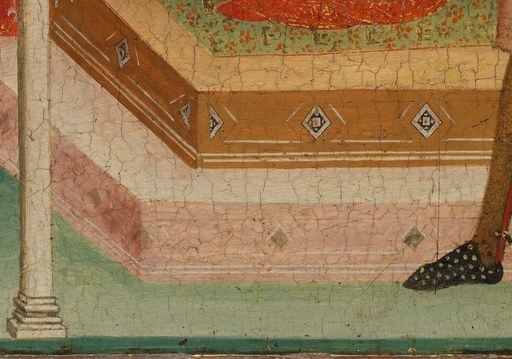
Centuries later, the visible cracks in the paint tell their own story of time, while the human spirit depicted continues to resonate. What emotions does this ancient confrontation stir in you?
Details
Transcript
This 14th-century scene captures a moment of stark confrontation. Emperor Decius, on his throne, holds ultimate power. His hand rests on his sword, a clear sign of his authority. She is Saint Reparata, standing calmly before his judgment. Her serene expression suggests unwavering faith. Bernardo Daddi painted this narrative in 1338, in tempera. The cracks show the age, but her story of defiance endures.