The Source of the Loue by Gustave Courbet
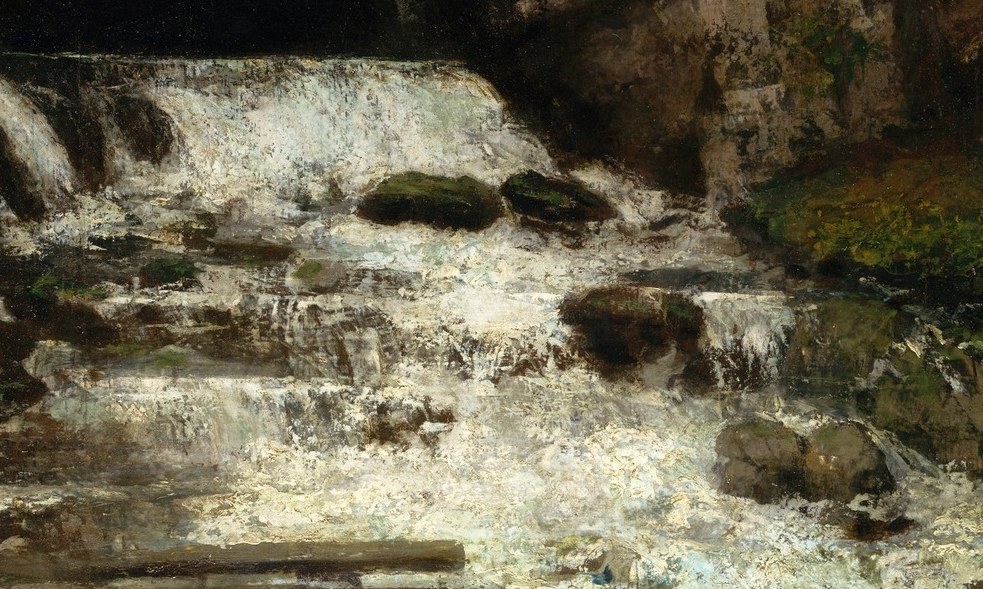
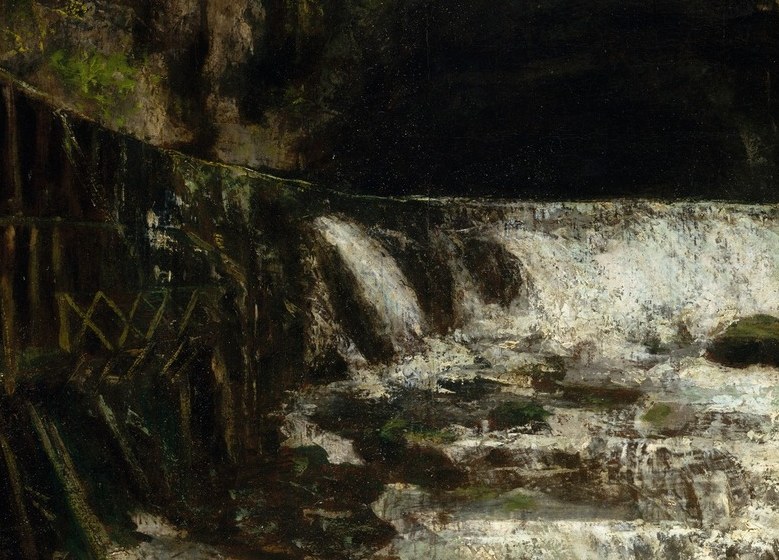
The Source of the Loue by Gustave Courbet (1864) is a powerful example of French Realism, focusing on the raw, unadorned origin of a river. Courbet rejected idealized landscapes, instead painting nature as a tangible, geological fact.
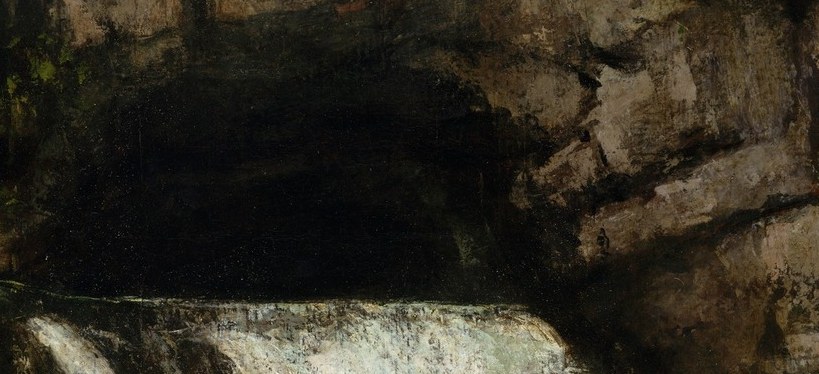
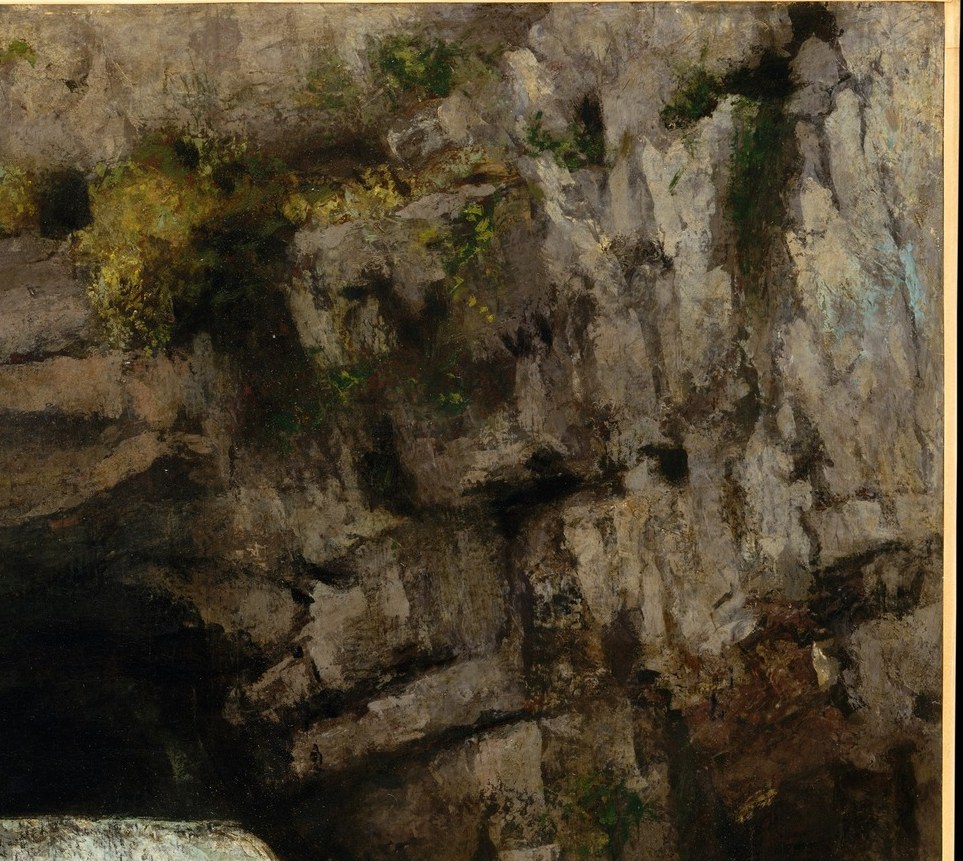
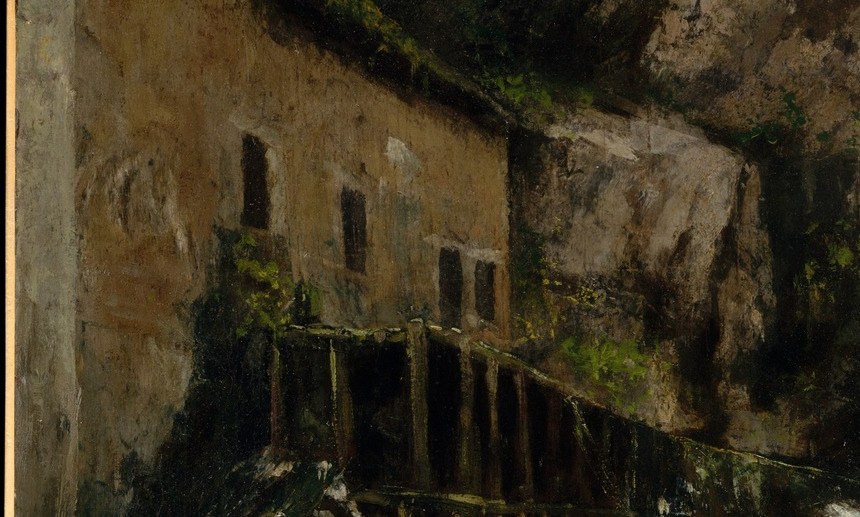
Observe the dark grotto entrance from which the Loue emerges, and the heavily impastoed, textured cliff face that gives the rocks a sculptural quality. Notice the old stone building and water wheel structure, hinting at a history of human interaction with this dramatic natural site.
Courbet painted this series in his native Franche-Comté region, deeply connected to its landscapes. He led the Realism movement, insisting on depicting only what he could see and rejecting Romanticism. This commitment influenced later art movements like Impressionism.
Courbet's direct, unmediated vision of nature is evident throughout this work, showing his power as a witness to the material world.
Details
Transcript
This is the source of the Loue River. A dark grotto where water first appears. Courbet painted only what he could see. Look at the textured cliff face. He captures nature's raw geological fact. An old stone building hints at human presence. A wooden wheel suggests a working mill. His signature anchors this wild landscape.