Madame Arthur Fontaine (Marie Escudier, born 1865) by Odilon Redon
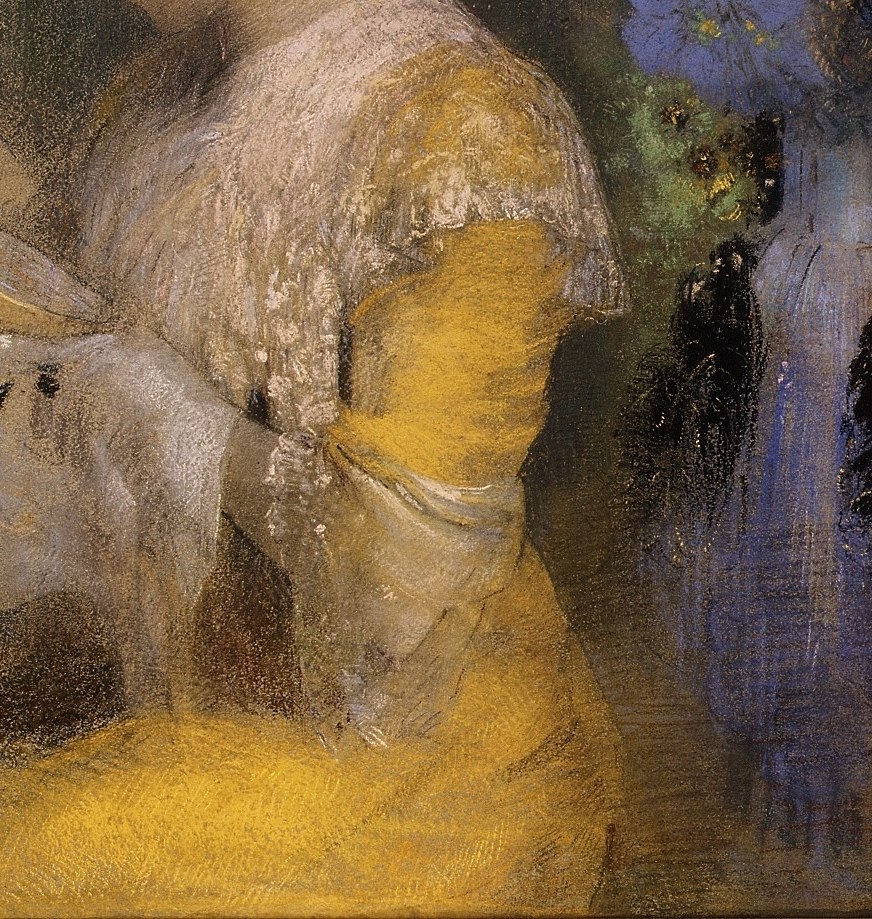
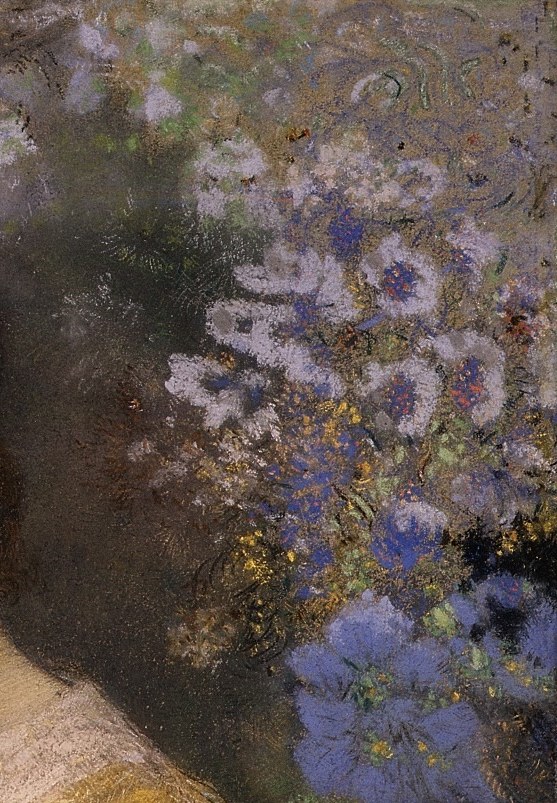
Odilon Redon's 1901 painting, *Madame Arthur Fontaine (Marie Escudier)*, marks a significant shift in the artist's career. Known for his earlier monochromatic 'noirs,' Redon transitioned to vibrant oils and pastels, embracing color with striking results as seen in the luminous golden-yellow dress and atmospheric floral background.
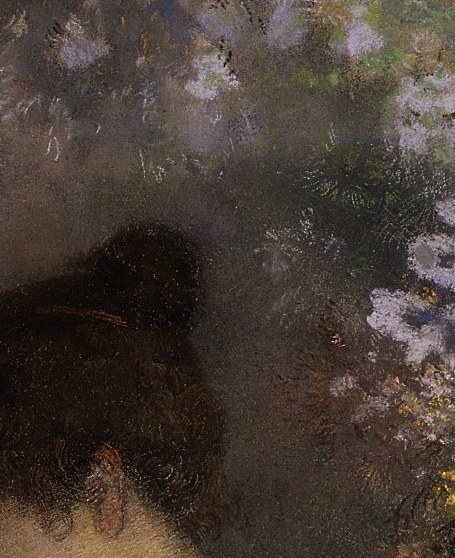
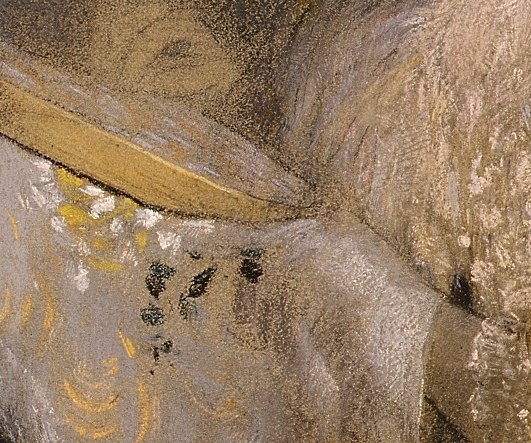
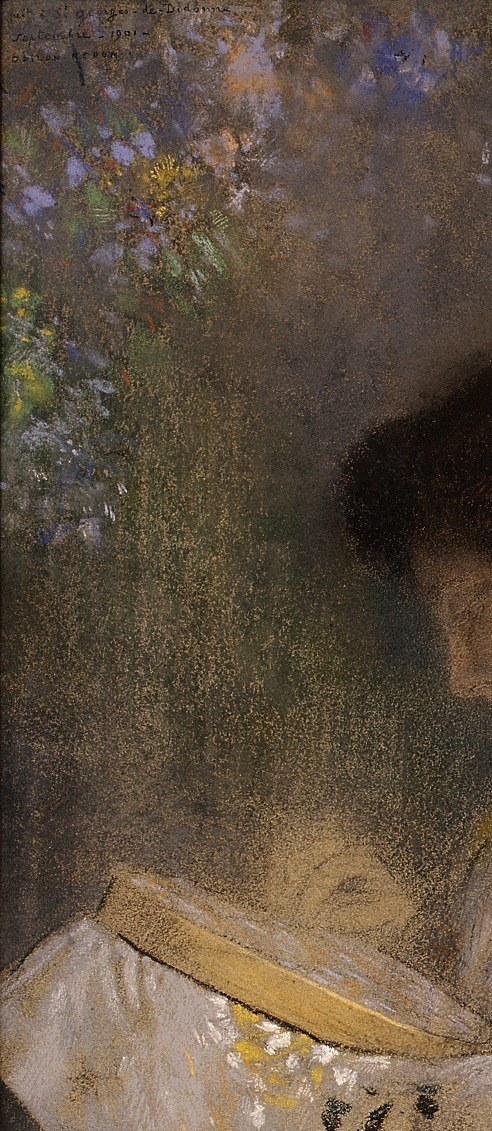
Look closely at Marie Escudier's absorbed expression, her downcast gaze, and the gentle repose of her hands over her needlework or book. Redon captures a profound sense of introspection, drawing the viewer into a private moment of contemplation. The soft, blurry rendering of the flowers in the background creates a dreamlike quality, a hallmark of his Symbolist style.
Redon, a prominent French Symbolist artist, gained recognition after his drawings were referenced in Joris-Karl Huysmans' influential 1884 novel *À rebours*. This work exemplifies his later period, where he explored color to evoke ideas and emotions, often drawing inspiration from Japanese art and Eastern religions. His unique approach to merging reality with the ethereal foreshadowed the Surrealist movement.
This portrait at the Museum of Modern Art invites us to appreciate the beauty of quietude and the power of color to convey inner worlds. What emotions do you feel looking at her absorbed state?
Details
Transcript
This painter was known for his dark, dreamlike charcoal drawings. Then, in 1901, he made a radical shift to vibrant color. He captures her in a moment of quiet, absorbed concentration. Notice her hands resting gently on the book or needlework. His later works, like this, were often inspired by Japanese art. The flowers here blur the line between reality and reverie. His art was considered a precursor to Surrealism.