Madame Manet (Suzanne Leenhoff, 1830–1906) at Bellevue by Édouard Manet
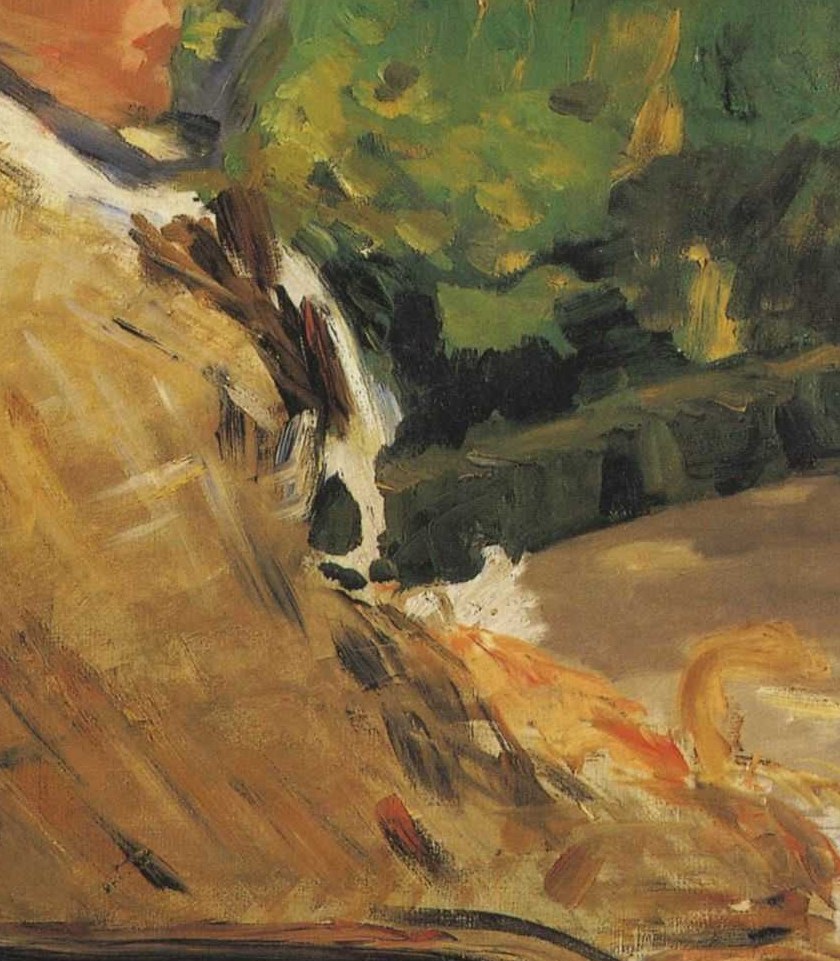
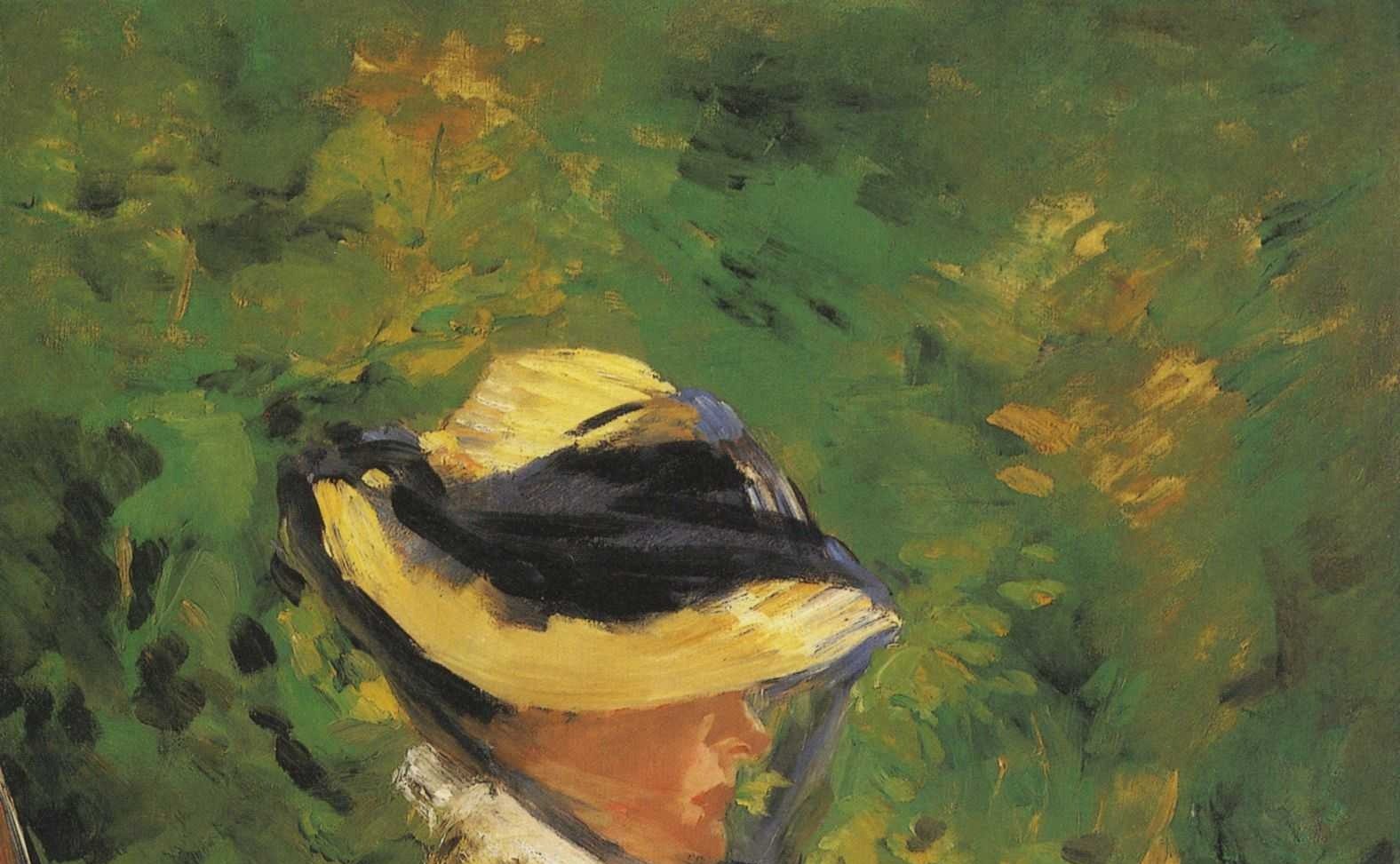
Édouard Manet's Madame Manet (Suzanne Leenhoff, 1830-1906) at Bellevue, 1880, from The Metropolitan Museum of Art. This late portrait of his wife captures her in profile, a study in Manet's evolving impressionistic technique. Notice how the light filters through the leaves, rendered with lively, visible strokes. His textured brushwork on her light-colored coat also adds a tactile quality, showing his mastery of capturing fabric. Manet was a key figure bridging Realism and Impressionism, focusing on contemporary life. This painting exemplifies his expressive, vibrant approach to oil paint.
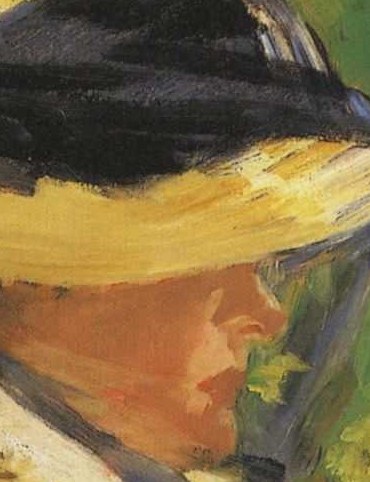
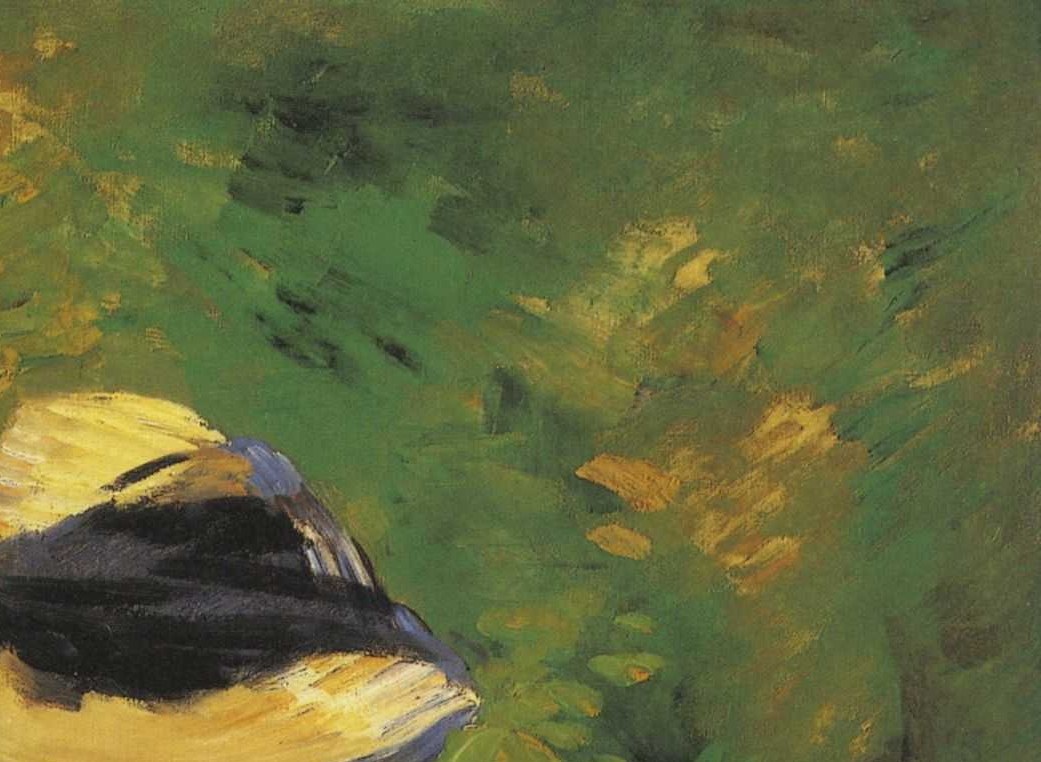
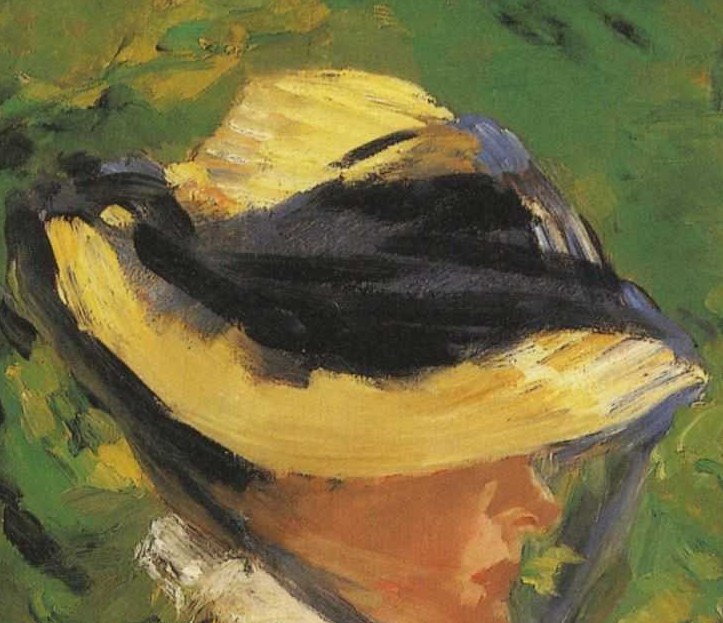
Look at the dappled yellow light appearing in the lush green foliage. Observe the loose, warm brushstrokes used to build the volume and texture of her light-colored coat. The wide-brimmed straw hat, with its dark band and yellow material, provides a strong visual contrast that frames her face.
This work dates to 1880, a period when Manet was deeply involved with Impressionist ideas, though he never formally exhibited with the group. He was known for depicting modern life and for his innovative techniques, often using bold brushwork and strong contrasts of light and shadow. This portrait of his wife, Suzanne Leenhoff, showcases his ability to convey immediacy and vitality on canvas.
Manet's willingness to experiment with technique paved the way for future artistic movements.
Details
Transcript
Her face is turned to the side. Look at the sunlight in the leaves. Loose brushstrokes build the coat's texture. Manet painted modern life this way. He was a pivotal figure in Impressionism. See the yellow straw against the dark band. His paintings show immediacy and vitality.