The Triumph of Marius by Giovanni Battista Tiepolo
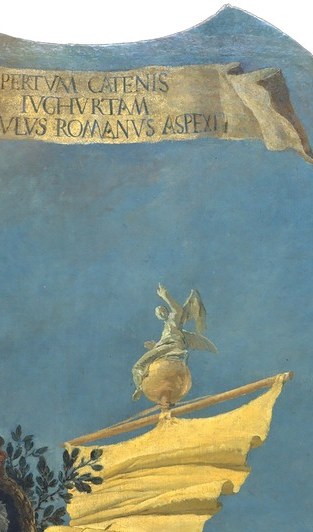
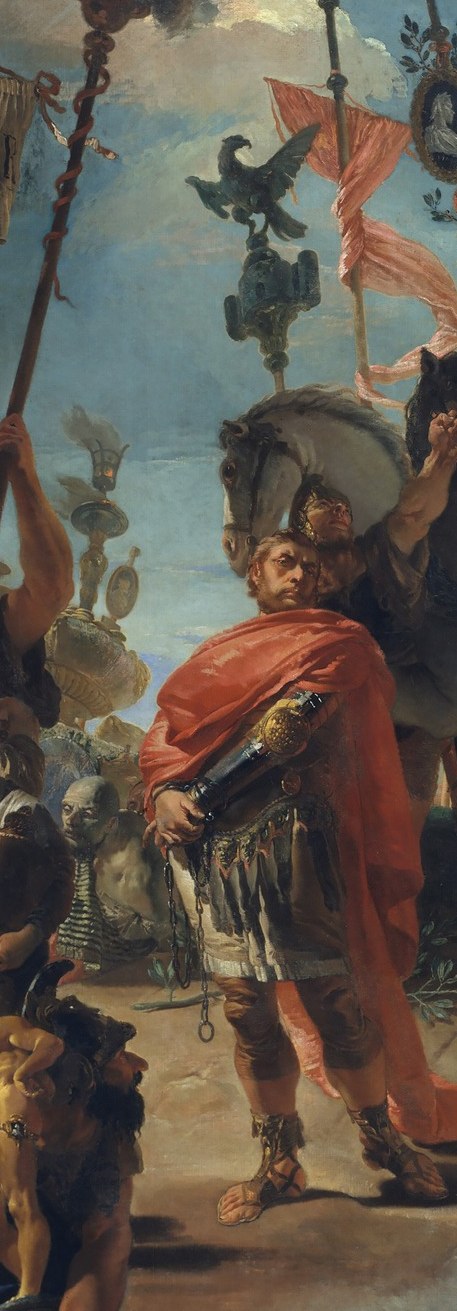
This is Giovanni Battista Tiepolo's The Triumph of Marius, painted in 1729. The Venetian artist was only 33, and this canvas reveals him already commanding history painting at full scale. It shows the Roman general Gaius Marius returning after defeating the Germanic Cimbri tribes in 101 BC, but what makes it work is that Tiepolo treats the painting like a document of the ritual itself.
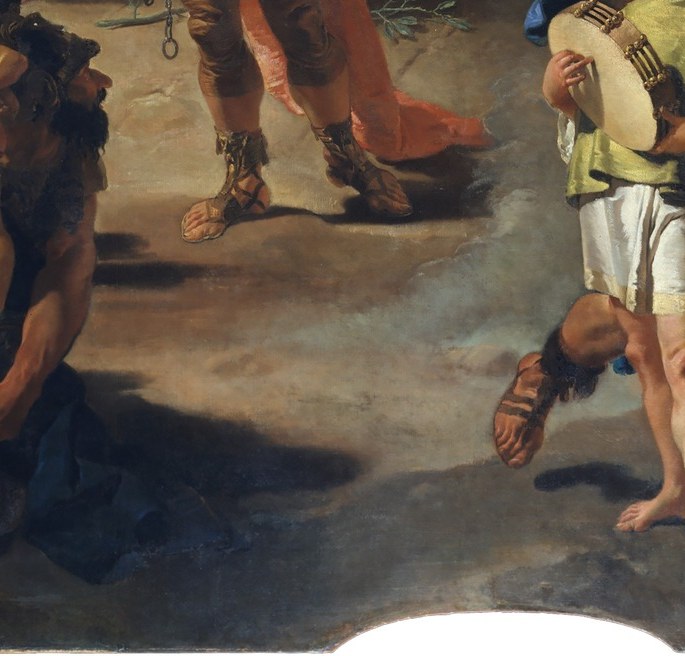
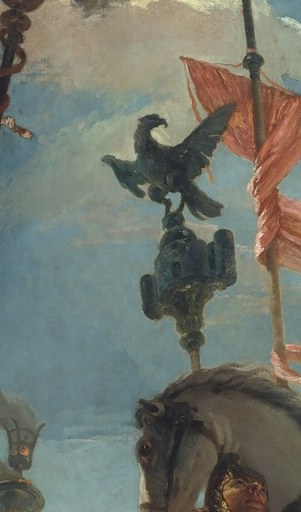
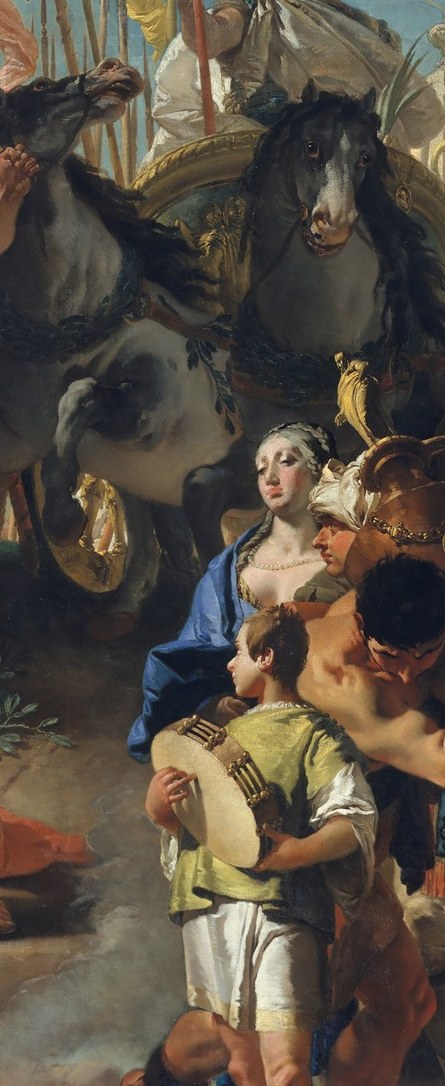
Notice where the camera lands: the prostrate bodies at the bottom anchor the hierarchy of the scene, literally placing the conquered beneath the victors. The golden eagle standard at the apex is the brightest object in the painting, a deliberate choice, since the aquila was Rome's holiest military symbol, the physical embodiment of legion honor. And that woman in blue holding a child amid the cavalry procession? Her role remains ambiguous: captive, allegorical figure, Roman matron. That ambiguity is the painting's central human puzzle.
Tiepolo routes the horses and banners on a diagonal that makes the static surface feel in motion, a compositional signature he would use for decades. The classical ruins in the background are not just scenery; they locate the scene in Rome and add a quiet subtext about imperial permanence and decay that runs through the very stones Marius marches past.
The painting marks the bridge between the late Baroque traditions Tiepolo inherited and the lighter Rococo sensibility he would define. He went on to cover palace ceilings across Europe, but here the spectacle is still grounded in ancient ritual, recorded as if someone were standing in the crowd.
Details
Transcript
Rome, 101 BC. A general returns. The conquered lie beneath the procession. The golden eagle was Rome's holiest military symbol. His name was Gaius Marius. He had just crushed the Cimbri. A woman in blue rides with a child amid the victory. Tiepolo painted this in 1729, at the start of his rise.