Saint Michael by http://www.wikidata.org/.well-known/genid/27a6e54aca901eb444e836fdc09a7895
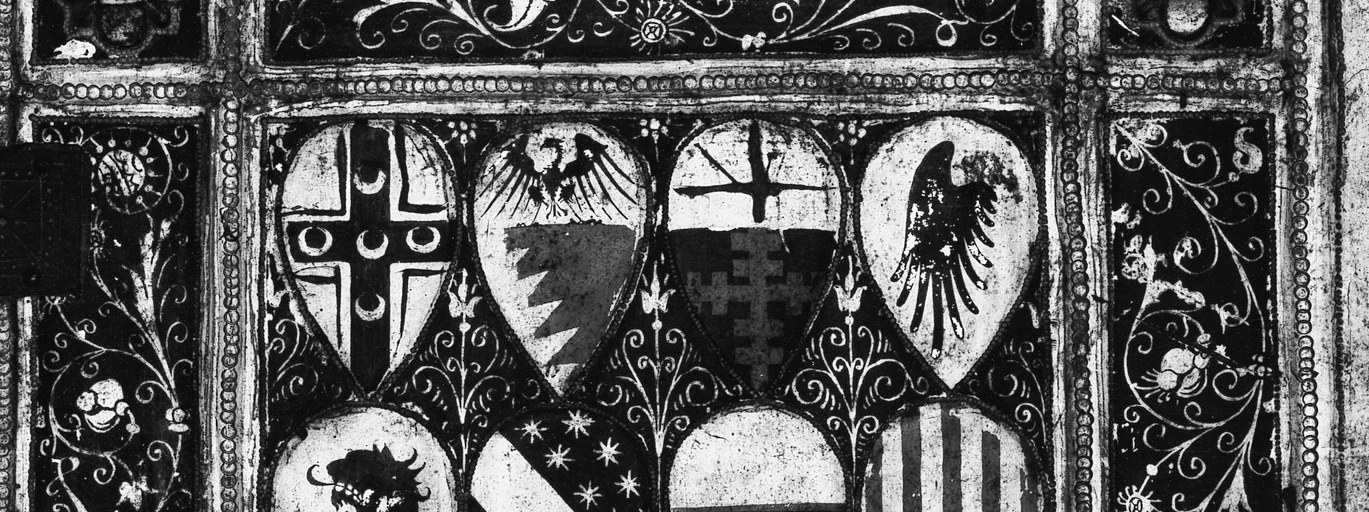
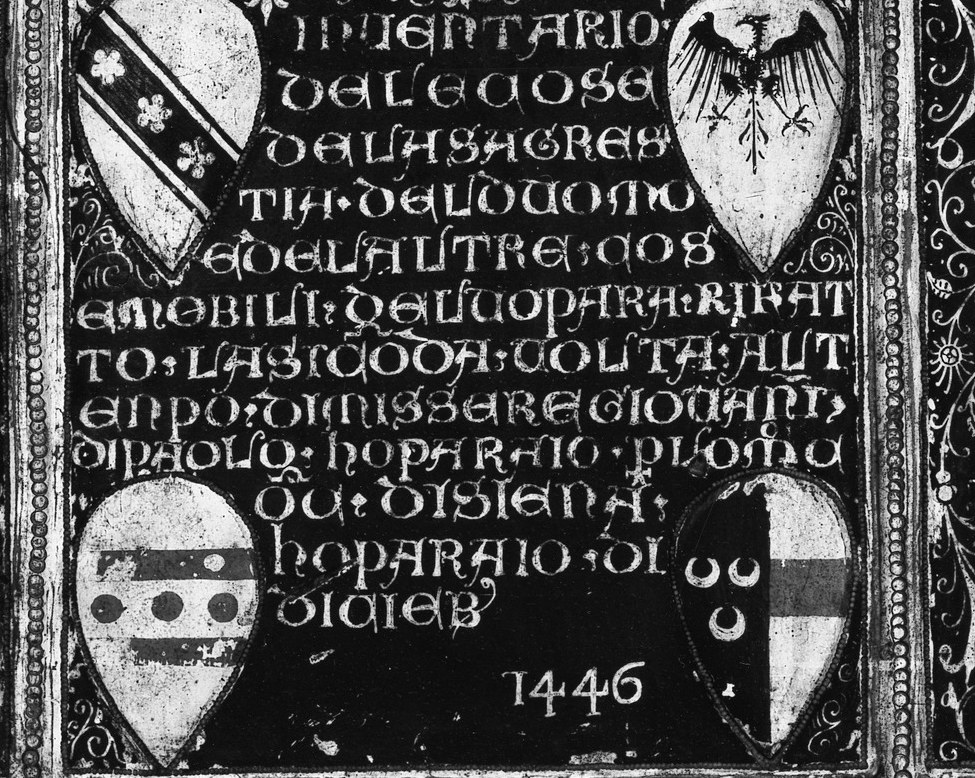
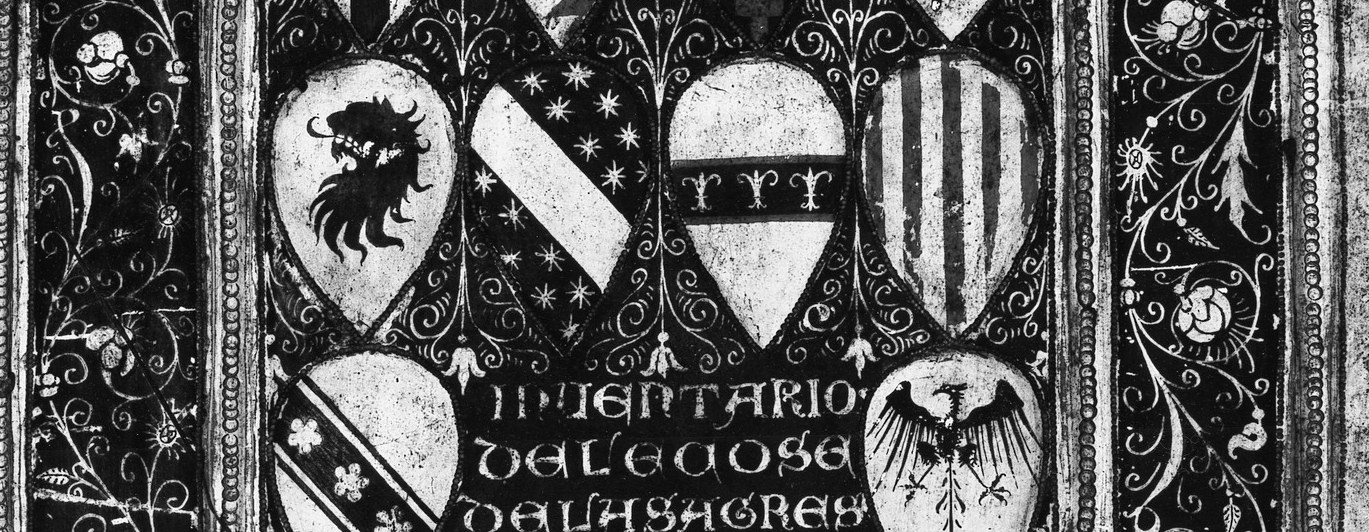
This intriguing 1446 tempera panel, titled “Saint Michael,” defies expectations. Instead of a depiction of the archangel, it presents a meticulously structured genealogical record, serving as a historical document.
Look closely at the various heraldic shields, each representing a different family or lineage. The central inscription block, filled with Latin text, further details names, dates, and obligations, grounding the artwork in a specific historical context.
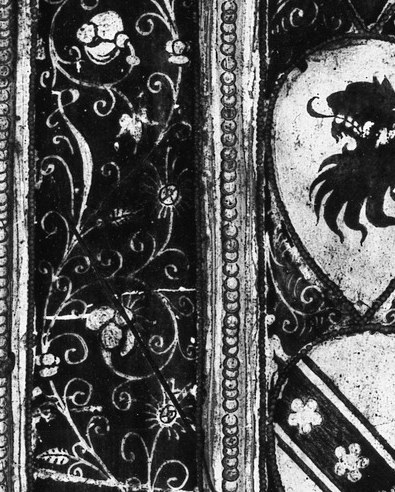
Created in 1446 by an unknown Italian artist, this panel likely served a commemorative or archival function, preserving a visual record of identity and heritage. Its monochromatic palette and rigid layout, framed by fluid scrollwork, highlight its unique blend of art and documentation from the mid-15th century.
What stories do you think these forgotten shields and names once told?
Details
Transcript
This painting is titled 'Saint Michael.' But Saint Michael, the archangel, is nowhere to be seen. Instead, we see an inventory of heraldic shields. Each one represents a family or lineage. At the center, a block of Latin text further lists names and dates. This work is a mid-15th century family record, not a saint.